
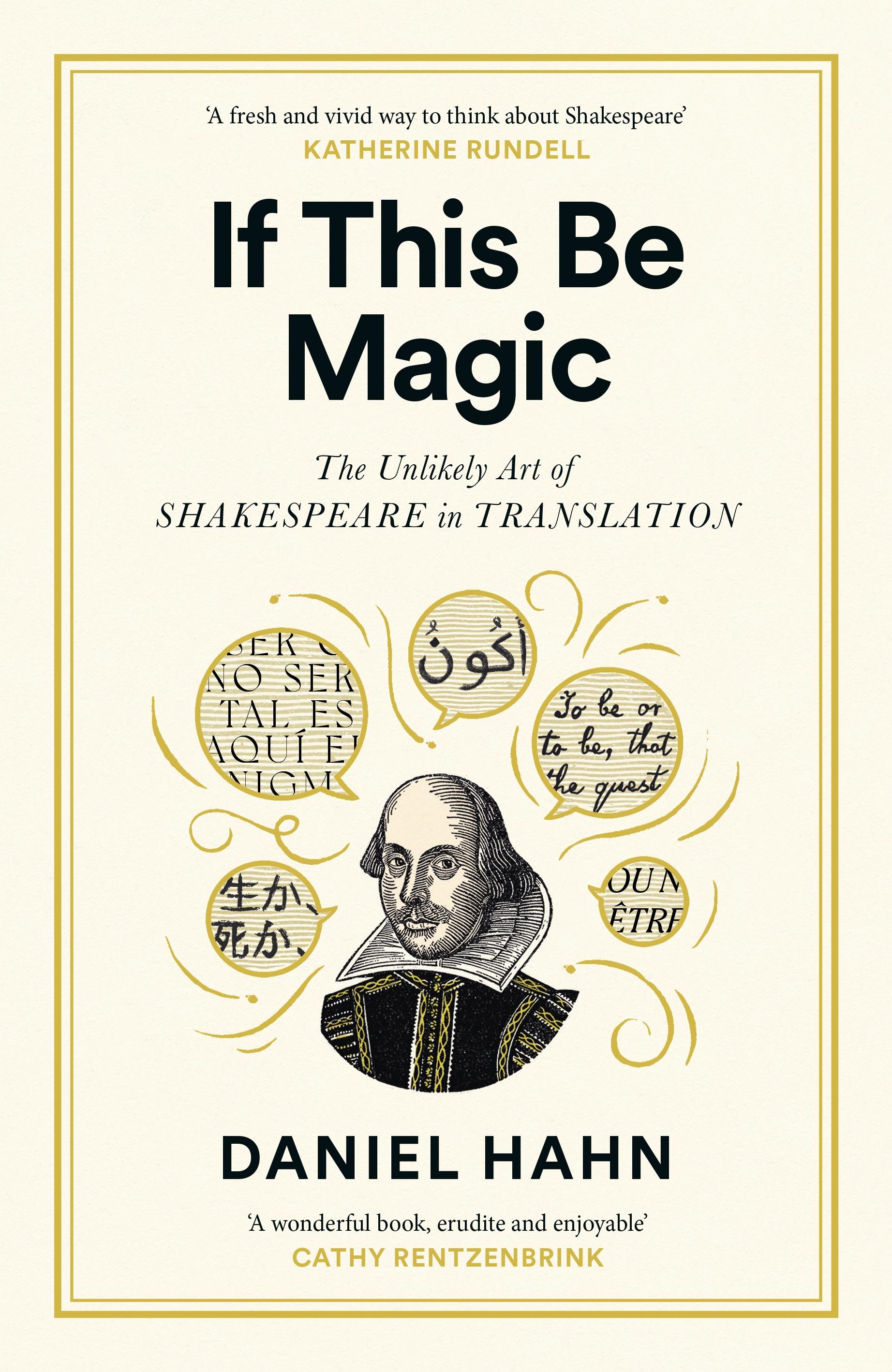
How do you rebuild a 400-year-old topical joke in a new culture and with none of the same words?
How does Romeo and Juliet’s first meeting unfold if they can’t mention pilgrims?
What does Taming of the Shrew sound like in a language where every noun has a gender?
Why might Hamlet be even longer in Japanese?
And why are Lady Macbeth’s pronouns such a problem?
What does it mean to translate Shakespeare? When we change all the poetry, all the wordplay, all the syntax – all the words! – is it still Shakespeare? And is it still any good?
Daniel Hahn, seasoned translator and Shakespeare fanatic, will change the way you think about language itself. Ranging widely across Shakespeare’s works, and across the world’s languages, this book explores what translators have done and what is possible.
No knowledge of any particular language is required, though a bit of patience for the nerdiest of close reading is desirable. This micro-attention to language will reveal some of the complexities of Shakespeare; and by using his work as its subject, with the extraordinary pressures that he puts on language, it will reveal even more about the craft of translation, and the power of words themselves.
Zahle einfach mit Karte, Klarna, Apple Pay oder Google Pay. Nicht zufrieden? Du hast immer ein 14-tägiges Widerrufsrecht. Lies mehr in unseren AGB. Hast du Fragen, schreib uns eine E-Mail an hello@memmo.org.
Memmo macht das Lernen einfacher – wo auch immer du bist. Bei uns findest du deine Kursbücher und smarte Lerntools an einem Ort: Zusammenfassungen, Quizzes, Podcasts und Lernkarten. Und Ted, dein Lernbuddy, beantwortet alles, was du wissen möchtest. Über 50.000 Studierende lernen bereits hier – gemacht, damit du schneller lernst und weniger Stress hast.