
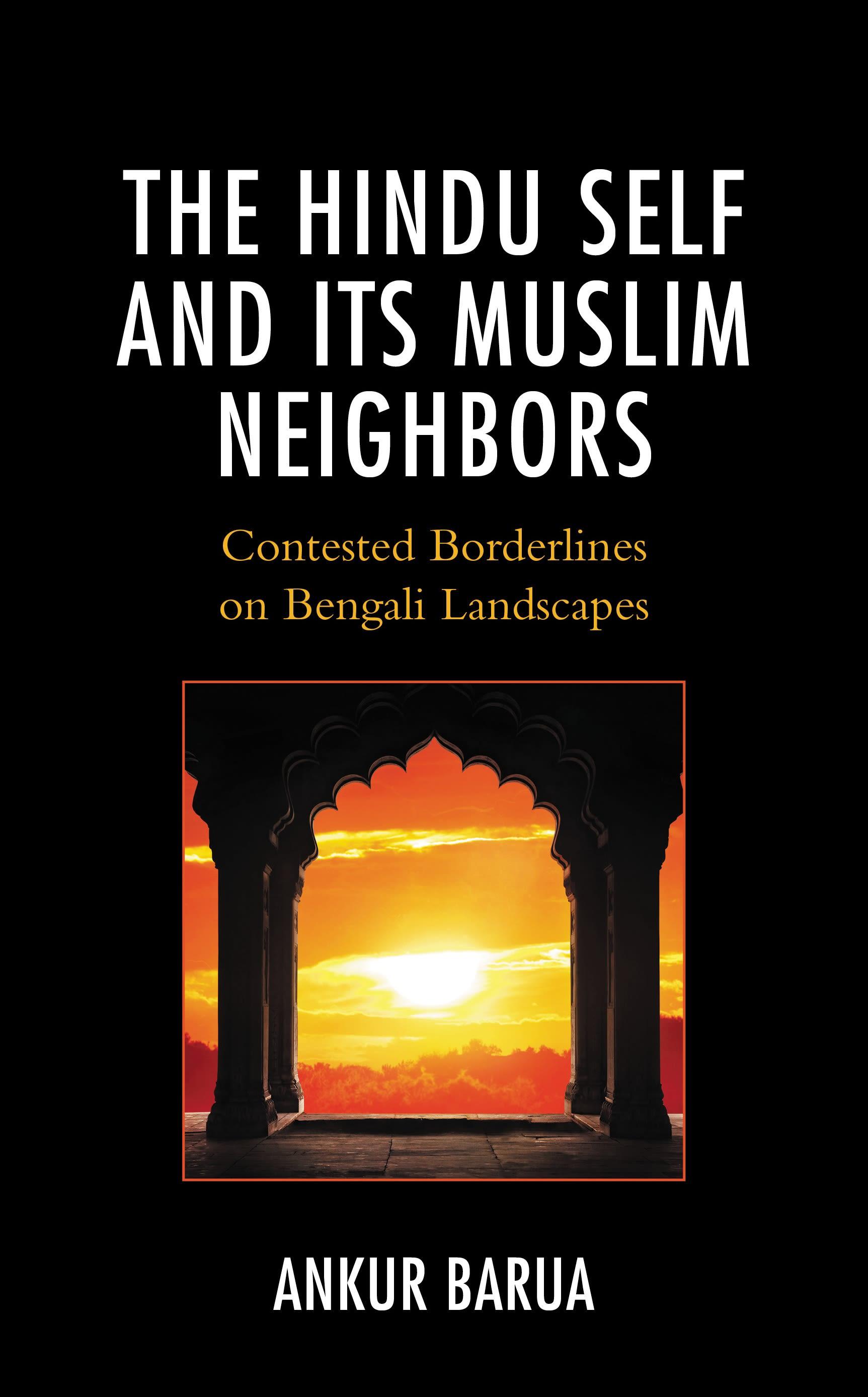
In The Hindu Self and its Muslim Neighbors, the author sketches the contours of relations between Hindus and Muslims in Bengal. The central argument is that various patterns of amicability and antipathy have been generated towards Muslims over the last six hundred years and these patterns emerge at dynamic intersections between Hindu self-understandings and social shifts on contested landscapes. The core of the book is a set of translations of the Bengali writings of Rabindranath Tagore (1861–1941), Kazi Nazrul Islam (1899–1976), and Annada Shankar Ray (1904–2002). Their lives were deeply interwoven with some Hindu–Muslim synthetic ideas and subjectivities, and these involvements are articulated throughout their writings which provide multiple vignettes of contemporary modes of amity and antagonism. Barua argues that the characterization of relations between Hindus and Muslims either in terms of an implacable hostility or of an unfragmented peace is historically inaccurate, for these relations were modulated by a shifting array of socio-economic and socio-political parameters. It is within these contexts that Rabindranath, Nazrul, and Annada Shankar are developing their thoughts on Hindus and Muslims through the prisms of religious humanism and universalism.
Seiten: 234
Kategorie: Religion & Teologi
e-ISBN: 9781793642592
Versandgewicht: 1.2 kg
Versand in: 1-2 Tage
Zahle einfach mit Karte, Klarna, Apple Pay oder Google Pay. Nicht zufrieden? Du hast immer ein 14-tägiges Widerrufsrecht. Lies mehr in unseren AGB. Hast du Fragen, schreib uns eine E-Mail an hello@memmo.org.
Memmo macht das Lernen einfacher – wo auch immer du bist. Bei uns findest du deine Kursbücher und smarte Lerntools an einem Ort: Zusammenfassungen, Quizzes, Podcasts und Lernkarten. Und Ted, dein Lernbuddy, beantwortet alles, was du wissen möchtest. Über 50.000 Studierende lernen bereits hier – gemacht, damit du schneller lernst und weniger Stress hast.