
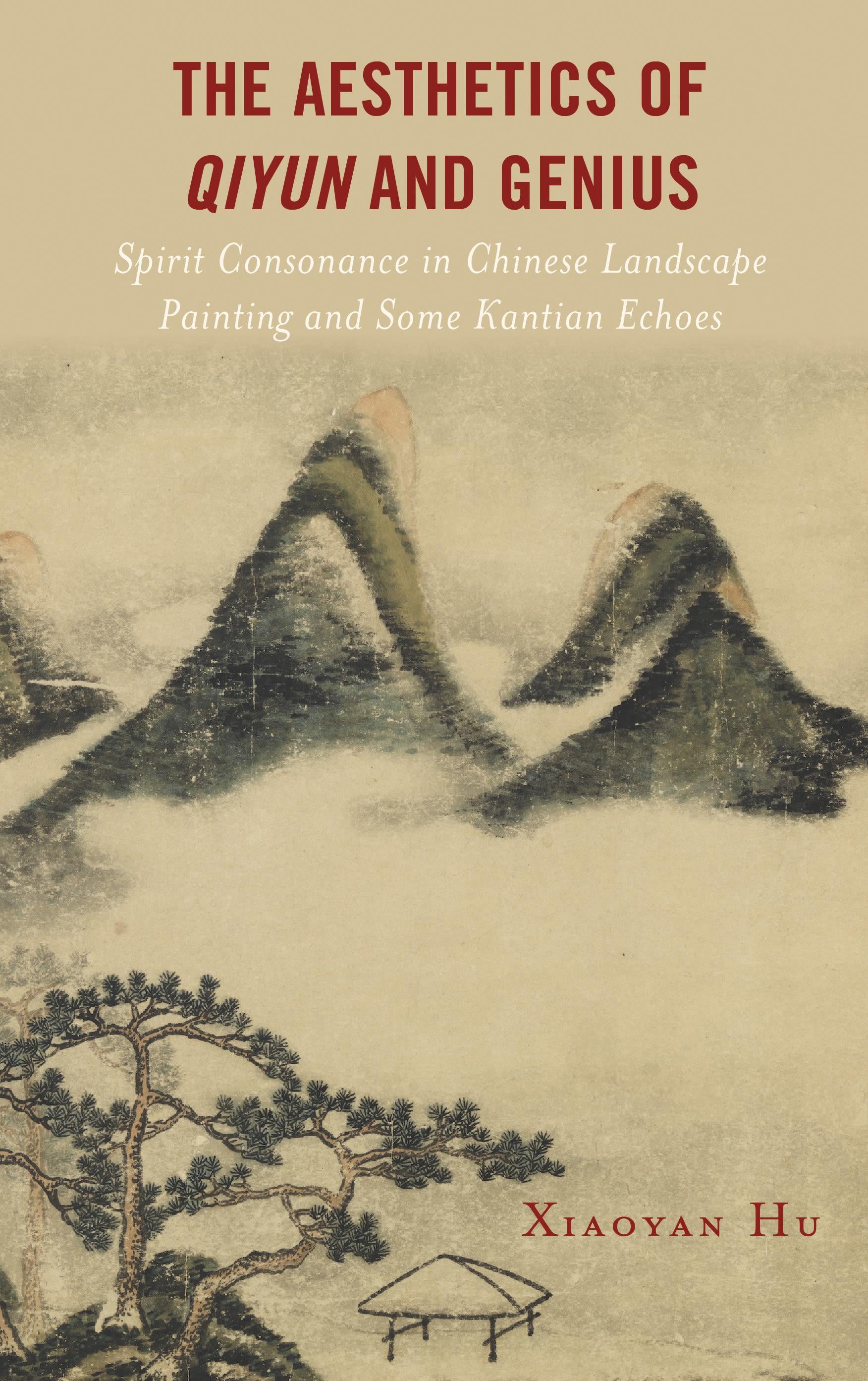
In The Aesthetics of Qiyun and Genius: Spirit Consonance in Chinese Landscape Painting and Some Kantian Echoes, Xiaoyan Hu provides an interpretation of the notion of qiyun, or spirit consonance, in Chinese painting, and considers why creating a painting—especially a landscape painting—replete with qiyun is regarded as an art of genius, where genius is an innate mental talent. Through a comparison of the role of this innate mental disposition in the aesthetics of qiyun and Kant’s account of artistic genius, the book addresses an important feature of the Chinese aesthetic tradition, one that evades the aesthetic universality assumed by a Kantian lens.
Drawing on the views of influential sixth to fourteenth-century theorists and art historians and connoisseurs, the first part explains and discusses qiyun and its conceptual development from a notion mainly applied to figure painting to one that also plays an enduring role in the aesthetics of landscape painting. In the light of Kant’s account of genius, the second part examines a range of issues regarding the role of the mind in creating a painting replete with qiyun and the impossibility of teaching qiyun. Through this comparison with Kant, Hu demystifies the uniqueness of qiyun aesthetics and also illuminates some limitations in Kant’s aesthetics.
The publication of this work was supported by the Fundamental Research Funds for the Central Universities (project no: 3213042202A1).
Drawing on the views of influential sixth to fourteenth-century theorists and art historians and connoisseurs, the first part explains and discusses qiyun and its conceptual development from a notion mainly applied to figure painting to one that also plays an enduring role in the aesthetics of landscape painting. In the light of Kant’s account of genius, the second part examines a range of issues regarding the role of the mind in creating a painting replete with qiyun and the impossibility of teaching qiyun. Through this comparison with Kant, Hu demystifies the uniqueness of qiyun aesthetics and also illuminates some limitations in Kant’s aesthetics.
The publication of this work was supported by the Fundamental Research Funds for the Central Universities (project no: 3213042202A1).
Zahle einfach mit Karte, Klarna, Apple Pay oder Google Pay. Nicht zufrieden? Du hast immer ein 14-tägiges Widerrufsrecht. Lies mehr in unseren AGB. Hast du Fragen, schreib uns eine E-Mail an hello@memmo.org.
Memmo macht das Lernen einfacher – wo auch immer du bist. Bei uns findest du deine Kursbücher und smarte Lerntools an einem Ort: Zusammenfassungen, Quizzes, Podcasts und Lernkarten. Und Ted, dein Lernbuddy, beantwortet alles, was du wissen möchtest. Über 50.000 Studierende lernen bereits hier – gemacht, damit du schneller lernst und weniger Stress hast.