
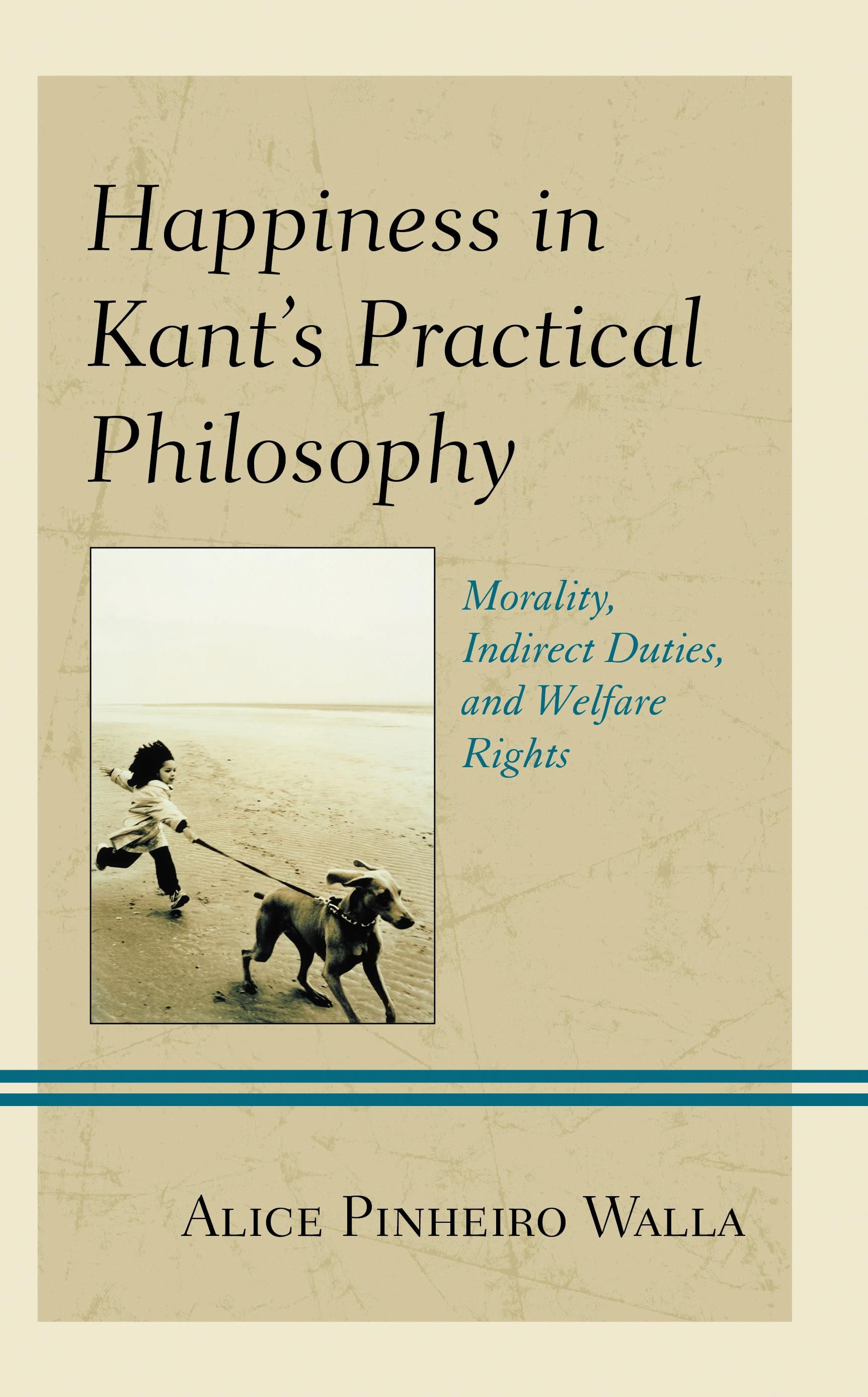
Happiness in Kant's Practical Philosophy: Morality, Indirect Duties, and Welfare Rights examines the role and normative implications of Kant's understanding of happiness for his moral, political, and legal philosophy. Kant's underlying assumptions about happiness are rarely overtly discussed or given much detail in his works. By bringing these assumptions to the fore, Alice Pinheiro Walla sheds light on some puzzling claims and on the scattered, sometimes contradictory remarks Kant makes about happiness. The book shows that happiness shapes or indirectly influences Kant's methodology and many of his conclusions, including his views on the nature of practical rationality, meta-ethics, the role of the state, and of political justification. The challenge with happiness is that it is impossible to know for certain what will make us happy, and what we take to be happiness changes over our lifetime. The book argues that Kant offers a distinctive strategy for dealing with this indeterminacy of happiness, one rooted in understanding our duties to ourselves and others. Happiness in Kant's Practical Philosophy provides a map of the areas in which the concept of happiness or considerations about the happiness of individuals appear in Kant's practical works and analyses the way they relate to central themes of his practical theory.
Zahle einfach mit Karte, Klarna, Apple Pay oder Google Pay. Nicht zufrieden? Du hast immer ein 14-tägiges Widerrufsrecht. Lies mehr in unseren AGB. Hast du Fragen, schreib uns eine E-Mail an hello@memmo.org.
Memmo macht das Lernen einfacher – wo auch immer du bist. Bei uns findest du deine Kursbücher und smarte Lerntools an einem Ort: Zusammenfassungen, Quizzes, Podcasts und Lernkarten. Und Ted, dein Lernbuddy, beantwortet alles, was du wissen möchtest. Über 50.000 Studierende lernen bereits hier – gemacht, damit du schneller lernst und weniger Stress hast.