
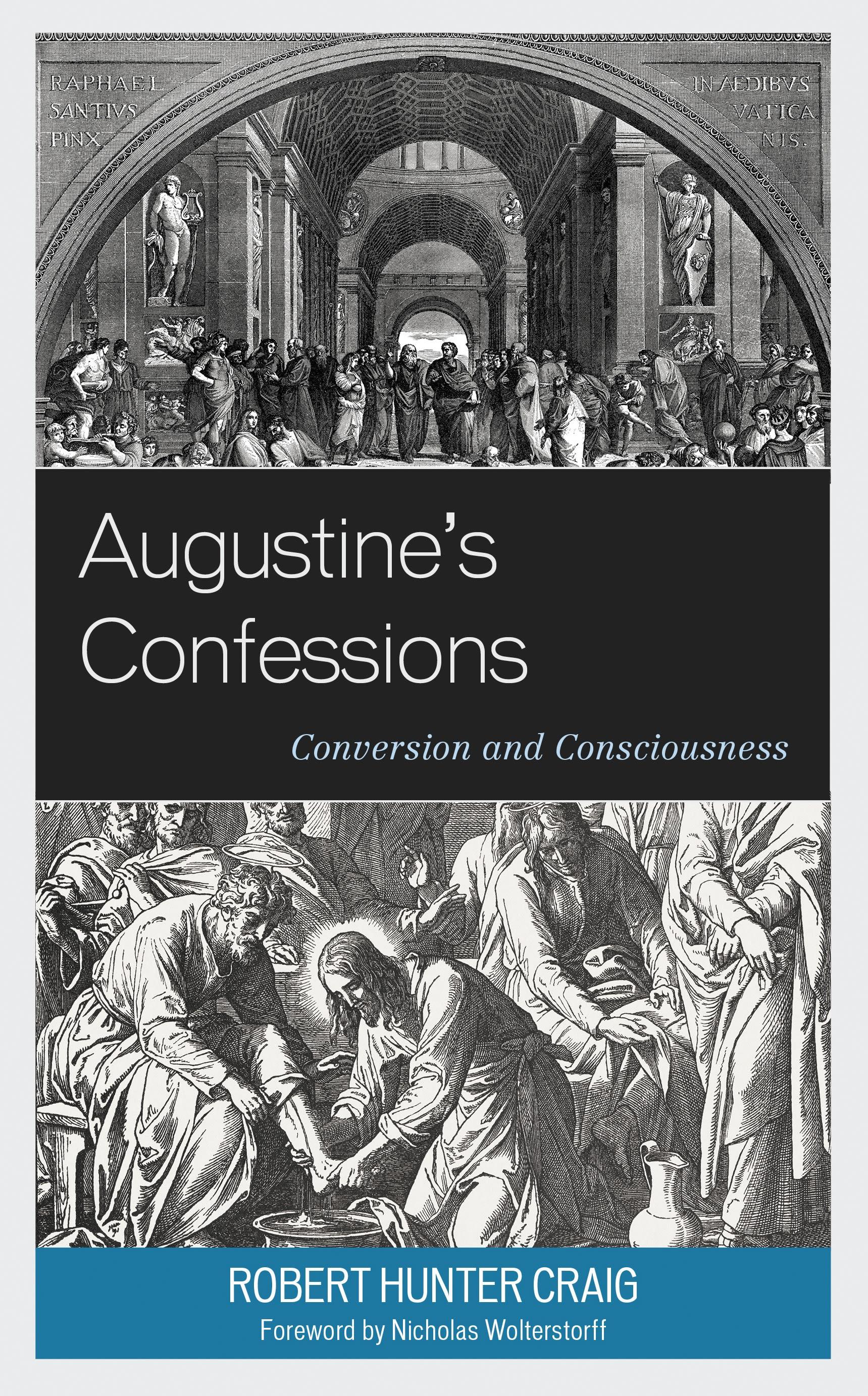
Augustine's Confessions: Conversion and Consciousness argues two original positions concerning the structure and meaning of the Confessions by Augustine. The structure is found to be a tool used by Augustine in his earlier pre-Confessions writings in which he uses the Allegory of the Cave in book VII of the Republic by Plato to both describe human consciousness and as a structural framework for his own life story. As with Plato's allegory, Augustine then uses Books X-XIII to do, what the author calls, "Scriptural Philosophical" analysis of the allegorical prayer previously given. The author shows that the Confessions is really an allegorical quasi-prayer that shows Augustine's state of mind or disposition through space/time—and at the same time uses different personas, schools of thought and metaphysical constructs to show the inadequacy of Plato's consciousness model of the cave to truly describe human ratiocination within consciousness in its totality—Synchronic-Synthetic-Triplex (SST) or body, mind, God-Will substance. Instead, Augustine demonstrates the superiority of the Christian conversion to that of the Platonic as described both by Platonic books and the books of the Platonists. The Christian conversion is based on the incarnate Wisdom of Christ Jesus within the Cave/World.
Zahle einfach mit Karte, Klarna, Apple Pay oder Google Pay. Nicht zufrieden? Du hast immer ein 14-tägiges Widerrufsrecht. Lies mehr in unseren AGB. Hast du Fragen, schreib uns eine E-Mail an hello@memmo.org.
Memmo macht das Lernen einfacher – wo auch immer du bist. Bei uns findest du deine Kursbücher und smarte Lerntools an einem Ort: Zusammenfassungen, Quizzes, Podcasts und Lernkarten. Und Ted, dein Lernbuddy, beantwortet alles, was du wissen möchtest. Über 50.000 Studierende lernen bereits hier – gemacht, damit du schneller lernst und weniger Stress hast.