
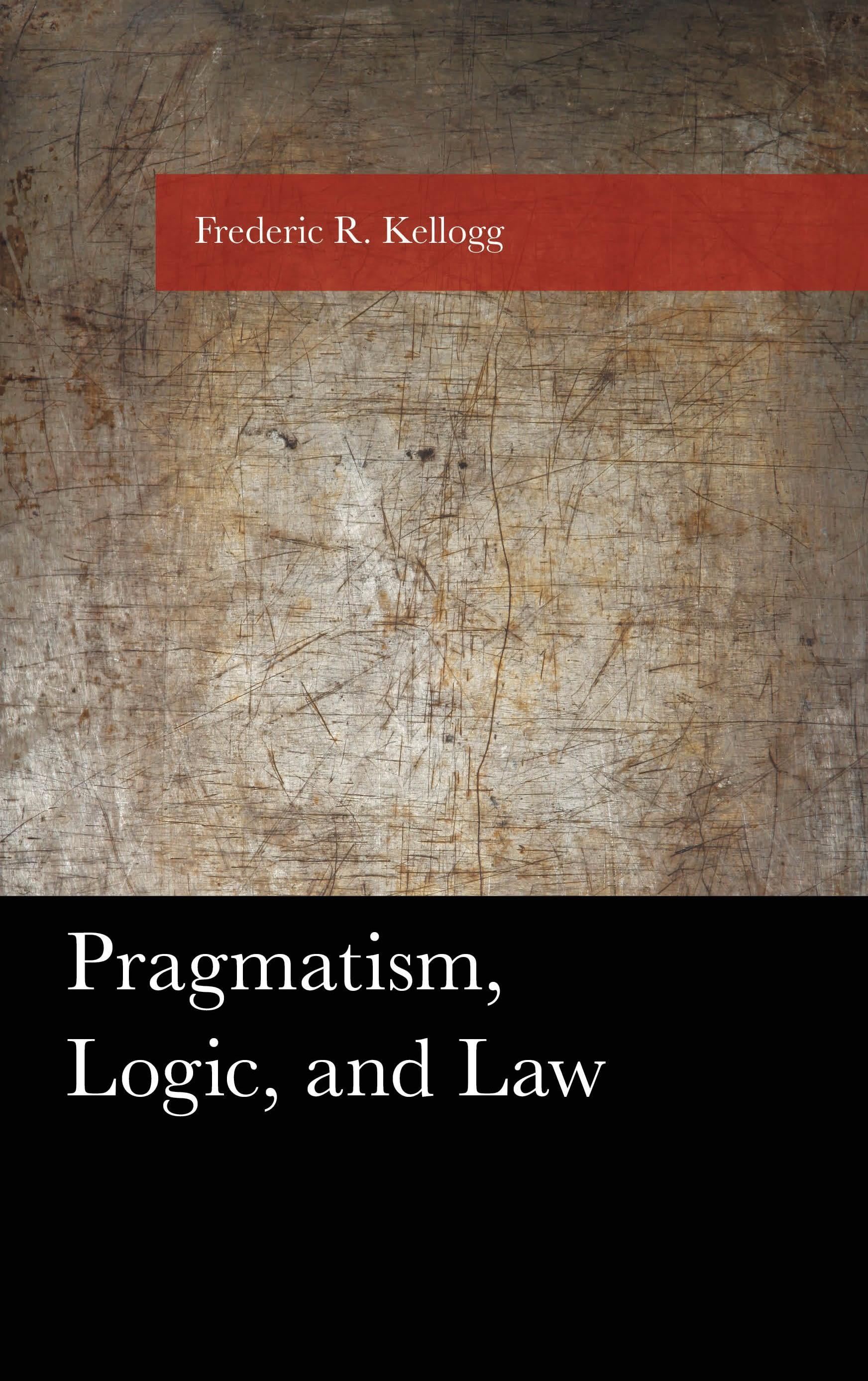
Pragmatism, Logic and Law offers a view of legal pragmatism consistent with pragmatism writ large, tracing it from origins in late 19th century America to the present, covering various issues, legal cases, personalities, and relevant intellectual movements within and outside law. It addresses pragmatism’s relation to legal liberalism, legal positivism, natural law, critical legal studies (CLS), and post-Rorty “neopragmatism.” It views legal pragmatism as an exemplar of pragmatism’s general contribution to logical theory, which bears two connections to the western philosophical tradition: first, it extends Francis Bacon’s empiricism into contemporary aspects of scientific and legal experience, and second, it is an explicitly social reconstruction of logical induction. Both notions were articulated by John Dewey, and both emphasize the social or corporate element of human inquiry. Empiricism is informed by social as well as individual experience (which includes the problems of conflict and consensus). Rather than following the Aristotelian model of induction as immediate inference from particulars to generals, a model that assumes a consensual objective viewpoint, pragmatism explores the actual, and extended, process of corporate inference from particular experience to generalization, in law as in science. This includes the necessary process of resolving disagreement and finding similarity among relevant particulars.
Zahle einfach mit Karte, Klarna, Apple Pay oder Google Pay. Nicht zufrieden? Du hast immer ein 14-tägiges Widerrufsrecht. Lies mehr in unseren AGB. Hast du Fragen, schreib uns eine E-Mail an hello@memmo.org.
Memmo macht das Lernen einfacher – wo auch immer du bist. Bei uns findest du deine Kursbücher und smarte Lerntools an einem Ort: Zusammenfassungen, Quizzes, Podcasts und Lernkarten. Und Ted, dein Lernbuddy, beantwortet alles, was du wissen möchtest. Über 50.000 Studierende lernen bereits hier – gemacht, damit du schneller lernst und weniger Stress hast.