
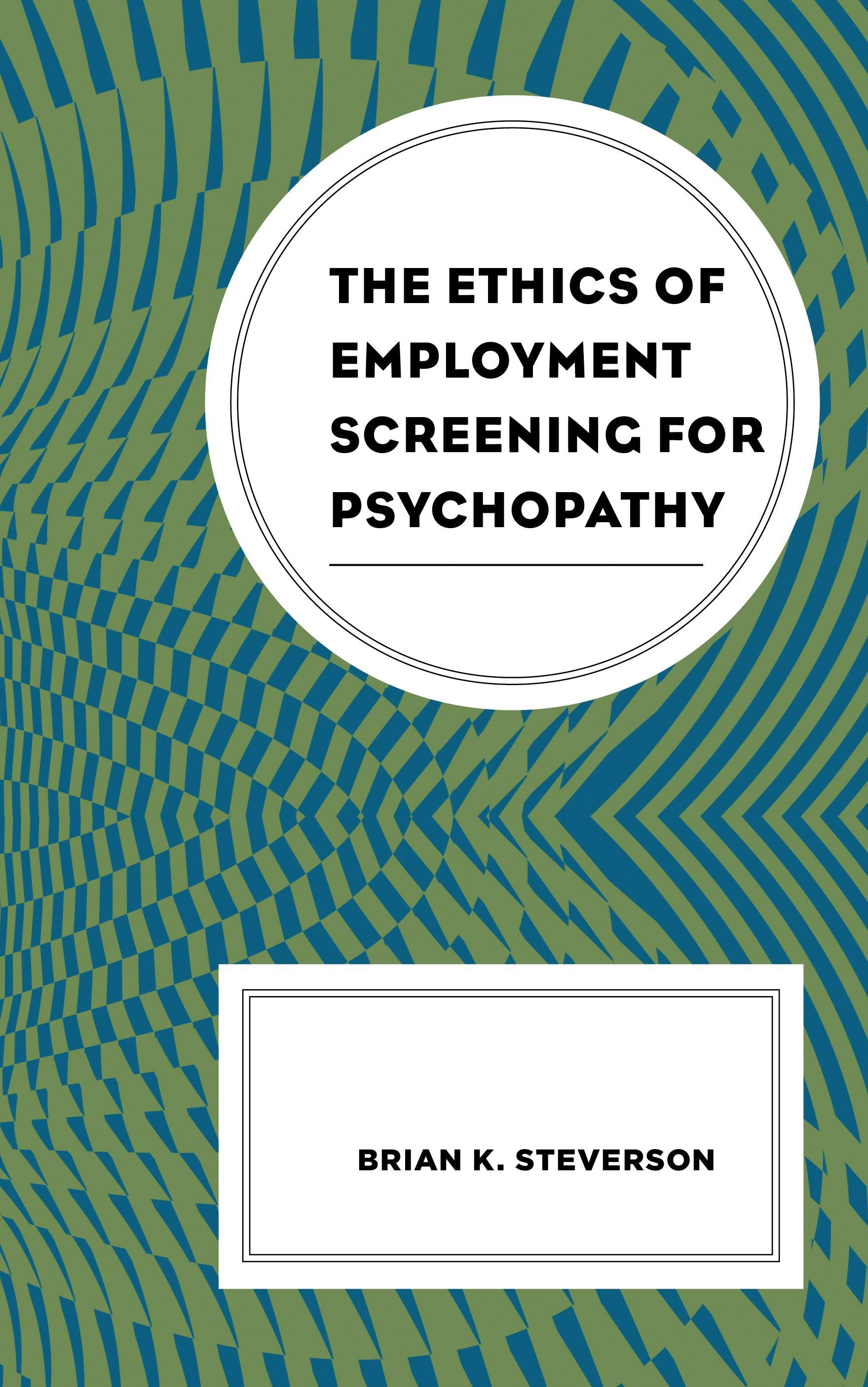
In 2006, Babiak and Hare alerted the public to the danger of “corporate psychopaths,” psychopathic individuals occupying positions of power in business organizations. Since then, academicians and the public media have advertised their presence, documented the harm they can cause, and issued a call to arms to identify corporate psychopaths and eliminate their presence in the workplace. Very little attention has been paid, however, to the ethics of such a “seek and destroy” mission. The Ethics of Employment Screening for Psychopathy argues that employment screening for psychopathy would be illegal and unethical. On legal grounds, Brian K Steverson argues that psychopathy would qualify as a protected disability under the Americans with Disabilities Act, and, hence, medical screening to identify potential corporate psychopaths would be in violation of the ADA. On ethical grounds, the case is made that such screening would violate a social commitment to equal opportunity, would constitute a morally unjustified violation of personal privacy, and would, in practice, not produce the intended benefits, while at the same time inflicting harm on the subjects of the screening.
Zahle einfach mit Karte, Klarna, Apple Pay oder Google Pay. Nicht zufrieden? Du hast immer ein 14-tägiges Widerrufsrecht. Lies mehr in unseren AGB. Hast du Fragen, schreib uns eine E-Mail an hello@memmo.org.
Memmo macht das Lernen einfacher – wo auch immer du bist. Bei uns findest du deine Kursbücher und smarte Lerntools an einem Ort: Zusammenfassungen, Quizzes, Podcasts und Lernkarten. Und Ted, dein Lernbuddy, beantwortet alles, was du wissen möchtest. Über 50.000 Studierende lernen bereits hier – gemacht, damit du schneller lernst und weniger Stress hast.