
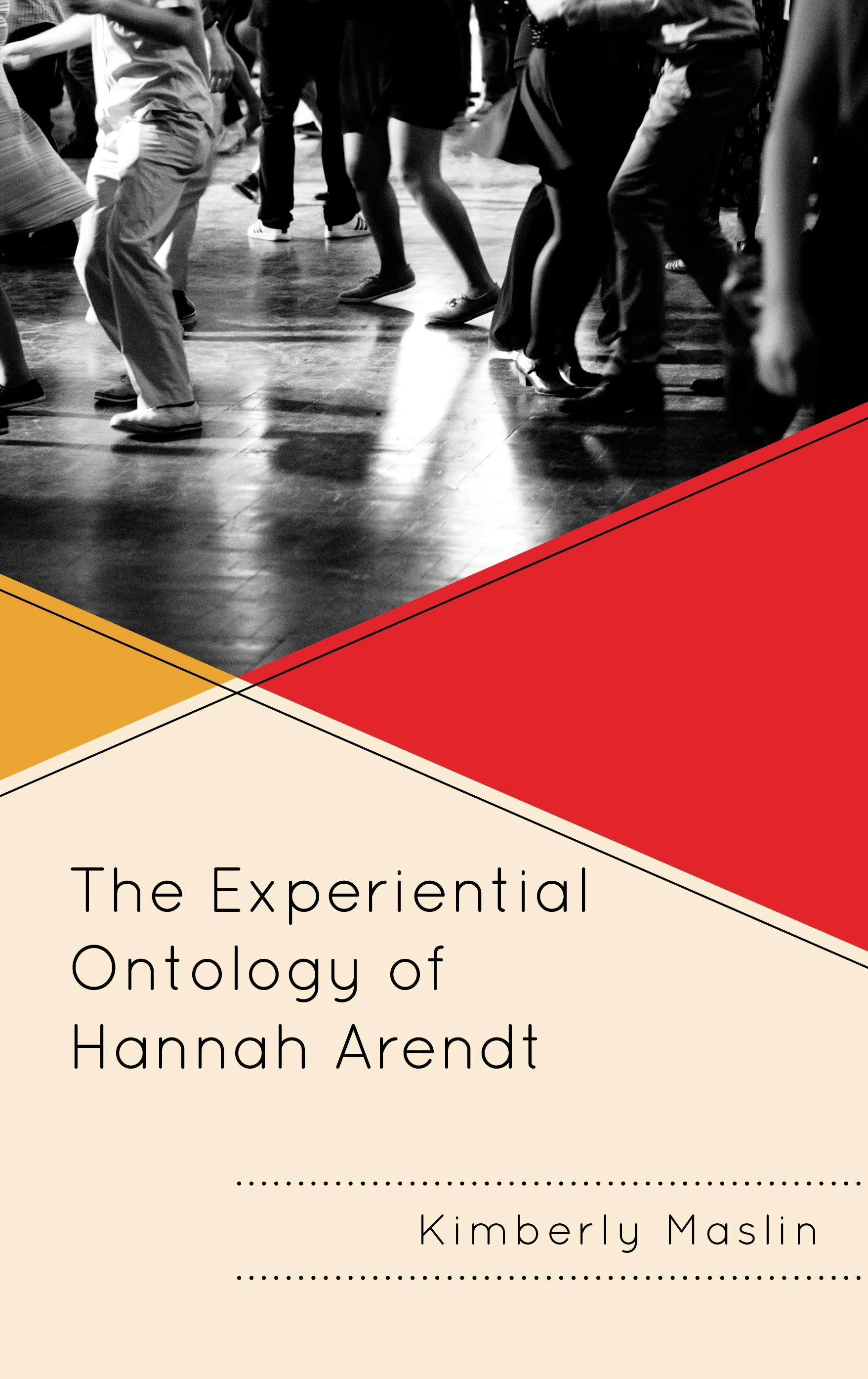
In The Experiential Ontology of Hannah Arendt, Kim Maslin examines Hannah Arendt’s political philosophy through a Heideggerian framework. Maslin argues that not only did Arendt grew beyond the role of naïve and beguiled student, but she became one of Heidegger’s most astute critics. Well acquainted with and deeply respectful of his contributions to existential philosophy, Arendt viewed Heidegger’s work as both profoundly insightful and extraordinarily myopic. Not contented to simply offer a critique of her mentor’s work, Arendt engaged in a lifelong struggle to come to terms with the collective implications of fundamental ontology. Maslin argues that Arendt shifted to political philosophy less to escape her own disappointment at Heidegger’s personal betrayal, but rather as an attempt to right the collective flaws of fundamental ontology. Her project offers a politically responsive, hence responsible, modification of Heidegger’s fundamental ontology. She suggests that Heidegger’s allegedly descriptive and non-normative insight into the nature of being is necessarily incomplete, and potentially irresponsible, unless it is undertaken in a manner which is mindful of the collective implications. As such, Maslin shows how Arendt attempts to construct an experiential ontology that transforms Heidegger’s fundamental ontology for use in the public sphere.
Zahle einfach mit Karte, Klarna, Apple Pay oder Google Pay. Nicht zufrieden? Du hast immer ein 14-tägiges Widerrufsrecht. Lies mehr in unseren AGB. Hast du Fragen, schreib uns eine E-Mail an hello@memmo.org.
Memmo macht das Lernen einfacher – wo auch immer du bist. Bei uns findest du deine Kursbücher und smarte Lerntools an einem Ort: Zusammenfassungen, Quizzes, Podcasts und Lernkarten. Und Ted, dein Lernbuddy, beantwortet alles, was du wissen möchtest. Über 50.000 Studierende lernen bereits hier – gemacht, damit du schneller lernst und weniger Stress hast.