
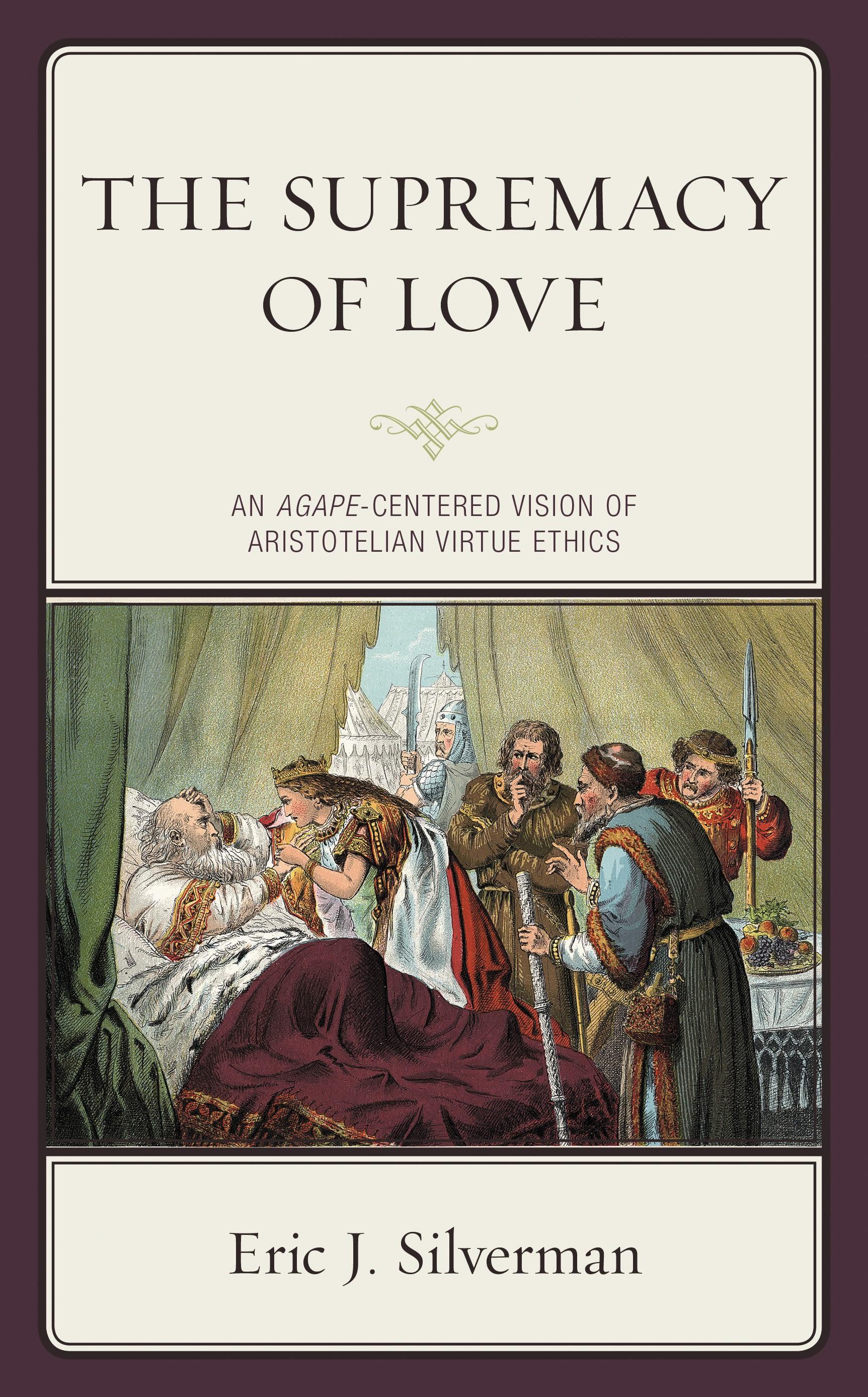
Thirty-five years ago Alasdair MacIntyre’s After Virtue established virtue ethics as a major challenger to competing visions of morality, but there is still considerable disagreement concerning which version of virtue ethics provides the best approach. The Supremacy of Love describes and advocates an agape-centered vision of Aristotelian virtue ethics that portrays love as the most important moral virtue, and the goals of love as a partial constituent of every genuine virtue. This structural improvement to Aristotelian virtue ethics—found originally in the ethics of Thomas Aquinas—enables this account to address several controversial topics in contemporary virtue ethics, including why the virtues cannot be used badly, in what sense is there a unity between the virtues, how the virtues benefit the virtuous person, and how virtues provide action guidance. Eric J. Silverman demonstrates how and why a distinctly love-centered approach to virtue ethics should make the view widely attractive in comparison to alternative accounts of virtue ethics, duty based deontological theories, as well as results-based consequentialist views.
Zahle einfach mit Karte, Klarna, Apple Pay oder Google Pay. Nicht zufrieden? Du hast immer ein 14-tägiges Widerrufsrecht. Lies mehr in unseren AGB. Hast du Fragen, schreib uns eine E-Mail an hello@memmo.org.
Memmo macht das Lernen einfacher – wo auch immer du bist. Bei uns findest du deine Kursbücher und smarte Lerntools an einem Ort: Zusammenfassungen, Quizzes, Podcasts und Lernkarten. Und Ted, dein Lernbuddy, beantwortet alles, was du wissen möchtest. Über 50.000 Studierende lernen bereits hier – gemacht, damit du schneller lernst und weniger Stress hast.