
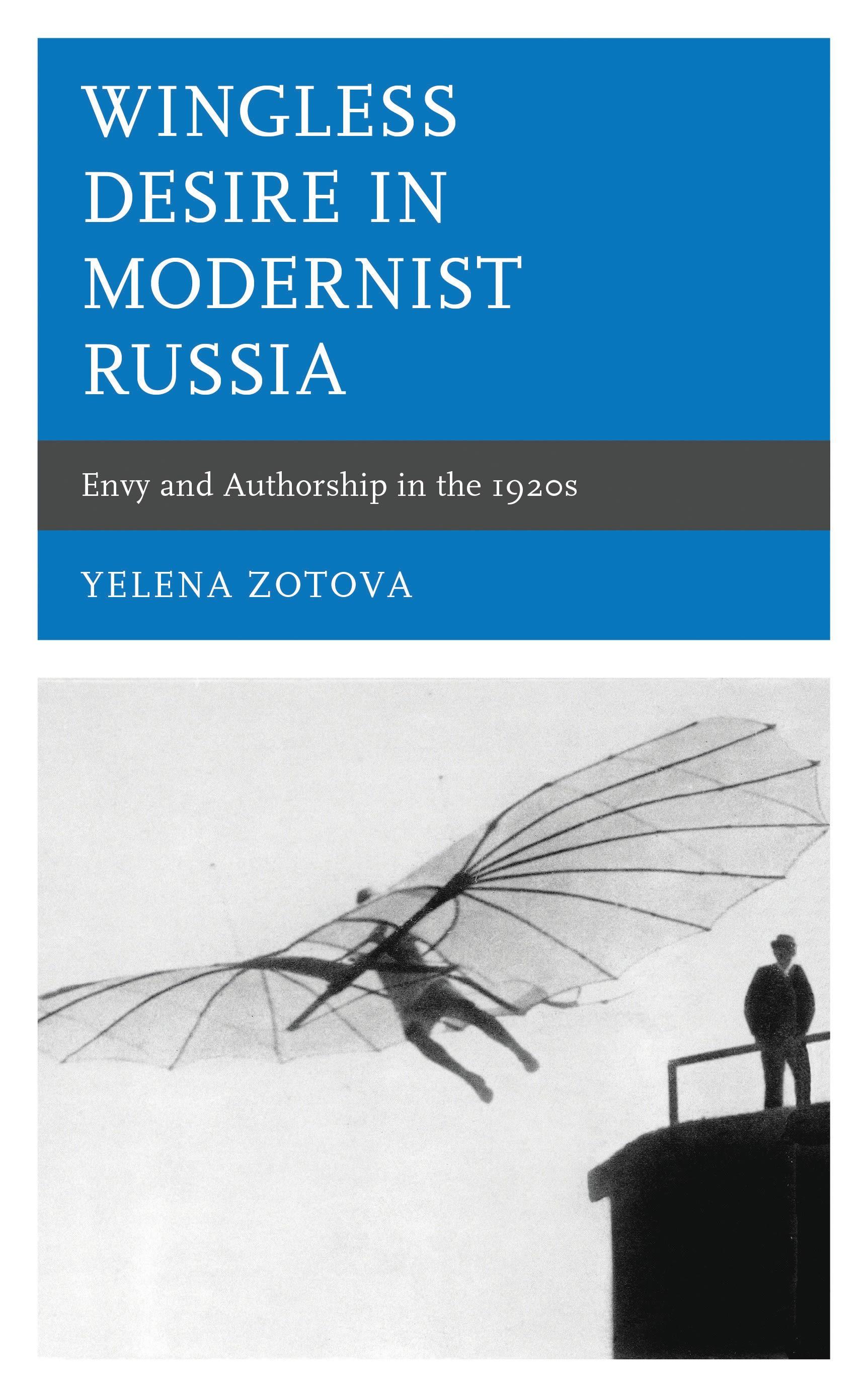
In Wingless Desire in Modernist Russia, Yelena Zotova argues that the concept of envy underwent a peculiar transformation in the Russian Modernist prose of the 1920s due to a series of radical shifts in societal values, with each subsequent change thwarting Russia’s volatile axiological hierarchy. Industriousness and austerity, inferior to playful genius in Pushkin’s “Mozart and Salieri,” became virtues, while the intrinsic value of nonutilitarian art was officially nullified by the Bolshevik state.Consequently, a new literary type emerged, and envy, described as “wingless desire” by Russia’s chief poet Alexander Pushkin, obtained new ownership as the envied became the envier. Superimposing twentieth-century theories of envy onto Mikhail Bakhtin’s “Author and Hero in the Aesthetic Activity” (1923), Zotova proposes that Salieri’s envy could be the wingless embryo of the Bakhtinian authorship.
Zahle einfach mit Karte, Klarna, Apple Pay oder Google Pay. Nicht zufrieden? Du hast immer ein 14-tägiges Widerrufsrecht. Lies mehr in unseren AGB. Hast du Fragen, schreib uns eine E-Mail an hello@memmo.org.
Memmo macht das Lernen einfacher – wo auch immer du bist. Bei uns findest du deine Kursbücher und smarte Lerntools an einem Ort: Zusammenfassungen, Quizzes, Podcasts und Lernkarten. Und Ted, dein Lernbuddy, beantwortet alles, was du wissen möchtest. Über 50.000 Studierende lernen bereits hier – gemacht, damit du schneller lernst und weniger Stress hast.