
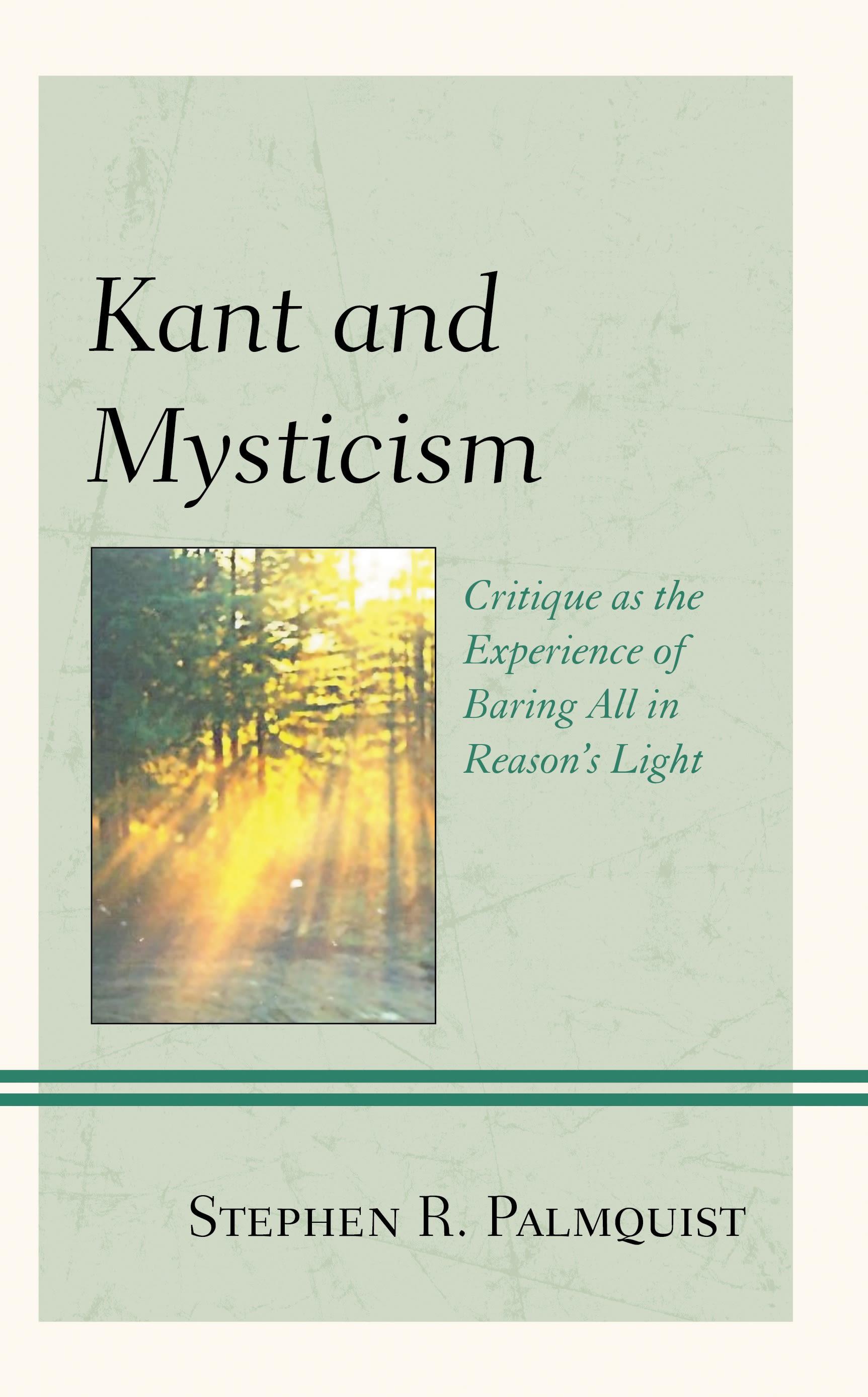
What is happening when someone has a mystical experience, such as “feeling at one with the universe” or “hearing God’s voice?” Does philosophy provide tools for assessing such claims? Which claims can be dismissed as delusions and which ones convey genuine truths that might be universally meaningful? Valuable insights into such pressing questions can be found in the writings of Immanuel Kant, though few philosophical commentators have appreciated the implications beyond his famous “Copernican hypothesis.” In Kant and Mysticism, Stephen R. Palmquist corrects this skewed view of Kant once and for all.
Beginning with a detailed analysis of Kant’s 1766 work Dreams of a Spirit-Seer, Palmquist demonstrates that in Dreams Kant first discovers and explains his plan to write a new, “critical” philosophy that will revolutionize metaphysics by laying bare the limits of human reason. Palmquist shows how the same metaphorical relationship—between reason’s dreams (metaphysics) and sensibility’s dreams (mysticism)—permeates Kant’s mature writings. Clarifying how Kant’s final (unfinished) book, Opus Postumum, completes this dual project, Palmquist explains how the “critical mysticism” entailed by Kant’s position has profound implications for contemporary understandings of religious and mystical experience, both by religious individuals and by philosophers seeking to understand such experiences.
Beginning with a detailed analysis of Kant’s 1766 work Dreams of a Spirit-Seer, Palmquist demonstrates that in Dreams Kant first discovers and explains his plan to write a new, “critical” philosophy that will revolutionize metaphysics by laying bare the limits of human reason. Palmquist shows how the same metaphorical relationship—between reason’s dreams (metaphysics) and sensibility’s dreams (mysticism)—permeates Kant’s mature writings. Clarifying how Kant’s final (unfinished) book, Opus Postumum, completes this dual project, Palmquist explains how the “critical mysticism” entailed by Kant’s position has profound implications for contemporary understandings of religious and mystical experience, both by religious individuals and by philosophers seeking to understand such experiences.
Zahle einfach mit Karte, Klarna, Apple Pay oder Google Pay. Nicht zufrieden? Du hast immer ein 14-tägiges Widerrufsrecht. Lies mehr in unseren AGB. Hast du Fragen, schreib uns eine E-Mail an hello@memmo.org.
Memmo macht das Lernen einfacher – wo auch immer du bist. Bei uns findest du deine Kursbücher und smarte Lerntools an einem Ort: Zusammenfassungen, Quizzes, Podcasts und Lernkarten. Und Ted, dein Lernbuddy, beantwortet alles, was du wissen möchtest. Über 50.000 Studierende lernen bereits hier – gemacht, damit du schneller lernst und weniger Stress hast.