
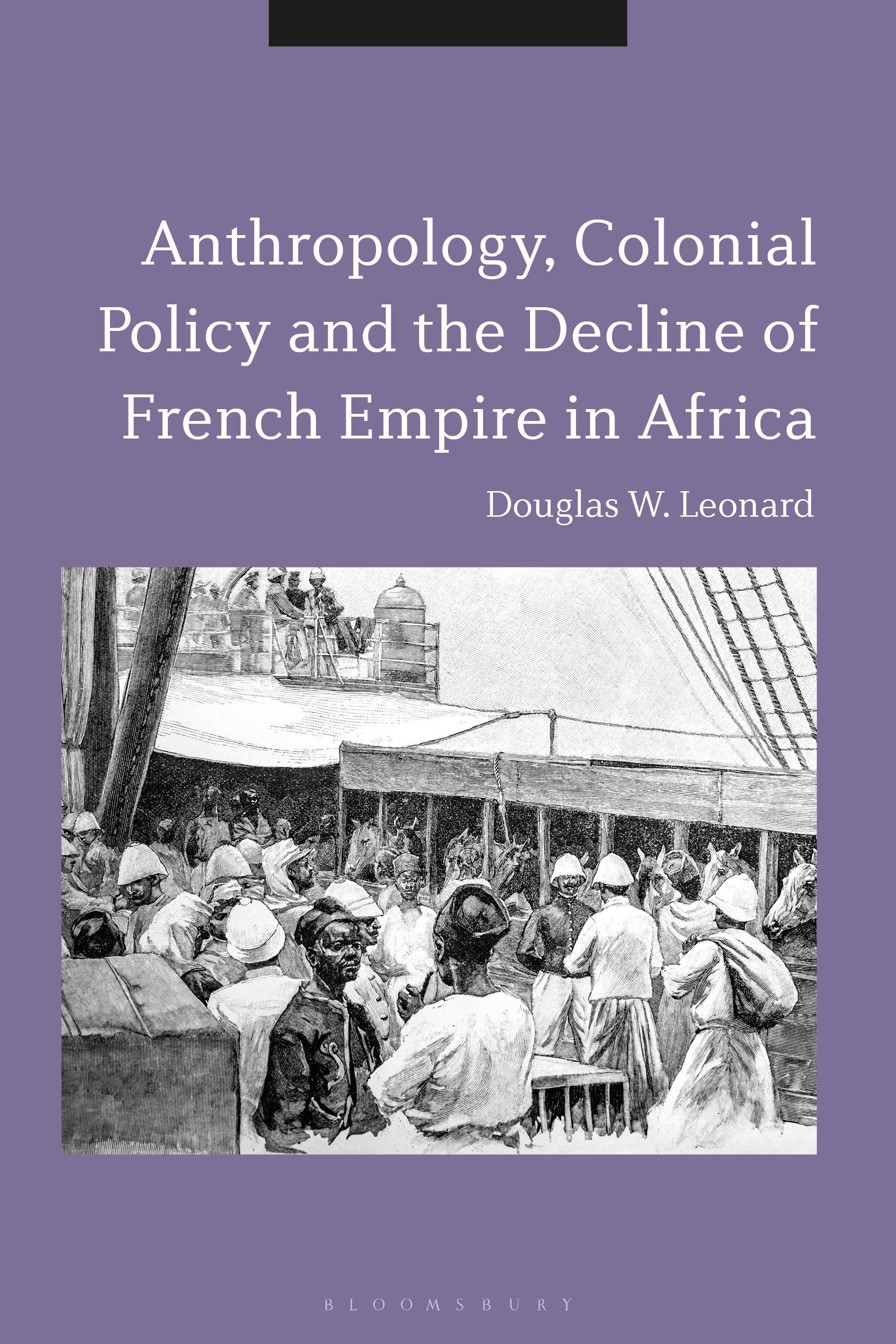
Conceived as both a vehicle to national prestige and as a civilizing mission, the second French colonial empire (1830-1962) challenged soldiers, scholars, and administrators to understand societies radically different from their own. The resultant networks of anthropological inquiry, however, did not have this effect. Rather, they opened pathways to political and intellectual independence framed in the language of social science, and in the process upended the colonial political system and reshaped the nature of human inquiry in France. While still unequal, French colonial rule in Africa revealed the durability and strength of non-European modes of thought.
In this influential new study, historian Douglas W. Leonard examines the political and intellectual repercussions of French efforts to understand and to dominate colonial Africa through the use of anthropology. From General Louis Faidherbe in the 1840s to politician Jacques Soustelle and sociologist Pierre Bourdieu in the 1950s, these French thinkers sowed the seeds of colonial destruction.
In this influential new study, historian Douglas W. Leonard examines the political and intellectual repercussions of French efforts to understand and to dominate colonial Africa through the use of anthropology. From General Louis Faidherbe in the 1840s to politician Jacques Soustelle and sociologist Pierre Bourdieu in the 1950s, these French thinkers sowed the seeds of colonial destruction.
Zahle einfach mit Karte, Klarna, Apple Pay oder Google Pay. Nicht zufrieden? Du hast immer ein 14-tägiges Widerrufsrecht. Lies mehr in unseren AGB. Hast du Fragen, schreib uns eine E-Mail an hello@memmo.org.
Memmo macht das Lernen einfacher – wo auch immer du bist. Bei uns findest du deine Kursbücher und smarte Lerntools an einem Ort: Zusammenfassungen, Quizzes, Podcasts und Lernkarten. Und Ted, dein Lernbuddy, beantwortet alles, was du wissen möchtest. Über 50.000 Studierende lernen bereits hier – gemacht, damit du schneller lernst und weniger Stress hast.