
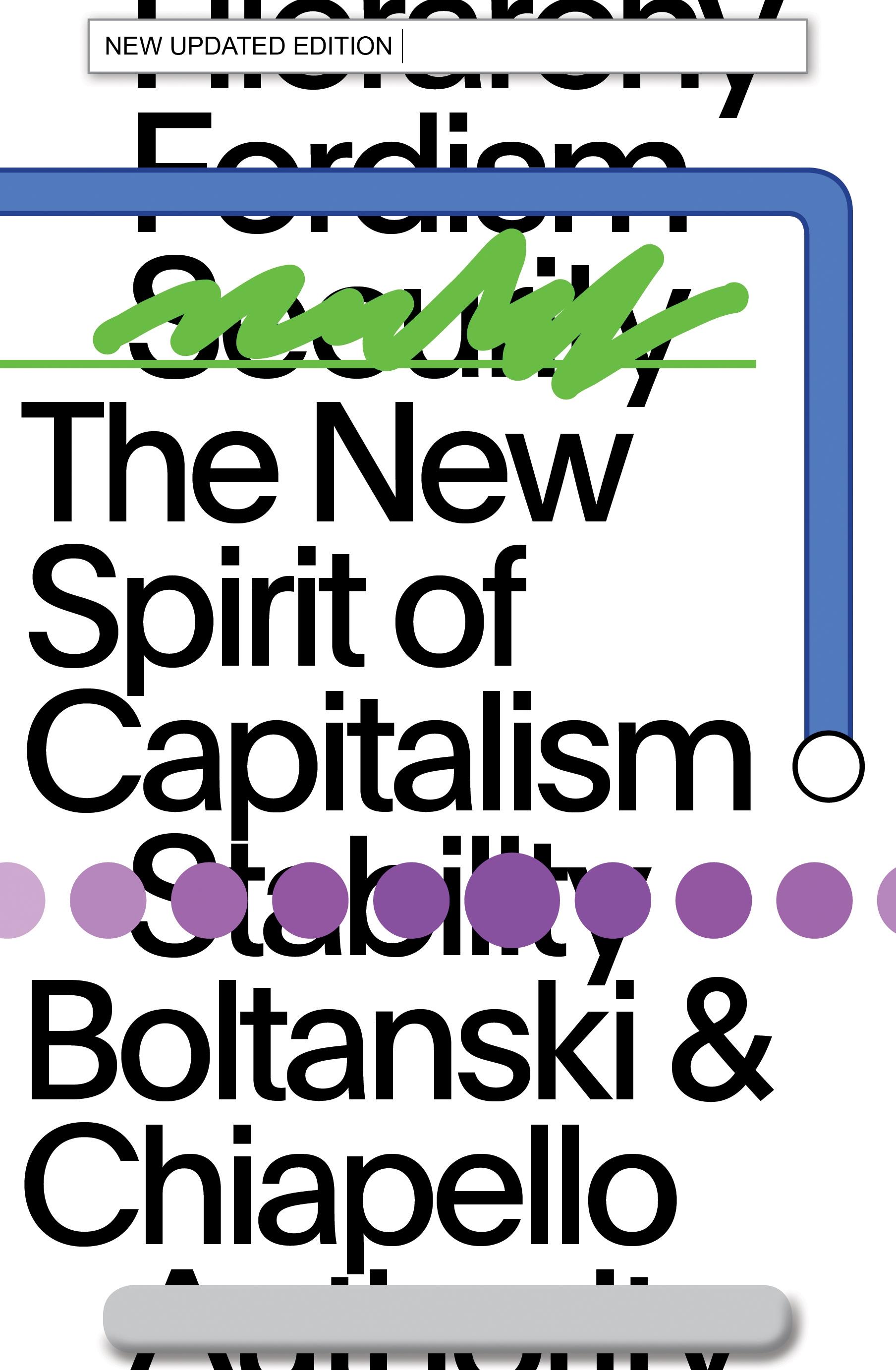
In this major work, sociologists Luc Boltanski and Eve Chiapello go to the heart of the changes in contemporary capitalism. Via an unprecedented analysis of the latest management texts that have formed the thinking of employers in their reorganization of business, the authors trace the contours of a new spirit of capitalism. They argue that from the middle of the 1970s onwards, capitalism abandoned the hierarchical Fordist work structure and developed a new network-based form of organization that was founded on employee initiative and autonomy in the workplace-a "freedom" that came at the cost of material and psychological security. The authors connect this new spirit with the children of the libertarian and romantic currents of the late 1960s (as epitomised by dressed-down, cool capitalists such as Bill Gates and "Ben and Jerry") arguing that they practice a more successful and subtle-form of exploitation. Now a classic work charting the sociological structure of neoliberalism, Boltanski and Chiapello show how the new spirit triumphed thanks to a remarkable recuperation of the left's critique of the alienation of everyday life that simultaneously undermined their "social critique."
In this new edition, the two authors reflect on the reception of the book and the debates it has stimulated.
In this new edition, the two authors reflect on the reception of the book and the debates it has stimulated.
Zahle einfach mit Karte, Klarna, Apple Pay oder Google Pay. Nicht zufrieden? Du hast immer ein 14-tägiges Widerrufsrecht. Lies mehr in unseren AGB. Hast du Fragen, schreib uns eine E-Mail an hello@memmo.org.
Memmo macht das Lernen einfacher – wo auch immer du bist. Bei uns findest du deine Kursbücher und smarte Lerntools an einem Ort: Zusammenfassungen, Quizzes, Podcasts und Lernkarten. Und Ted, dein Lernbuddy, beantwortet alles, was du wissen möchtest. Über 50.000 Studierende lernen bereits hier – gemacht, damit du schneller lernst und weniger Stress hast.
Das könnte dir auch gefallen
Buch kaufen0