
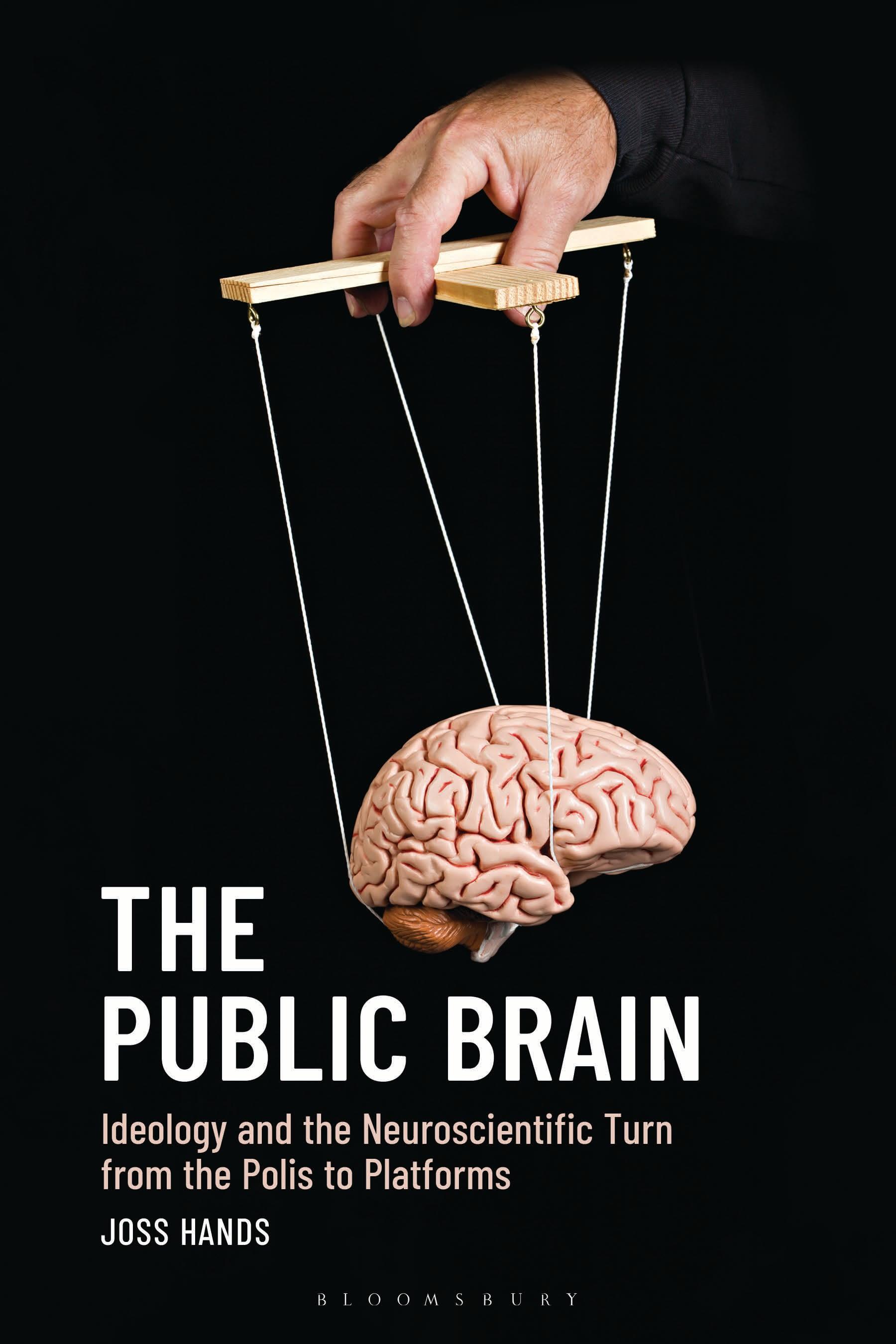
Joss Hands connects historical understandings of the brain with the histories of politics and democracy to address contemporary concerns about social media, democratic collapse, and technological control.
The Public Brain explores how politics and the public sphere have been understood in different societies and eras, in light of the prevailing conception of the brain in each period-particularly how the brain's capacities and characteristics have been used to justify the dominant political ideology of the time. Moving from the birth of democracy through the age of reason and revolution to the current social media era of “nudge” politics and new forms of political extremism, the book traces the triangulation of brain, public, and media. This includes an exploration of the role of social media platforms and their contribution to confusion and obfuscation in the present era. It proposes different formulations of the “public brain” across these periods, concluding with an argument for a democratic public brain.
The book examines what has largely been overlooked in this field, unpacking this history to offer valuable insights into contemporary debates surrounding issues such as neoliberalism, self-help and wellbeing as forms of ideology and control, the rise of extremist proto-fascist politics, and the phenomenon of post-truth. It unpacks arguments about affect and cognitive overload to make a positive case for the continuing power of reason and its emancipatory potential. In doing so, the book provides a valuable perspective on how we have come to view the brain as we do, and how that can often be a misuse, and suggests ways to cultivate an enriched, democratic concept of the public brain for positive social change.
The Public Brain explores how politics and the public sphere have been understood in different societies and eras, in light of the prevailing conception of the brain in each period-particularly how the brain's capacities and characteristics have been used to justify the dominant political ideology of the time. Moving from the birth of democracy through the age of reason and revolution to the current social media era of “nudge” politics and new forms of political extremism, the book traces the triangulation of brain, public, and media. This includes an exploration of the role of social media platforms and their contribution to confusion and obfuscation in the present era. It proposes different formulations of the “public brain” across these periods, concluding with an argument for a democratic public brain.
The book examines what has largely been overlooked in this field, unpacking this history to offer valuable insights into contemporary debates surrounding issues such as neoliberalism, self-help and wellbeing as forms of ideology and control, the rise of extremist proto-fascist politics, and the phenomenon of post-truth. It unpacks arguments about affect and cognitive overload to make a positive case for the continuing power of reason and its emancipatory potential. In doing so, the book provides a valuable perspective on how we have come to view the brain as we do, and how that can often be a misuse, and suggests ways to cultivate an enriched, democratic concept of the public brain for positive social change.
Zahle einfach mit Karte, Klarna, Apple Pay oder Google Pay. Nicht zufrieden? Du hast immer ein 14-tägiges Widerrufsrecht. Lies mehr in unseren AGB. Hast du Fragen, schreib uns eine E-Mail an hello@memmo.org.
Memmo macht das Lernen einfacher – wo auch immer du bist. Bei uns findest du deine Kursbücher und smarte Lerntools an einem Ort: Zusammenfassungen, Quizzes, Podcasts und Lernkarten. Und Ted, dein Lernbuddy, beantwortet alles, was du wissen möchtest. Über 50.000 Studierende lernen bereits hier – gemacht, damit du schneller lernst und weniger Stress hast.