
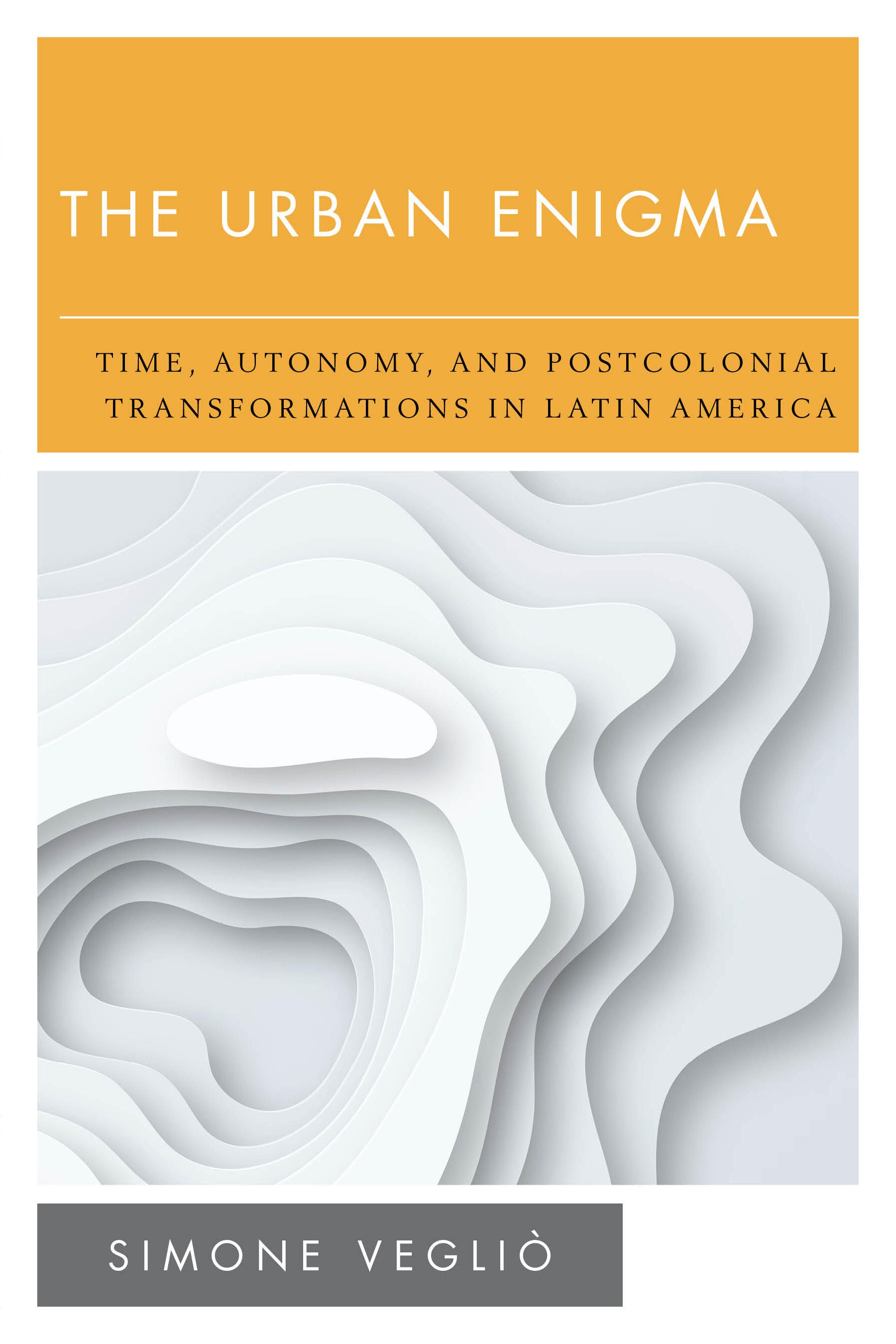
This book explores how Latin America indicated an autonomous form of postcolonialism that was marked by the production of multiple conceptualisations of time. The analysis particularly focuses on iconic urban transformations in capital cities such as Buenos Aires, Mexico City, and Brasilia, diachronically, and investigates each case’s specific representations of past, present, and future. By exploring these three episodes, the book shows how Latin America’s postcolonialism involved specific spatial dynamics that were inherently working over global socio-political geographies resulting from the legacy of a “long” colonial imagination. The text is divided into two parts.
The first part discusses some theoretical questions concerning the very conceptualization of Latin American space and the importance of exploring a genealogy of its urban geographies. The second part analyses the themes proposed through the discussion of the “materiality” of specific historical examples. The section delves into urban transformations in the aforementioned capital cities and focuses on how iconic material forms are able to encapsulate the main socio-political features defining each country’s post-colonial project.
The book aims to depict a historical geography capable of describing how controversial relations between power and knowledge had materialised in the shapes of the urban environment and had iconically contributed to the multifaceted production of the global area known as Latin America. Without any pretension to offer an all-embracing perspective, the book discusses the Latin America experience within the broader question concerning the genealogy of global socio-political geographies.
The first part discusses some theoretical questions concerning the very conceptualization of Latin American space and the importance of exploring a genealogy of its urban geographies. The second part analyses the themes proposed through the discussion of the “materiality” of specific historical examples. The section delves into urban transformations in the aforementioned capital cities and focuses on how iconic material forms are able to encapsulate the main socio-political features defining each country’s post-colonial project.
The book aims to depict a historical geography capable of describing how controversial relations between power and knowledge had materialised in the shapes of the urban environment and had iconically contributed to the multifaceted production of the global area known as Latin America. Without any pretension to offer an all-embracing perspective, the book discusses the Latin America experience within the broader question concerning the genealogy of global socio-political geographies.
Zahle einfach mit Karte, Klarna, Apple Pay oder Google Pay. Nicht zufrieden? Du hast immer ein 14-tägiges Widerrufsrecht. Lies mehr in unseren AGB. Hast du Fragen, schreib uns eine E-Mail an hello@memmo.org.
Memmo macht das Lernen einfacher – wo auch immer du bist. Bei uns findest du deine Kursbücher und smarte Lerntools an einem Ort: Zusammenfassungen, Quizzes, Podcasts und Lernkarten. Und Ted, dein Lernbuddy, beantwortet alles, was du wissen möchtest. Über 50.000 Studierende lernen bereits hier – gemacht, damit du schneller lernst und weniger Stress hast.