
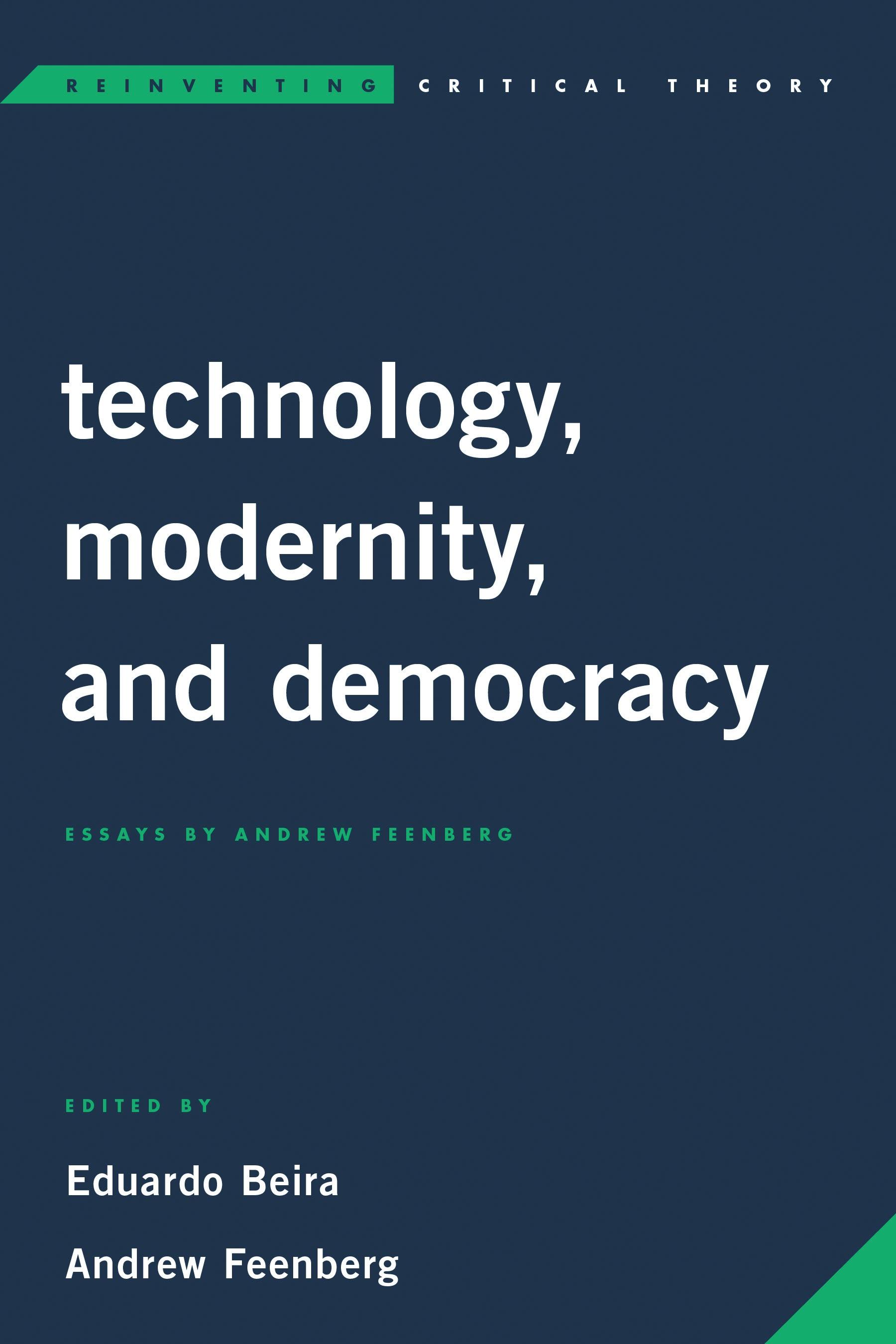
This important collection of essays by Andrew Feenberg presents his critical theory of technology, an innovative approach to philosophy and sociology of technology based on a synthesis of ideas drawn from STS and Frankfurt School Critical Theory.
According to critical theory of technology, technologies are neither neutral nor deterministic, but are encoded with specific socio-economic values and interests. Feenberg explores how they can be developed and adapted to more or less democratic values and institutions, and how their future is subject to social action, negotiation and reinterpretation. Technologies bring with them a particular "rationality," sets of rules and implied ways of behaving and thinking which, despite their profound influence on institutions, ideas and actions, can be transformed in a process of democratic rationalization. Feenberg argues that the emergence of human communication on the Internet and the environmental movement offer abundant examples of public interventions that have reshaped technologies originally designed for different purposes. This volume includes chapters on citizenship and critical theory of technology, philosophy of technology and modernity, and Heidegger and Marcuse, two of the most prominent philosophers of technology.
According to critical theory of technology, technologies are neither neutral nor deterministic, but are encoded with specific socio-economic values and interests. Feenberg explores how they can be developed and adapted to more or less democratic values and institutions, and how their future is subject to social action, negotiation and reinterpretation. Technologies bring with them a particular "rationality," sets of rules and implied ways of behaving and thinking which, despite their profound influence on institutions, ideas and actions, can be transformed in a process of democratic rationalization. Feenberg argues that the emergence of human communication on the Internet and the environmental movement offer abundant examples of public interventions that have reshaped technologies originally designed for different purposes. This volume includes chapters on citizenship and critical theory of technology, philosophy of technology and modernity, and Heidegger and Marcuse, two of the most prominent philosophers of technology.
Seiten: 192
Kategorie: Statsvetenskap & Politik
e-ISBN: 9781786607201
Versandgewicht: 1.2 kg
Versand in: 1-2 Tage
Zahle einfach mit Karte, Klarna, Apple Pay oder Google Pay. Nicht zufrieden? Du hast immer ein 14-tägiges Widerrufsrecht. Lies mehr in unseren AGB. Hast du Fragen, schreib uns eine E-Mail an hello@memmo.org.
Memmo macht das Lernen einfacher – wo auch immer du bist. Bei uns findest du deine Kursbücher und smarte Lerntools an einem Ort: Zusammenfassungen, Quizzes, Podcasts und Lernkarten. Und Ted, dein Lernbuddy, beantwortet alles, was du wissen möchtest. Über 50.000 Studierende lernen bereits hier – gemacht, damit du schneller lernst und weniger Stress hast.