
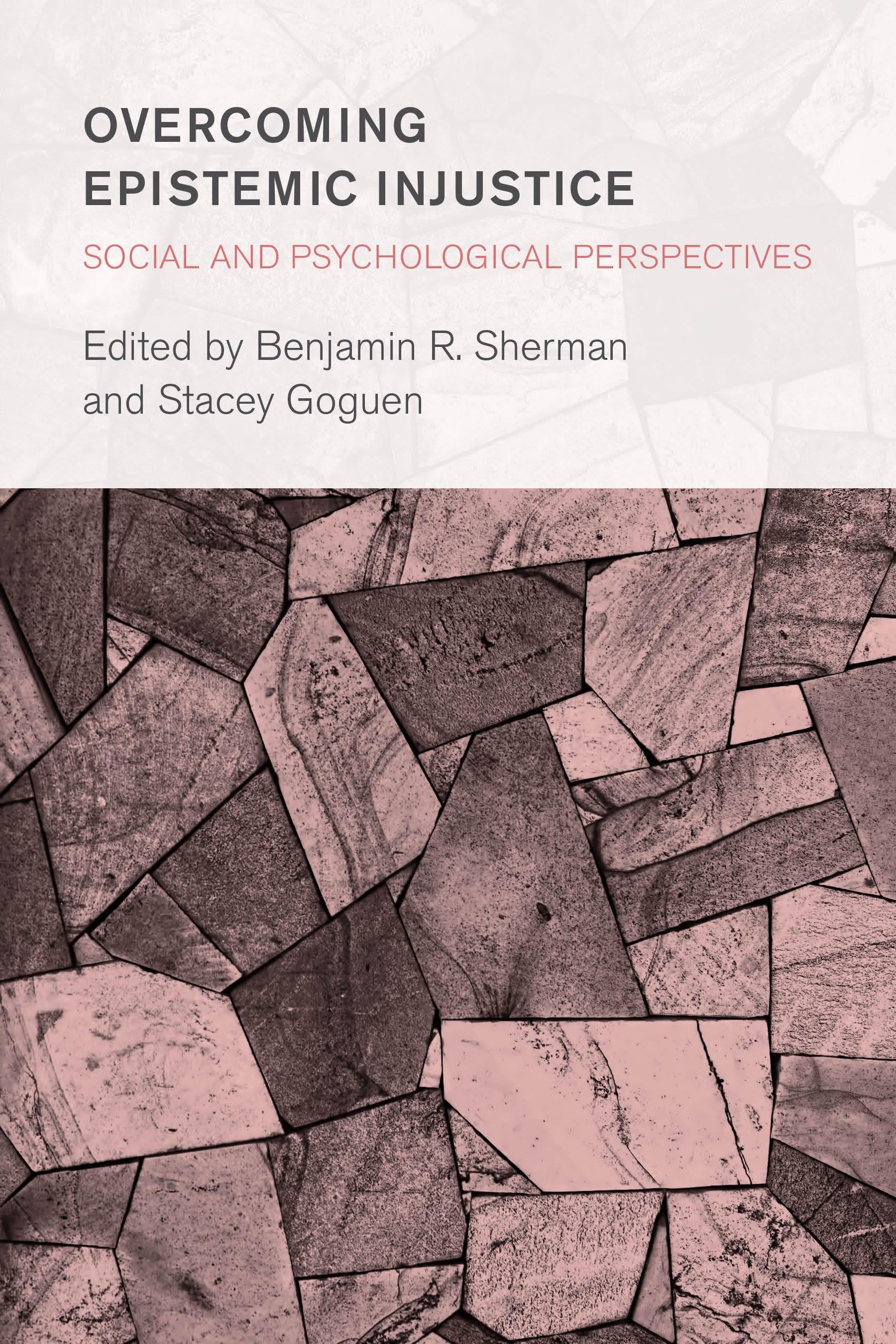
Prejudice influences people’s thoughts and behaviors in many ways; it can lead people to underestimate others’ credibility, to read anger or hysteria into their words, or to expect knowledge and truth to ‘sound’ a certain way—or to come from a certain type of person. These biases and mistakes can have a big effect on everything from an institutional culture to an individual’s self-understanding. These kinds of intellectual harms are known as epistemic injustice.
Most people are opposed to unfair prejudices (at least in principle), and no one wants to make avoidable mistakes. But research in the social sciences reveals a disturbing truth: Even people who intend to be fair-minded and unprejudiced are influenced by unconscious biases and stereotypes. We may sincerely want to be epistemically just, but we frequently fail, and simply thinking harder about it will not fix the problem.
The essays collected in this volume draw from cutting-edge social science research and detailed case studies, to suggest how we can better tackle our unconscious reactions and institutional biases, to help ameliorate epistemic injustice. The volume concludes with an afterward by Miranda Fricker, who catalyzed recent scholarship on epistemic injustice, reflecting on these new lines of research and potential future directions to explore.
Most people are opposed to unfair prejudices (at least in principle), and no one wants to make avoidable mistakes. But research in the social sciences reveals a disturbing truth: Even people who intend to be fair-minded and unprejudiced are influenced by unconscious biases and stereotypes. We may sincerely want to be epistemically just, but we frequently fail, and simply thinking harder about it will not fix the problem.
The essays collected in this volume draw from cutting-edge social science research and detailed case studies, to suggest how we can better tackle our unconscious reactions and institutional biases, to help ameliorate epistemic injustice. The volume concludes with an afterward by Miranda Fricker, who catalyzed recent scholarship on epistemic injustice, reflecting on these new lines of research and potential future directions to explore.
Zahle einfach mit Karte, Klarna, Apple Pay oder Google Pay. Nicht zufrieden? Du hast immer ein 14-tägiges Widerrufsrecht. Lies mehr in unseren AGB. Hast du Fragen, schreib uns eine E-Mail an hello@memmo.org.
Memmo macht das Lernen einfacher – wo auch immer du bist. Bei uns findest du deine Kursbücher und smarte Lerntools an einem Ort: Zusammenfassungen, Quizzes, Podcasts und Lernkarten. Und Ted, dein Lernbuddy, beantwortet alles, was du wissen möchtest. Über 50.000 Studierende lernen bereits hier – gemacht, damit du schneller lernst und weniger Stress hast.