
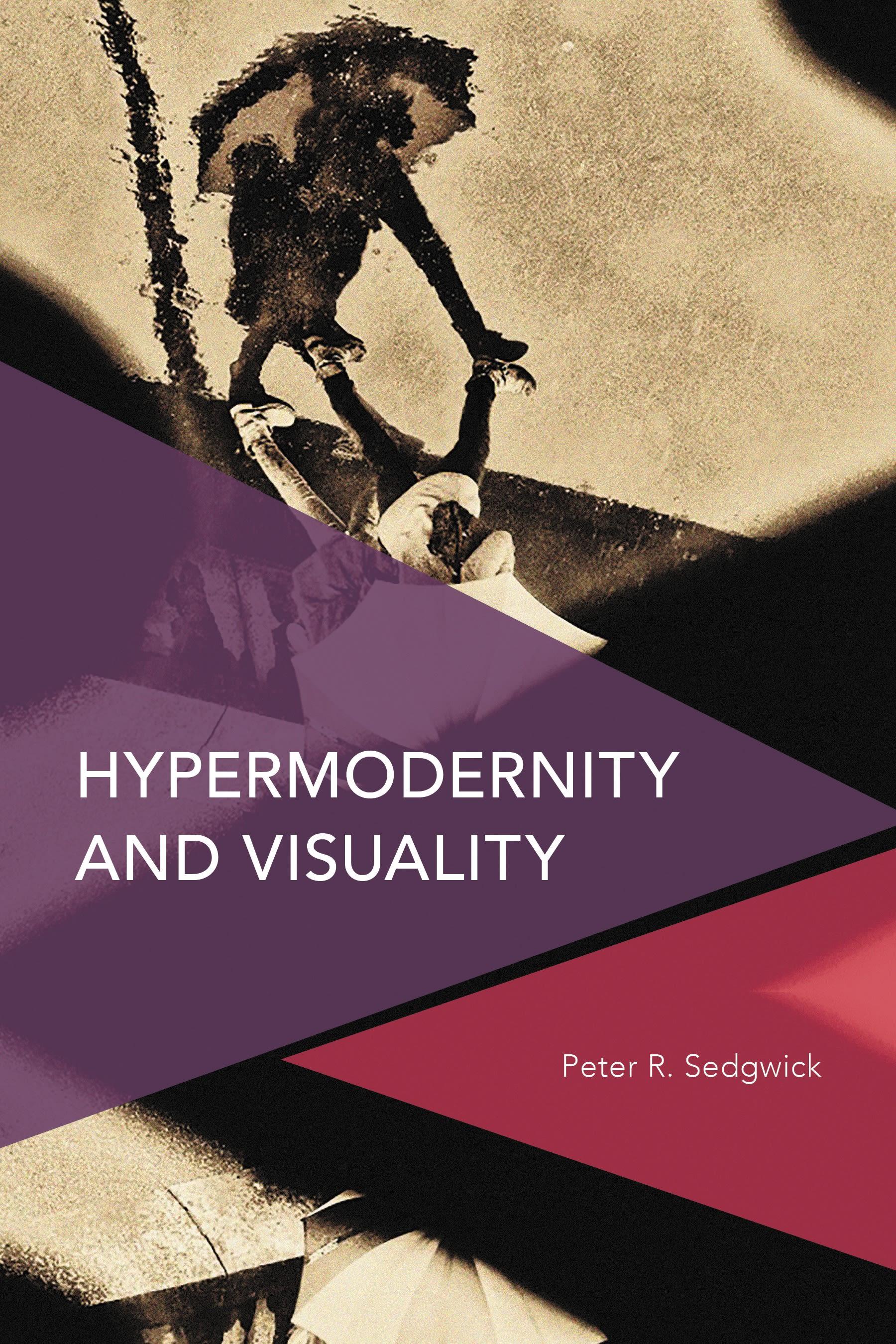
This book engages with the question of making sense of seeing in today’s technologically dominated world. It does so by exploring the notion of the ‘hypermodern’, a term which is used to capture the drive in contemporary culture to achieve ever greater speed and efficiency. The volume draws principally on the thought of Paul Virilio and Friedrich Nietzsche. The text’s key argument is that destabilizing tendencies, which become increasingly evident in hypermodern culture, spring from its having a dual character. This duality turns on hypermodernity’s uncomfortable, unstable and possibly unsustainable relation to its own past. The volume engages with this dual character in a unique way. Its discussions are prefaced by poems and photographic images which together frame and permeate the text’s arguments and analyses. Part One offers linked engagements with Virilio’s articulation of the hypermodernized cultural-visual environment, Nietzsche’s accounts of history, power and archaic visuality, and briefer discussions of various other writers. Part Two presents a creative elaboration of these engagements through a combination of poetry, image and aphorism. Through this combination the digital image, a quintessentially hypermodern form of representation, is turned against itself to allow for reflection on the ethics and politics of seeing today. The volume concludes with an open-ended dialogue on visual culture, the archaic and the hypermodern.
Zahle einfach mit Karte, Klarna, Apple Pay oder Google Pay. Nicht zufrieden? Du hast immer ein 14-tägiges Widerrufsrecht. Lies mehr in unseren AGB. Hast du Fragen, schreib uns eine E-Mail an hello@memmo.org.
Memmo macht das Lernen einfacher – wo auch immer du bist. Bei uns findest du deine Kursbücher und smarte Lerntools an einem Ort: Zusammenfassungen, Quizzes, Podcasts und Lernkarten. Und Ted, dein Lernbuddy, beantwortet alles, was du wissen möchtest. Über 50.000 Studierende lernen bereits hier – gemacht, damit du schneller lernst und weniger Stress hast.