
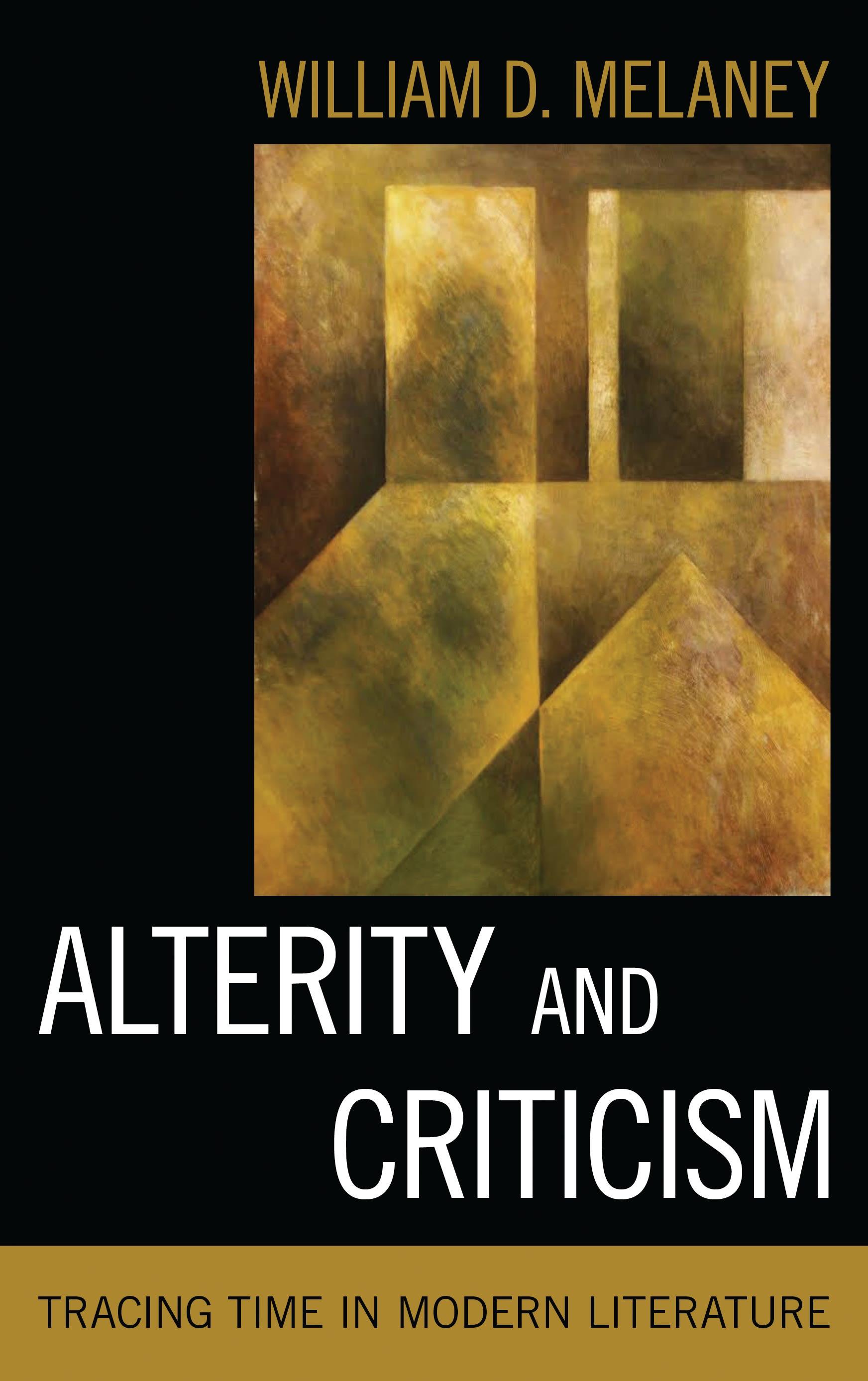
How does the theme of the other–-as person, experience or alternative conceptual scheme—allow us to reassess the role of the self in literary texts? This book employs phenomenology and semiotics to argue that modern literature is strongly concerned with the role of time in the construction of the self.
Alterity and Criticism: Retracing Time in Modern Literature argues that the role of time in canonical literature underlies the experience of alterity and requires a new hermeneutic to clarify how the self emerges in literary texts. Romantic poetry from Goethe to Shelley and the modern prose tradition from Flaubert to Butor constitute different traditions but also indicate, on a textual basis, how alterity performs a crucial role in reading, thus encouraging us to interpret literary texts in terms of the related concerns of self, other and time. The author examines the phenomenology of Emmanuel Lévinas and Wolfgang Iser, as well as the cultural semiotics of Julia Kristeva, to argue that modern literature provides the occasion for a new understanding of the self in time and, in this way, addresses some of the pressing literary problems of our own period.
Alterity and Criticism: Retracing Time in Modern Literature argues that the role of time in canonical literature underlies the experience of alterity and requires a new hermeneutic to clarify how the self emerges in literary texts. Romantic poetry from Goethe to Shelley and the modern prose tradition from Flaubert to Butor constitute different traditions but also indicate, on a textual basis, how alterity performs a crucial role in reading, thus encouraging us to interpret literary texts in terms of the related concerns of self, other and time. The author examines the phenomenology of Emmanuel Lévinas and Wolfgang Iser, as well as the cultural semiotics of Julia Kristeva, to argue that modern literature provides the occasion for a new understanding of the self in time and, in this way, addresses some of the pressing literary problems of our own period.
Zahle einfach mit Karte, Klarna, Apple Pay oder Google Pay. Nicht zufrieden? Du hast immer ein 14-tägiges Widerrufsrecht. Lies mehr in unseren AGB. Hast du Fragen, schreib uns eine E-Mail an hello@memmo.org.
Memmo macht das Lernen einfacher – wo auch immer du bist. Bei uns findest du deine Kursbücher und smarte Lerntools an einem Ort: Zusammenfassungen, Quizzes, Podcasts und Lernkarten. Und Ted, dein Lernbuddy, beantwortet alles, was du wissen möchtest. Über 50.000 Studierende lernen bereits hier – gemacht, damit du schneller lernst und weniger Stress hast.