
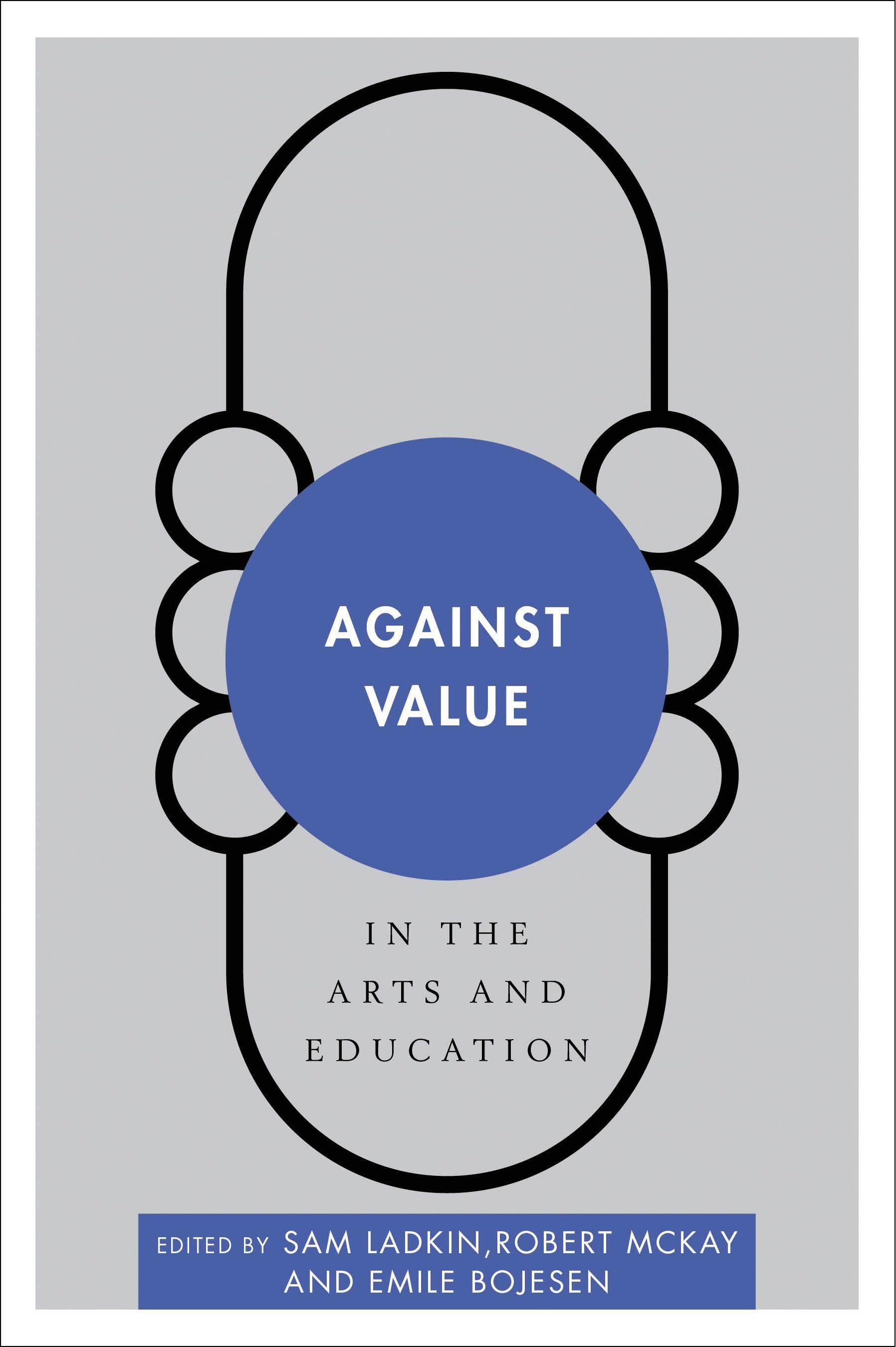
Against Value in the Arts and Education proposes that it is often the staunchest defenders of art who do it the most harm, by suppressing or mollifying its dissenting voice, by neutralizing its painful truths, and by instrumentalizing its ambivalence. The result is that rather than expanding the autonomy of thought and feeling of the artist and the audience, art’s defenders make art self-satisfied, or otherwise an echo-chamber for the limited and limiting self-description of people’s lives lived in an “audit culture”, a culture pervaded by the direct and indirect excrescence of practices of accountability.
This book diagnoses the counter-intuitive effects of the rhetoric of value. It posits that the auditing of values pervades the fabric of people’s work-lives, their education, and increasingly their everyday experience. The book uncovers figures of resentment, disenchantment and alienation fostered by the dogma of value. It argues instead that value judgments can behave insidiously, and incorporate aesthetic, ethical or ideological values fundamentally opposed to the “value” they purportedly name and describe. The collection contains contributions from leading scholars in the UK and US with contributions from anthropology, the history of art, literature, education, musicology, political science, and philosophy.
This book diagnoses the counter-intuitive effects of the rhetoric of value. It posits that the auditing of values pervades the fabric of people’s work-lives, their education, and increasingly their everyday experience. The book uncovers figures of resentment, disenchantment and alienation fostered by the dogma of value. It argues instead that value judgments can behave insidiously, and incorporate aesthetic, ethical or ideological values fundamentally opposed to the “value” they purportedly name and describe. The collection contains contributions from leading scholars in the UK and US with contributions from anthropology, the history of art, literature, education, musicology, political science, and philosophy.
Zahle einfach mit Karte, Klarna, Apple Pay oder Google Pay. Nicht zufrieden? Du hast immer ein 14-tägiges Widerrufsrecht. Lies mehr in unseren AGB. Hast du Fragen, schreib uns eine E-Mail an hello@memmo.org.
Memmo macht das Lernen einfacher – wo auch immer du bist. Bei uns findest du deine Kursbücher und smarte Lerntools an einem Ort: Zusammenfassungen, Quizzes, Podcasts und Lernkarten. Und Ted, dein Lernbuddy, beantwortet alles, was du wissen möchtest. Über 50.000 Studierende lernen bereits hier – gemacht, damit du schneller lernst und weniger Stress hast.