
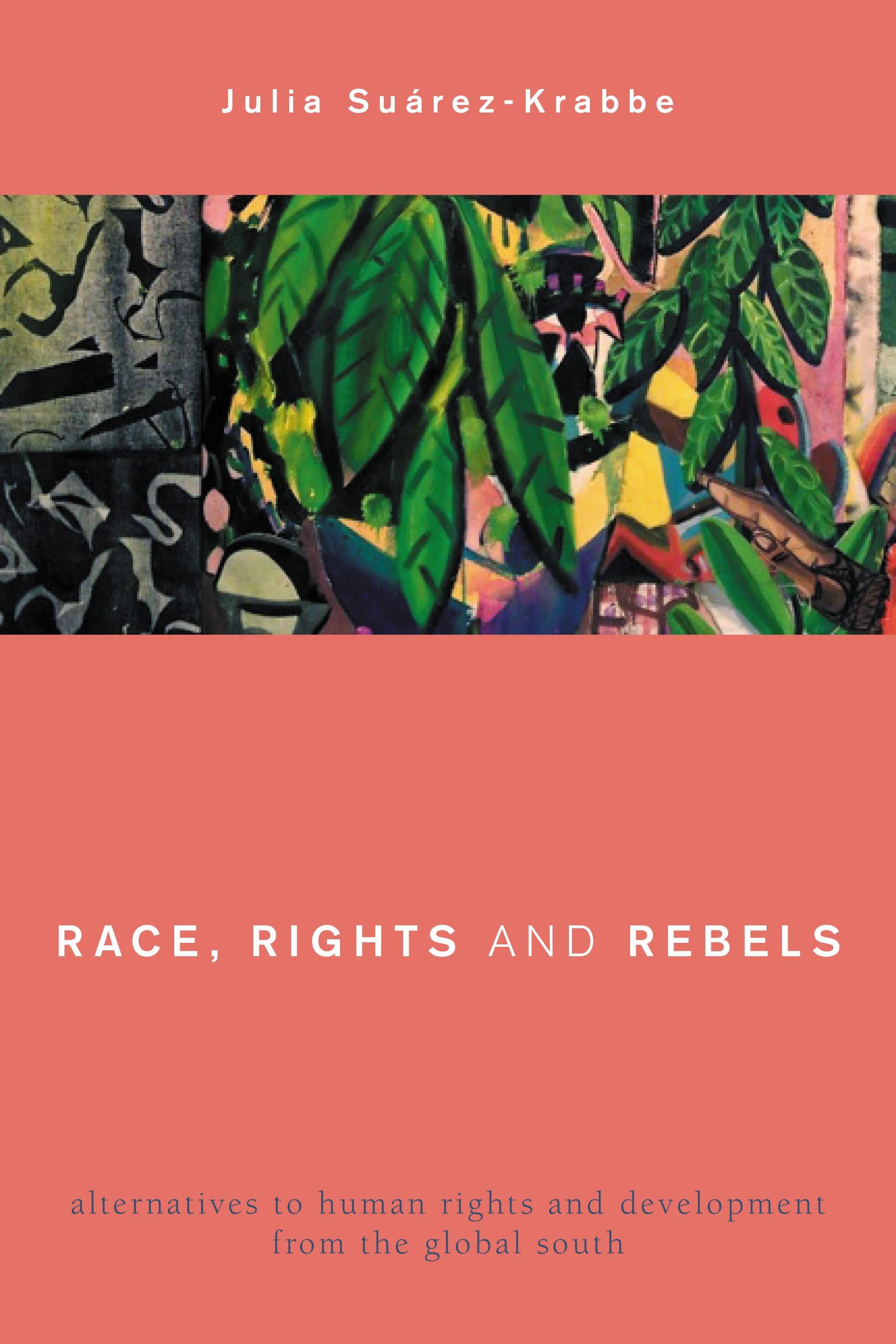
Human rights and development cannot be understood separately. They are historically connected by the idea of race, and have evolved concomitantly with the latter. As the tools of race, human rights and development have been forged in the effort to legitimize and maintain coloniality.
While rights and development can be used as tools to achieve protection, specific political goals, or access in the dominant society, they limit radical social change because they are framed within a specific dominant ontology, and sustain a particular political horizon. This book provides an original analysis of the evolution of the overlapping histories of human rights and development through the prism of coloniality, and offers an important contribution to the search for alternatives to these through the lens of indigenous and other southern theories and epistemologies. In this effort, Julia Suárez-Krabbe brings new perspectives to discussions pertaining to the decolonial perspective, race, knowledge, pluriversality, mestizaje and identity while elaborating on original philosophical concepts that can ground alternatives to human rights and development.
While rights and development can be used as tools to achieve protection, specific political goals, or access in the dominant society, they limit radical social change because they are framed within a specific dominant ontology, and sustain a particular political horizon. This book provides an original analysis of the evolution of the overlapping histories of human rights and development through the prism of coloniality, and offers an important contribution to the search for alternatives to these through the lens of indigenous and other southern theories and epistemologies. In this effort, Julia Suárez-Krabbe brings new perspectives to discussions pertaining to the decolonial perspective, race, knowledge, pluriversality, mestizaje and identity while elaborating on original philosophical concepts that can ground alternatives to human rights and development.
Seiten: 224
Kategorie: Kultur-, Genus- & Postkoloniala studier
e-ISBN: 9781783484621
Versandgewicht: 1.2 kg
Versand in: 1-2 Tage
Zahle einfach mit Karte, Klarna, Apple Pay oder Google Pay. Nicht zufrieden? Du hast immer ein 14-tägiges Widerrufsrecht. Lies mehr in unseren AGB. Hast du Fragen, schreib uns eine E-Mail an hello@memmo.org.
Memmo macht das Lernen einfacher – wo auch immer du bist. Bei uns findest du deine Kursbücher und smarte Lerntools an einem Ort: Zusammenfassungen, Quizzes, Podcasts und Lernkarten. Und Ted, dein Lernbuddy, beantwortet alles, was du wissen möchtest. Über 50.000 Studierende lernen bereits hier – gemacht, damit du schneller lernst und weniger Stress hast.