
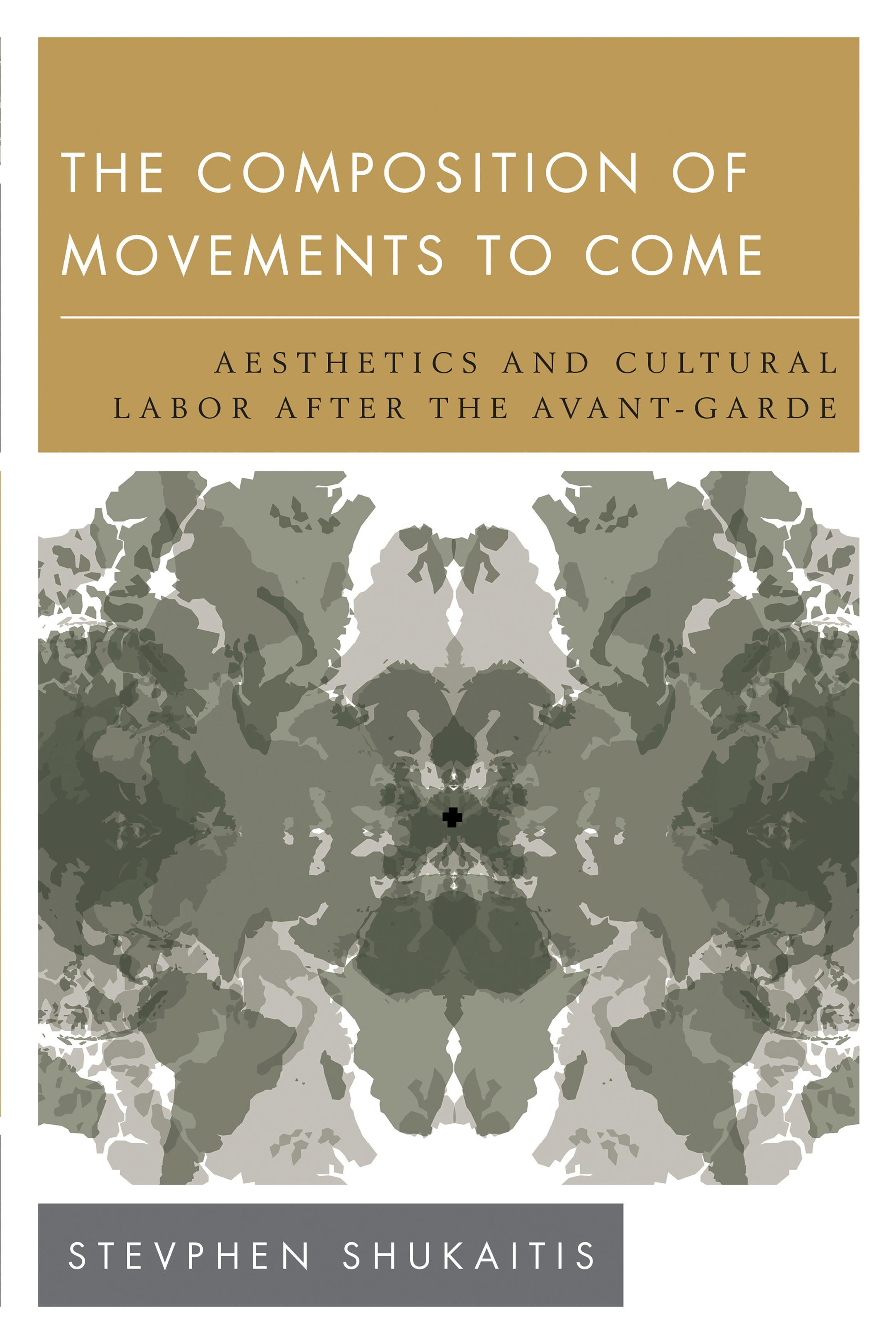
How does the avant-garde create spaces in everyday life that subvert regimes of economic and political control? How do art, aesthetics and activism inform one another? And how do strategic spaces of creativity become the basis for new forms of production and governance?
The Composition of Movements to Come reconsiders the history and the practices of the avant-garde, from the Situationists to the Art Strike, revolutionary Constructivism to Laibach and Neue Slowenische Kunst, through an autonomist Marxist framework. Moving the framework beyond an overly narrow class analysis, the book explores broader questions of the changing nature of cultural labor and forms of resistance around this labor. It examines a doubly articulated process of refusal: the refusal of separating art from daily life and the re-fusing of these antagonistic energies by capitalist production and governance. This relationship opens up a new terrain for strategic thought in relation to everyday politics, where the history of the avant-garde is no longer separated from broader questions of political economy or movement, but becomes a point around which to reorient these considerations.
The Composition of Movements to Come reconsiders the history and the practices of the avant-garde, from the Situationists to the Art Strike, revolutionary Constructivism to Laibach and Neue Slowenische Kunst, through an autonomist Marxist framework. Moving the framework beyond an overly narrow class analysis, the book explores broader questions of the changing nature of cultural labor and forms of resistance around this labor. It examines a doubly articulated process of refusal: the refusal of separating art from daily life and the re-fusing of these antagonistic energies by capitalist production and governance. This relationship opens up a new terrain for strategic thought in relation to everyday politics, where the history of the avant-garde is no longer separated from broader questions of political economy or movement, but becomes a point around which to reorient these considerations.
Zahle einfach mit Karte, Klarna, Apple Pay oder Google Pay. Nicht zufrieden? Du hast immer ein 14-tägiges Widerrufsrecht. Lies mehr in unseren AGB. Hast du Fragen, schreib uns eine E-Mail an hello@memmo.org.
Memmo macht das Lernen einfacher – wo auch immer du bist. Bei uns findest du deine Kursbücher und smarte Lerntools an einem Ort: Zusammenfassungen, Quizzes, Podcasts und Lernkarten. Und Ted, dein Lernbuddy, beantwortet alles, was du wissen möchtest. Über 50.000 Studierende lernen bereits hier – gemacht, damit du schneller lernst und weniger Stress hast.