
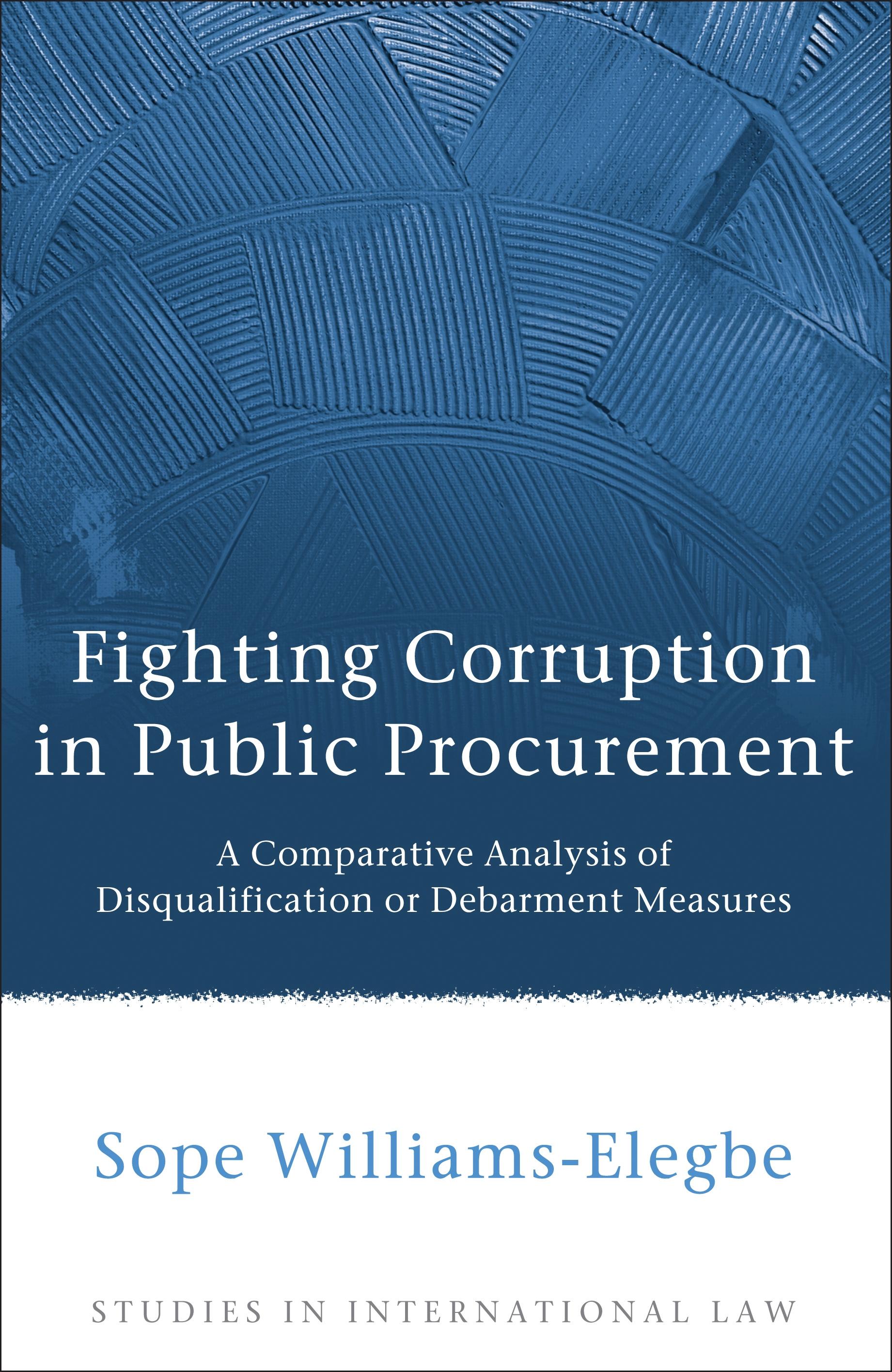
Anti-corruption measures have firmly taken centre stage in the development agenda of international organisations as well as in developed and developing countries. One area in which corruption manifests itself is in public procurement and, as a result, States have adopted various measures to prevent and curb corruption in public procurement. One such mechanism for dealing with procurement corruption is to debar or disqualify corrupt suppliers from bidding for or otherwise obtaining government contracts.
This book examines the issues and challenges raised by the debarment or disqualification of corrupt suppliers from public contracts. Implementing a disqualification mechanism in public procurement raises serious practical and conceptual difficulties, which are not always considered by legislative provisions on disqualification. Some of the problems that may arise from the use of disqualifications include determining whether a conviction for corruption ought to be a pre-requisite to disqualification, bearing in mind that corruption thrives in secret, resulting in a dearth of convictions. Another issue is determining how to balance the tension between granting adequate procedural safeguards to a supplier in disqualification proceedings and not delaying the procurement process. A further issue is determining the scope of the disqualification in the sense of determining whether it applies to firms, natural persons, subcontractors, subsidiaries or other persons related to the corrupt firm and whether disqualification will lead to the termination of existing contracts.
The book compares and contrasts the legal, practical and institutional approaches to the implementation of the disqualification mechanism in the European Union, the United Kingdom, the United States, the Republic of South Africa and the World Bank.
This book examines the issues and challenges raised by the debarment or disqualification of corrupt suppliers from public contracts. Implementing a disqualification mechanism in public procurement raises serious practical and conceptual difficulties, which are not always considered by legislative provisions on disqualification. Some of the problems that may arise from the use of disqualifications include determining whether a conviction for corruption ought to be a pre-requisite to disqualification, bearing in mind that corruption thrives in secret, resulting in a dearth of convictions. Another issue is determining how to balance the tension between granting adequate procedural safeguards to a supplier in disqualification proceedings and not delaying the procurement process. A further issue is determining the scope of the disqualification in the sense of determining whether it applies to firms, natural persons, subcontractors, subsidiaries or other persons related to the corrupt firm and whether disqualification will lead to the termination of existing contracts.
The book compares and contrasts the legal, practical and institutional approaches to the implementation of the disqualification mechanism in the European Union, the United Kingdom, the United States, the Republic of South Africa and the World Bank.
Zahle einfach mit Karte, Klarna, Apple Pay oder Google Pay. Nicht zufrieden? Du hast immer ein 14-tägiges Widerrufsrecht. Lies mehr in unseren AGB. Hast du Fragen, schreib uns eine E-Mail an hello@memmo.org.
Memmo macht das Lernen einfacher – wo auch immer du bist. Bei uns findest du deine Kursbücher und smarte Lerntools an einem Ort: Zusammenfassungen, Quizzes, Podcasts und Lernkarten. Und Ted, dein Lernbuddy, beantwortet alles, was du wissen möchtest. Über 50.000 Studierende lernen bereits hier – gemacht, damit du schneller lernst und weniger Stress hast.