
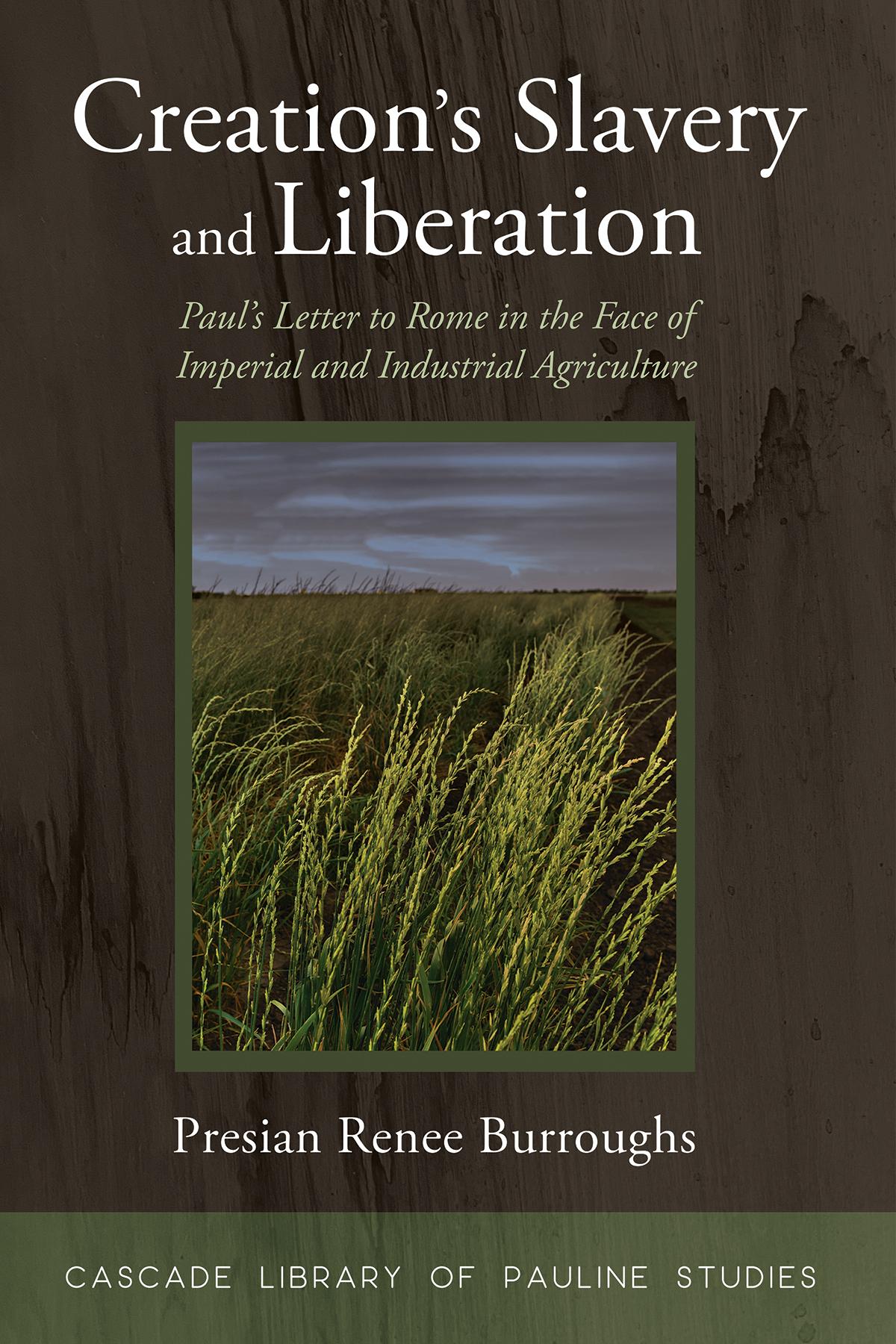
What did the apostle Paul mean when he portrayed the creation as subjected to frustration and enslaved to destruction? What forms of frustration and destruction might he have seen throughout the Roman Empire? And how would he describe creation's condition today?
Creation's Slavery and Liberation addresses these questions by tracing the story of creation as it appears in Paul's own Scriptures (the Tanakh), Roman imperial propaganda, Paul's letter to Rome, and U.S. industrial agriculture. This story reveals God to be the Creator who makes right (justifies) and makes alive through Jesus Christ and the Spirit. Because God liberates, justifies, and vivifies the entire creation and since--according to Paul--creation's liberation is linked to humanity's glorification, Paul expects Christians to pursue justice and nourish life. Burroughs encapsulates key justice-oriented and life-supporting practices in seven eco-ethical principles. To make these principles come alive, she describes the ways in which Roman imperial and American industrial regimes have caused injustice and destruction and, instead, she proposes more regenerative approaches to growing, enjoying, and sharing our daily bread.
Zahle einfach mit Karte, Klarna, Apple Pay oder Google Pay. Nicht zufrieden? Du hast immer ein 14-tägiges Widerrufsrecht. Lies mehr in unseren AGB. Hast du Fragen, schreib uns eine E-Mail an hello@memmo.org.
Memmo macht das Lernen einfacher – wo auch immer du bist. Bei uns findest du deine Kursbücher und smarte Lerntools an einem Ort: Zusammenfassungen, Quizzes, Podcasts und Lernkarten. Und Ted, dein Lernbuddy, beantwortet alles, was du wissen möchtest. Über 50.000 Studierende lernen bereits hier – gemacht, damit du schneller lernst und weniger Stress hast.
Das könnte dir auch gefallen
Buch kaufen0