
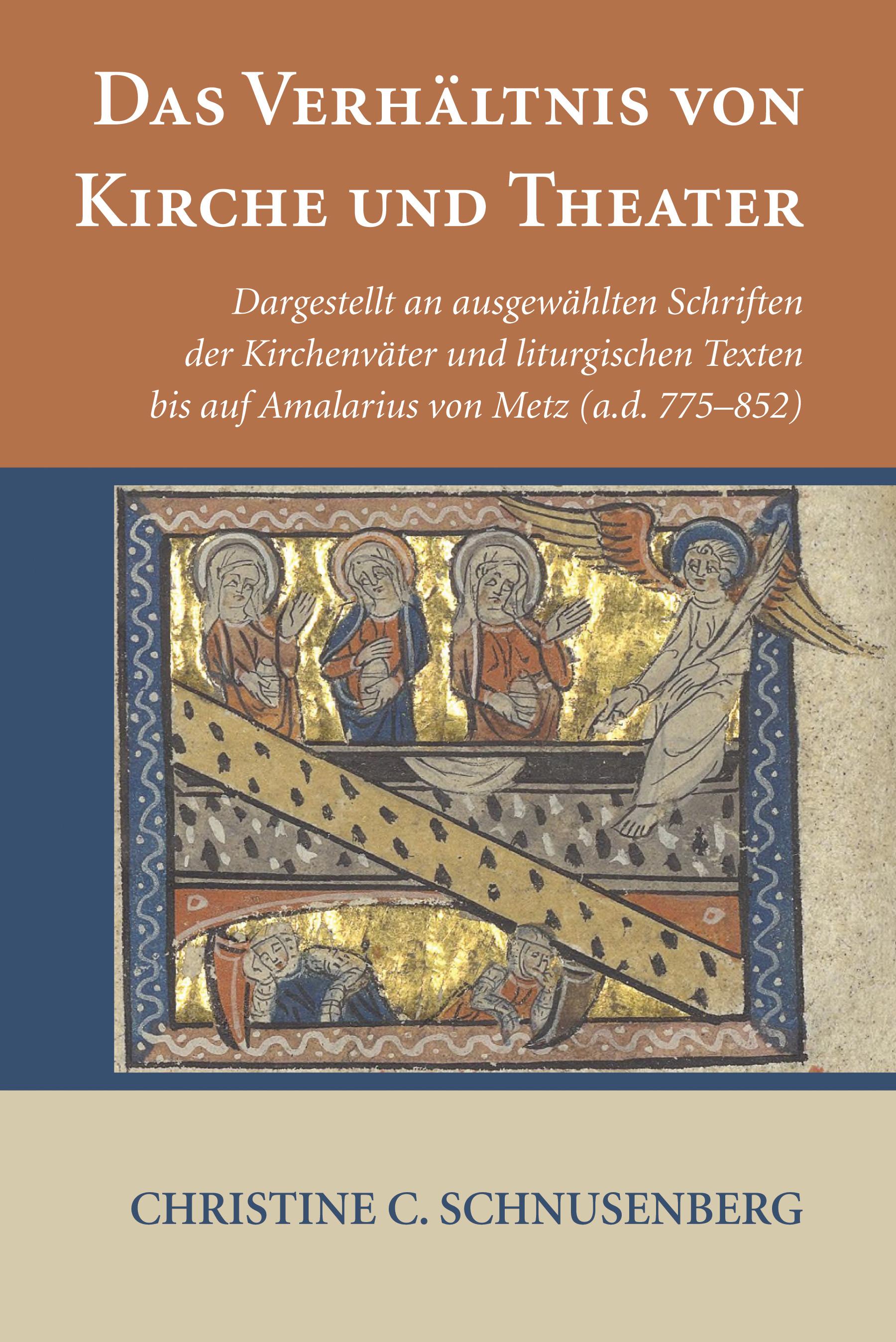
This work has grown out of the question regarding the negative relationship of the Church Fathers toward the Roman theatre and the apparent subsequent theatre vacuum of over 400 years (ca. 530 AD to 930 AD). This is considered to be the time which lies between the end of the Roman theatre and the appearance of the quem quaeritis tropes. This work moves between these two poles: on the one hand, between the polemics against the pagan Roman theatre which the Church Fathers described as a theatrum daemonicum and on the other hand, the appearances of dramatic-liturgical configurations in the Christian Church. This work attempts to connect these two opposite poles instead of separating them. This study begins with an examination of documents dealing with the patristic polemic. This is followed by an examination in chronological sequence of the development of the liturgical dramatic manifestations from Jerusalem to Amalarius of Metz. It also examines the allegorical method connected with this development. In conclusion the argument is maintained that aside the theatrum daemonicum, a theatrum infictitium et sapirituale is beginning to develop.
Zahle einfach mit Karte, Klarna, Apple Pay oder Google Pay. Nicht zufrieden? Du hast immer ein 14-tägiges Widerrufsrecht. Lies mehr in unseren AGB. Hast du Fragen, schreib uns eine E-Mail an hello@memmo.org.
Memmo macht das Lernen einfacher – wo auch immer du bist. Bei uns findest du deine Kursbücher und smarte Lerntools an einem Ort: Zusammenfassungen, Quizzes, Podcasts und Lernkarten. Und Ted, dein Lernbuddy, beantwortet alles, was du wissen möchtest. Über 50.000 Studierende lernen bereits hier – gemacht, damit du schneller lernst und weniger Stress hast.
Das könnte dir auch gefallen
Buch kaufen0