
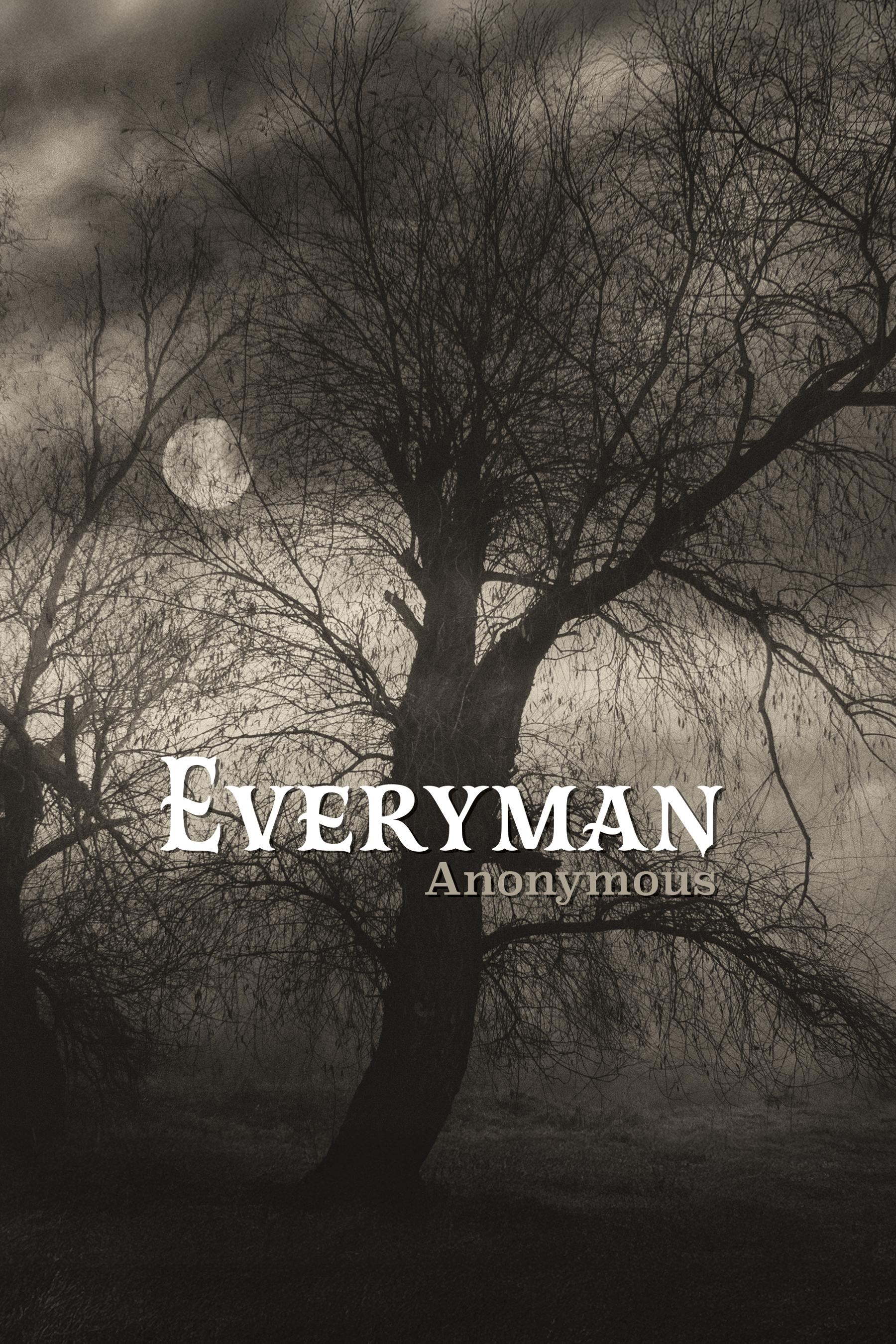
Western drama, having all but disappeared during the Dark Ages, reemerged spontaneously in the liturgy and life of the medieval church during the Tudor period. These 15th and 16th century morality plays were allegorical dramas in which the protagonists are met with the personifications of personal attributes and tasked with choosing either a good and godly life or evil. Everyman, which was written anonymously in the 15th century, is the most famous example of these.
The play tells the story of a wealthy and successful man who is suddenly confronted by Death. Realizing that he must face final judgment on the strength of his good deeds, Everyman seeks the help of his friends and family, but they all abandon him in his time of need.
During Everyman's pilgrimage to God to seek redemption, he meets many characters, including Fellowship, Good Deeds, and Knowledge. Everyman asks them all to join him in his journey so that he may improve his reckoning before God, but in the end, it is only Good Deeds that stays with him and helps Everyman find salvation and eternal life.
This powerful allegory explores the themes of death, sin, and the human condition and is considered one of the greatest works of medieval English literature, It has been widely studied and performed for centuries.
The play tells the story of a wealthy and successful man who is suddenly confronted by Death. Realizing that he must face final judgment on the strength of his good deeds, Everyman seeks the help of his friends and family, but they all abandon him in his time of need.
During Everyman's pilgrimage to God to seek redemption, he meets many characters, including Fellowship, Good Deeds, and Knowledge. Everyman asks them all to join him in his journey so that he may improve his reckoning before God, but in the end, it is only Good Deeds that stays with him and helps Everyman find salvation and eternal life.
This powerful allegory explores the themes of death, sin, and the human condition and is considered one of the greatest works of medieval English literature, It has been widely studied and performed for centuries.
Zahle einfach mit Karte, Klarna, Apple Pay oder Google Pay. Nicht zufrieden? Du hast immer ein 14-tägiges Widerrufsrecht. Lies mehr in unseren AGB. Hast du Fragen, schreib uns eine E-Mail an hello@memmo.org.
Memmo macht das Lernen einfacher – wo auch immer du bist. Bei uns findest du deine Kursbücher und smarte Lerntools an einem Ort: Zusammenfassungen, Quizzes, Podcasts und Lernkarten. Und Ted, dein Lernbuddy, beantwortet alles, was du wissen möchtest. Über 50.000 Studierende lernen bereits hier – gemacht, damit du schneller lernst und weniger Stress hast.
Das könnte dir auch gefallen
Buch kaufen0