
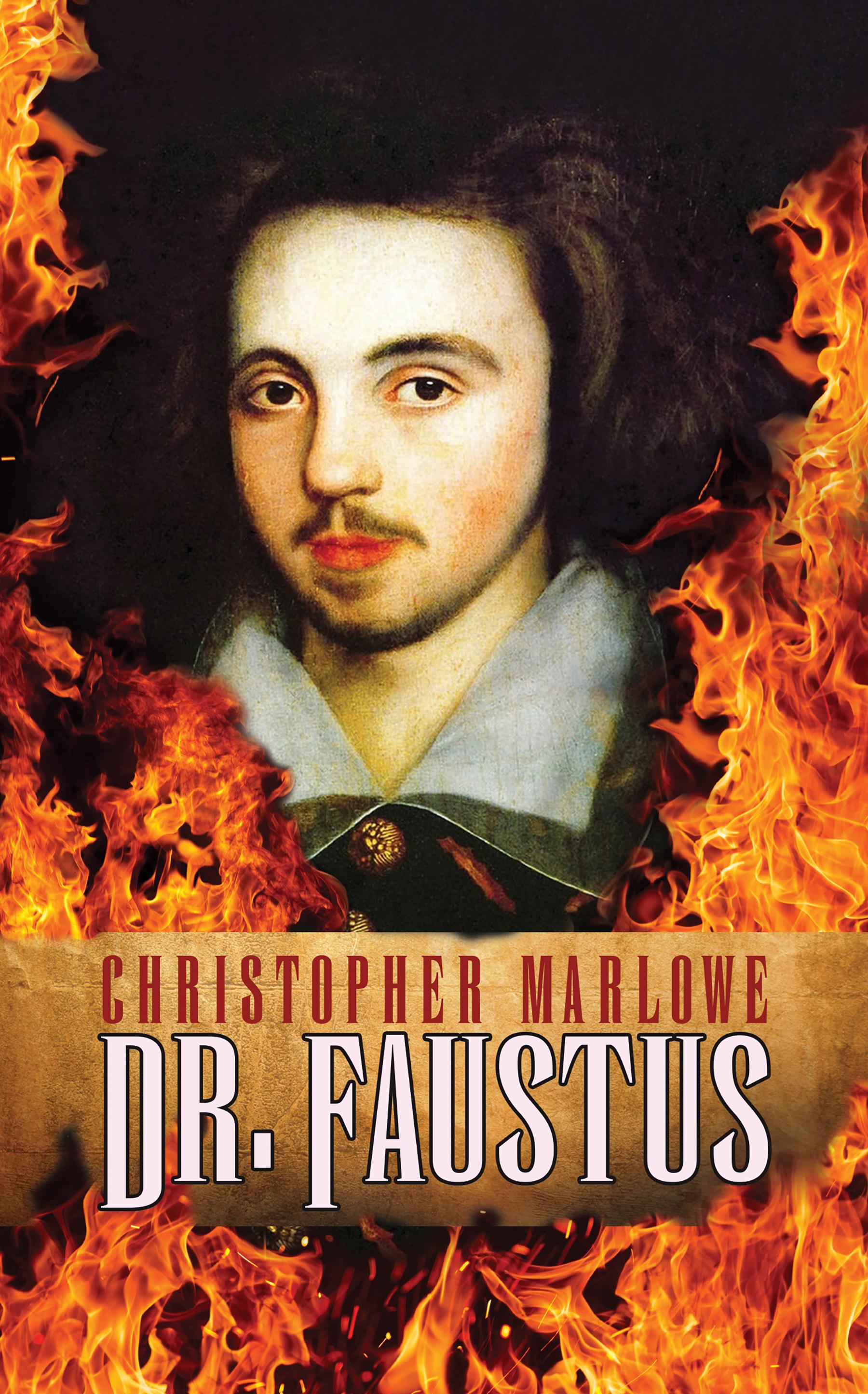
Dr. Faustus is a great Elizabethan tragedy by Christopher Marlow originally published in 1600. The story is based on an earlier anonymous classic German legend involving worldly ambition, black magic and surrender to the devil. It remains one of the most famous plays of the English Renaissance.
Dr. John Faustus, a brilliant, well-respected German doctor grows dissatisfied with the limits of human knowledge - logic, medicine, law, and religion, and decides that he has learned all that can be learned by conventional means. What is left for him, he thinks, but magic. His friends instruct him in the black arts, and he begins his new career as a magician by summoning up Mephastophilis, a devil. Despite Mephastophilis’s warnings about the horrors of hell, Faustus tells the devil to return to his master, Lucifer, with an offer of Faustus’s soul in exchange for twenty-four years of service from Mephastophilis.
On the final night before the expiration of the twenty-four years, Faustus is overcome by fear and remorse. He begs for mercy, but it is too late. At midnight, a host of devils appears and carries his soul off to hell.
Marlowe’s dramatic interpretation of the Faust legend is a theatrical masterpiece. With immense poetic skill, and psychological insight that greatly influenced the works of William Shakespeare and other dramatists, Dr. Faustus combines soaring poetry, psychological depth, and grand stage spectacle. Marlowe created powerful scenes that invest the work with tragic dignity, among them the doomed man’s calling upon Christ to save him and his ultimate rejection of salvation for the embrace of Helen of Troy.
Dr. John Faustus, a brilliant, well-respected German doctor grows dissatisfied with the limits of human knowledge - logic, medicine, law, and religion, and decides that he has learned all that can be learned by conventional means. What is left for him, he thinks, but magic. His friends instruct him in the black arts, and he begins his new career as a magician by summoning up Mephastophilis, a devil. Despite Mephastophilis’s warnings about the horrors of hell, Faustus tells the devil to return to his master, Lucifer, with an offer of Faustus’s soul in exchange for twenty-four years of service from Mephastophilis.
On the final night before the expiration of the twenty-four years, Faustus is overcome by fear and remorse. He begs for mercy, but it is too late. At midnight, a host of devils appears and carries his soul off to hell.
Marlowe’s dramatic interpretation of the Faust legend is a theatrical masterpiece. With immense poetic skill, and psychological insight that greatly influenced the works of William Shakespeare and other dramatists, Dr. Faustus combines soaring poetry, psychological depth, and grand stage spectacle. Marlowe created powerful scenes that invest the work with tragic dignity, among them the doomed man’s calling upon Christ to save him and his ultimate rejection of salvation for the embrace of Helen of Troy.
Zahle einfach mit Karte, Klarna, Apple Pay oder Google Pay. Nicht zufrieden? Du hast immer ein 14-tägiges Widerrufsrecht. Lies mehr in unseren AGB. Hast du Fragen, schreib uns eine E-Mail an hello@memmo.org.
Memmo macht das Lernen einfacher – wo auch immer du bist. Bei uns findest du deine Kursbücher und smarte Lerntools an einem Ort: Zusammenfassungen, Quizzes, Podcasts und Lernkarten. Und Ted, dein Lernbuddy, beantwortet alles, was du wissen möchtest. Über 50.000 Studierende lernen bereits hier – gemacht, damit du schneller lernst und weniger Stress hast.
Das könnte dir auch gefallen
Buch kaufen0