
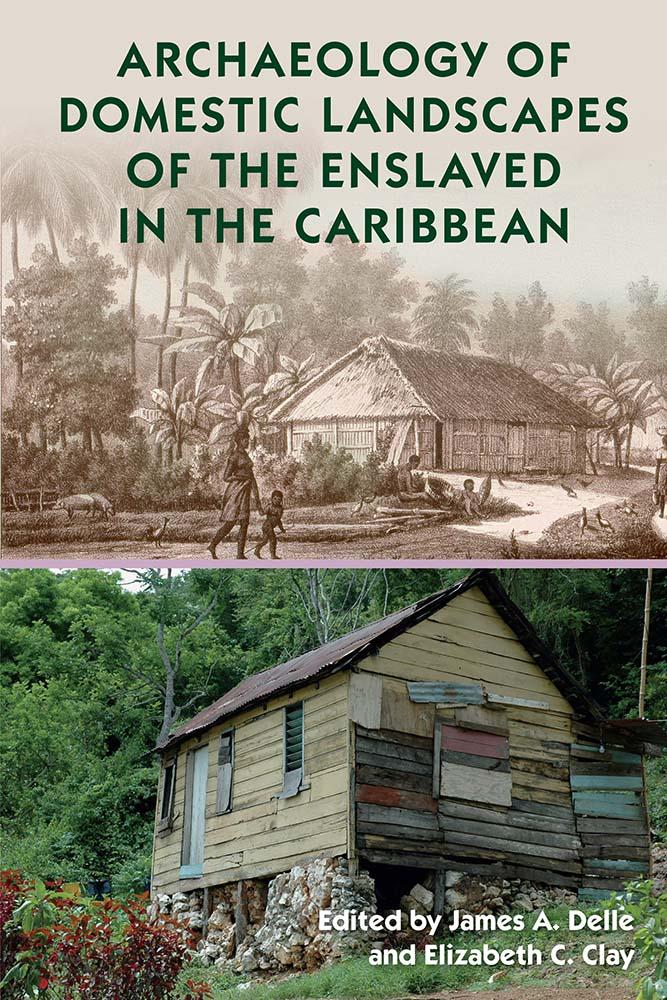
While previous research on household archaeology in the colonial Caribbean has drawn heavily on artifact analysis, this volume provides the first in-depth examination of the architecture of slave housing during this period. It examines the considerations that went into constructing and inhabiting living spaces for the enslaved and reveals the diversity of people and practices in these settings.
Contributors present case studies using written descriptions, period illustrations, and standing architecture, in addition to archaeological evidence to illustrate the wide variety of built environments for enslaved populations in places including Jamaica, the Bahamas, and the islands of the Lesser Antilles. They investigate how the enslaved defined their social positions and identities through house, yard, and garden space; they explore what daily life was like for slaves on military compounds; they compare the spatial arrangements of slave villages on plantations based on type of labor; and they show how the style of traditional laborer houses became a form of vernacular architecture still in use today. This volume expands our understanding of the wide range of enslaved experiences across British, French, Dutch, and Danish colonies.
Publication of the paperback edition made possible by a Sustaining the Humanities through the American Rescue Plan grant from the National Endowment for the Humanities.
Zahle einfach mit Karte, Klarna, Apple Pay oder Google Pay. Nicht zufrieden? Du hast immer ein 14-tägiges Widerrufsrecht. Lies mehr in unseren AGB. Hast du Fragen, schreib uns eine E-Mail an hello@memmo.org.
Memmo macht das Lernen einfacher – wo auch immer du bist. Bei uns findest du deine Kursbücher und smarte Lerntools an einem Ort: Zusammenfassungen, Quizzes, Podcasts und Lernkarten. Und Ted, dein Lernbuddy, beantwortet alles, was du wissen möchtest. Über 50.000 Studierende lernen bereits hier – gemacht, damit du schneller lernst und weniger Stress hast.