
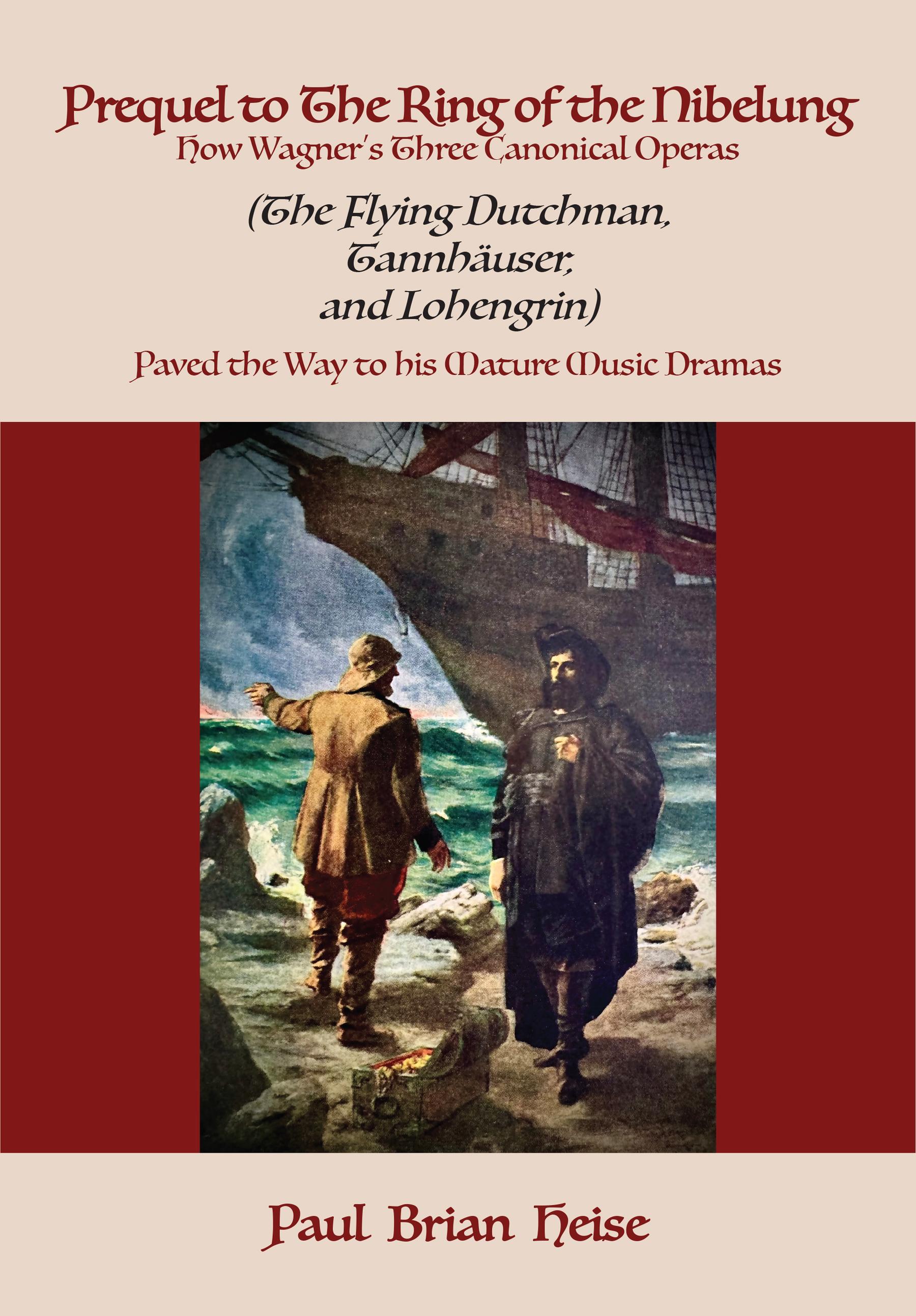
Scholars of Richard Wagner’s works have long noted his numerous comparisons between their characters and plots in his letters, essays, and recorded remarks. Yet no one has previously attempted to assess their implications for our understanding of his art systematically. Paul Heise’s quest to grasp the allegorical unity underlying Wagner’s canonical artworks began in the 1970s. Following his allegorical interpretation of Wagner’s Ring of the Nibelung, The Wound That Will Never Heal (Academica Press, 2021), this fresh installment of Heise’s lifelong Wagner project will demonstrate how the composer employed key facets of the plots of his first three canonical operas The Flying Dutchman, Tannhäuser, and Lohengrin in building the sophisticated allegorical superstructure which culminated in his Ring of the Nibelung and his other mature music-dramas, Tristan and Isolde, The Mastersingers of Nuremberg, and Parsifal. This study casts a retrospective light on the many meanings hidden within these three operas, which were the prequel to the Ring, revealing their heretofore subliminal content as never before.
Zahle einfach mit Karte, Klarna, Apple Pay oder Google Pay. Nicht zufrieden? Du hast immer ein 14-tägiges Widerrufsrecht. Lies mehr in unseren AGB. Hast du Fragen, schreib uns eine E-Mail an hello@memmo.org.
Memmo macht das Lernen einfacher – wo auch immer du bist. Bei uns findest du deine Kursbücher und smarte Lerntools an einem Ort: Zusammenfassungen, Quizzes, Podcasts und Lernkarten. Und Ted, dein Lernbuddy, beantwortet alles, was du wissen möchtest. Über 50.000 Studierende lernen bereits hier – gemacht, damit du schneller lernst und weniger Stress hast.