
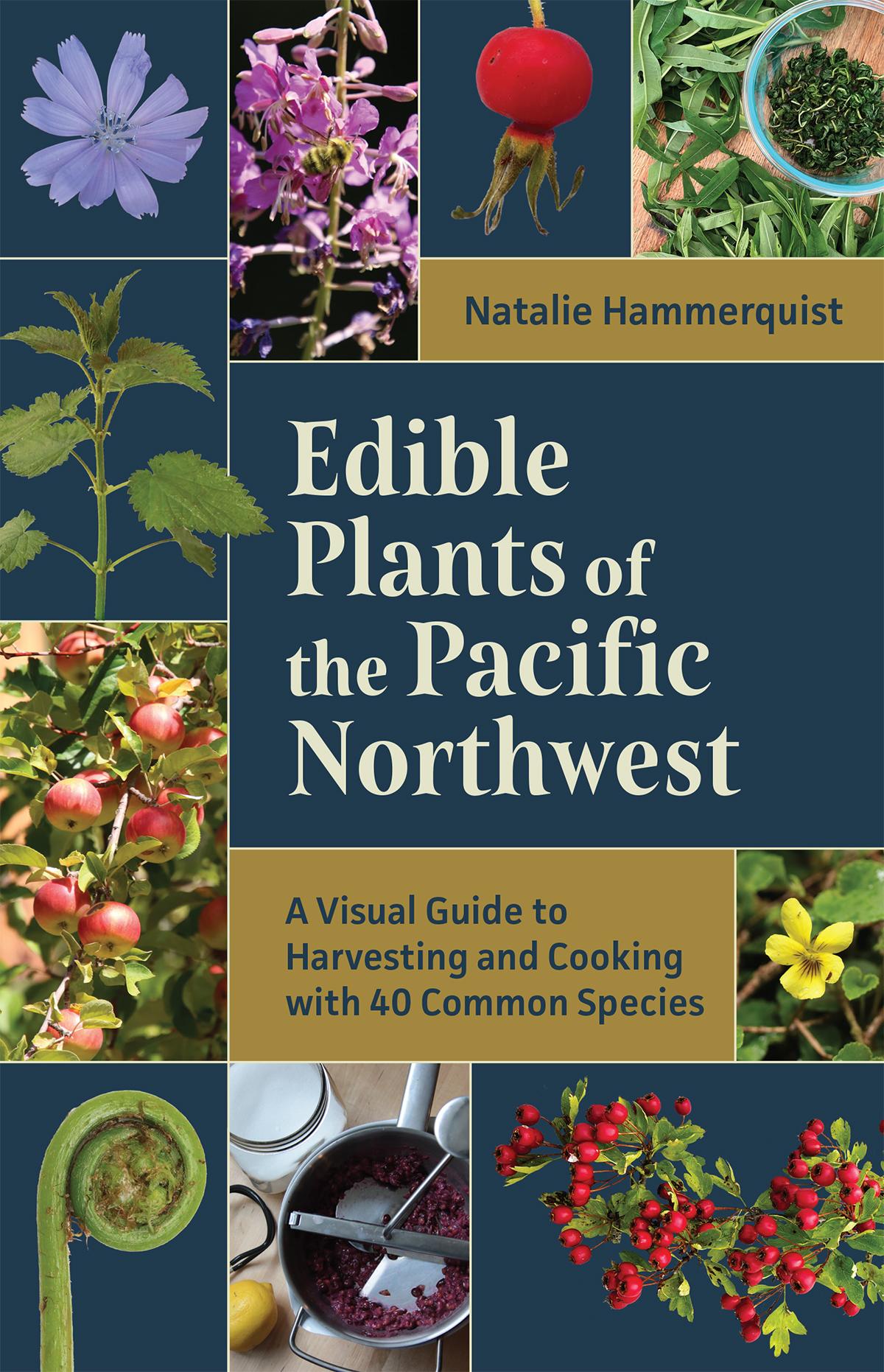
A detailed guide to the most abundant and tasty edible wild plants in the Pacific Northwest
A foraging guide that emphasizes the tastiest wild foods of the region, Edible Plants of the Pacific Northwest is a comprehensive, effective, and ethical resource for anyone interested in foraged food. Appropriate for beginners and experienced naturalists alike, this book teaches readers to identify, harvest, and cook with 40 of the region’s most common wild plants.
Expert forager and educator Natalie Hammerquist not only teaches readers to recognize the most common plants, but she also shows them how to steer clear of threatened species, as well as toxic and poisonous plants, using highly detailed visuals to make identification more immediate and accurate. Her holistic approach to wild foods incorporates both Eastern and Western traditions, as well as folk knowledge, and invites people to form relationships with the land and to act with reciprocity and care in our wild spaces.
Plants range from familiar treats like nettles and evergreen huckleberries, to lesser-known edibles like cattail, mallow, wood sorrel, and more. Recipes include local favorites like rose-petal jam, dock-seed crackers, and slow-cooker applesauce.
- Overviews of 40 edible plants with history, common names, and subspecies
- Beginner-friendly resource explores native, non-native, and invasive plants with detailed listings, recipes, plus a seasonal harvest calendar
- Full-color ID photos with detailed close-ups, as well as contextual photos of plants in the wild
A foraging guide that emphasizes the tastiest wild foods of the region, Edible Plants of the Pacific Northwest is a comprehensive, effective, and ethical resource for anyone interested in foraged food. Appropriate for beginners and experienced naturalists alike, this book teaches readers to identify, harvest, and cook with 40 of the region’s most common wild plants.
Expert forager and educator Natalie Hammerquist not only teaches readers to recognize the most common plants, but she also shows them how to steer clear of threatened species, as well as toxic and poisonous plants, using highly detailed visuals to make identification more immediate and accurate. Her holistic approach to wild foods incorporates both Eastern and Western traditions, as well as folk knowledge, and invites people to form relationships with the land and to act with reciprocity and care in our wild spaces.
Plants range from familiar treats like nettles and evergreen huckleberries, to lesser-known edibles like cattail, mallow, wood sorrel, and more. Recipes include local favorites like rose-petal jam, dock-seed crackers, and slow-cooker applesauce.
Zahle einfach mit Karte, Klarna, Apple Pay oder Google Pay. Nicht zufrieden? Du hast immer ein 14-tägiges Widerrufsrecht. Lies mehr in unseren AGB. Hast du Fragen, schreib uns eine E-Mail an hello@memmo.org.
Memmo macht das Lernen einfacher – wo auch immer du bist. Bei uns findest du deine Kursbücher und smarte Lerntools an einem Ort: Zusammenfassungen, Quizzes, Podcasts und Lernkarten. Und Ted, dein Lernbuddy, beantwortet alles, was du wissen möchtest. Über 50.000 Studierende lernen bereits hier – gemacht, damit du schneller lernst und weniger Stress hast.
Das könnte dir auch gefallen
Buch kaufen0