
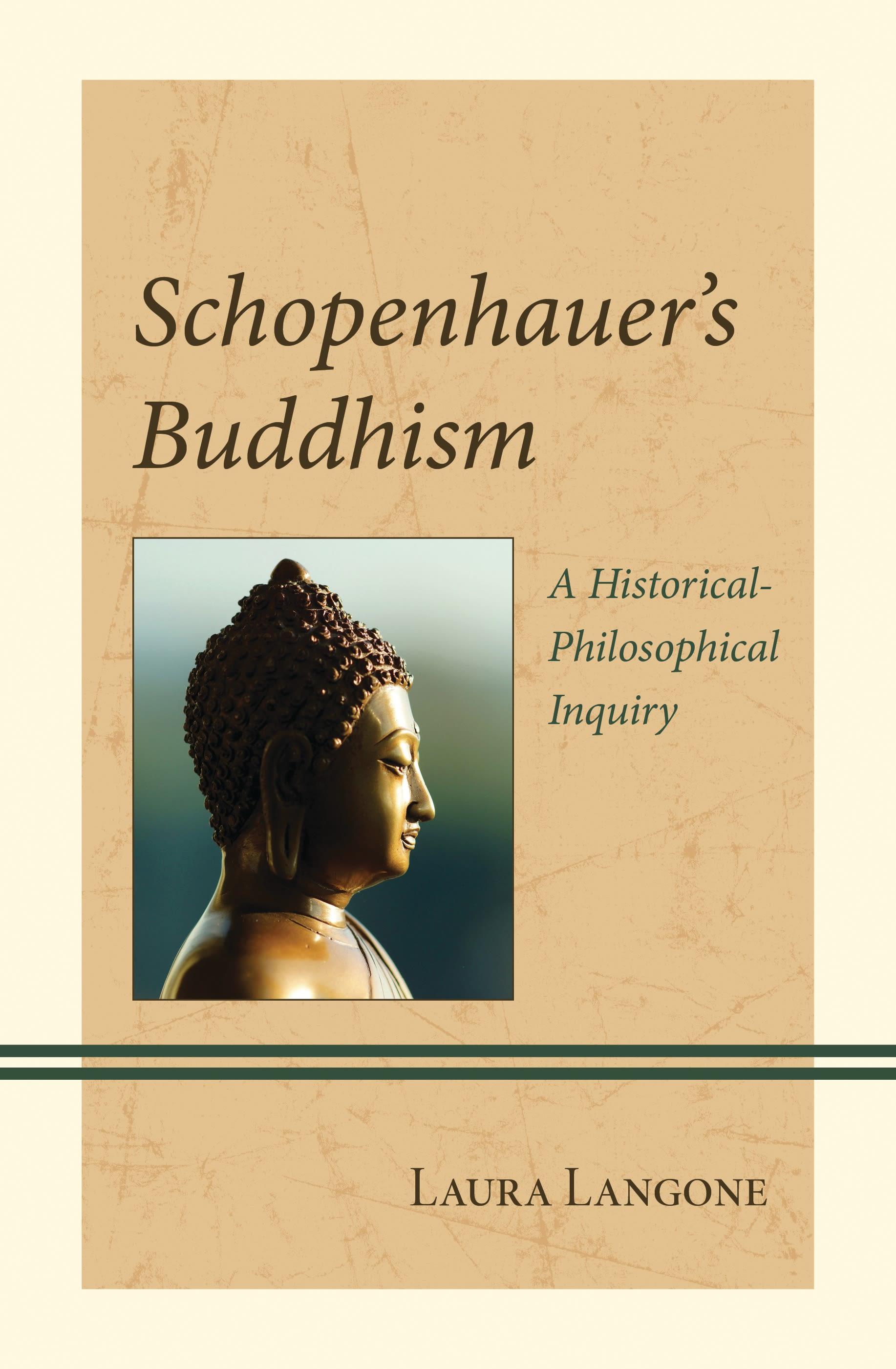
In a letter from May 10, 1852, to Adam von Doß, Arthur Schopenhauer declared himself to be a Buddhist. From 1825 until his death, he never stopped searching for more information on Buddhism, with his thirst for knowledge of it growing over time. Schopenhauer’s Buddhism: A Historical-Philosophical Inquiry is the first study to do justice to Schopenhauer’s passion for Buddhism, reconstructing the notions of Buddhism he acquired through his readings on Buddhism as well as their influence on his thought. Laura Langone examines what Buddhism meant for Schopenhauer, what kind of Buddhism Schopenhauer had in mind, and how Buddhism shaped his philosophy. This book examines how the assimilation of Buddhist tenets through his Buddhist sources led him to incorporate the Buddhist concept of palingenesis into his philosophical system, which introduced a radically new metaphysical framework. Ultimately, Schopenhauer’s incorporation of Buddhist palingenesis illustrates how Buddhism deeply spurred him to develop new and innovative ideas previously unthinkable in Western philosophy.
Zahle einfach mit Karte, Klarna, Apple Pay oder Google Pay. Nicht zufrieden? Du hast immer ein 14-tägiges Widerrufsrecht. Lies mehr in unseren AGB. Hast du Fragen, schreib uns eine E-Mail an hello@memmo.org.
Memmo macht das Lernen einfacher – wo auch immer du bist. Bei uns findest du deine Kursbücher und smarte Lerntools an einem Ort: Zusammenfassungen, Quizzes, Podcasts und Lernkarten. Und Ted, dein Lernbuddy, beantwortet alles, was du wissen möchtest. Über 50.000 Studierende lernen bereits hier – gemacht, damit du schneller lernst und weniger Stress hast.