
Choice 2025 Outstanding Academic Title
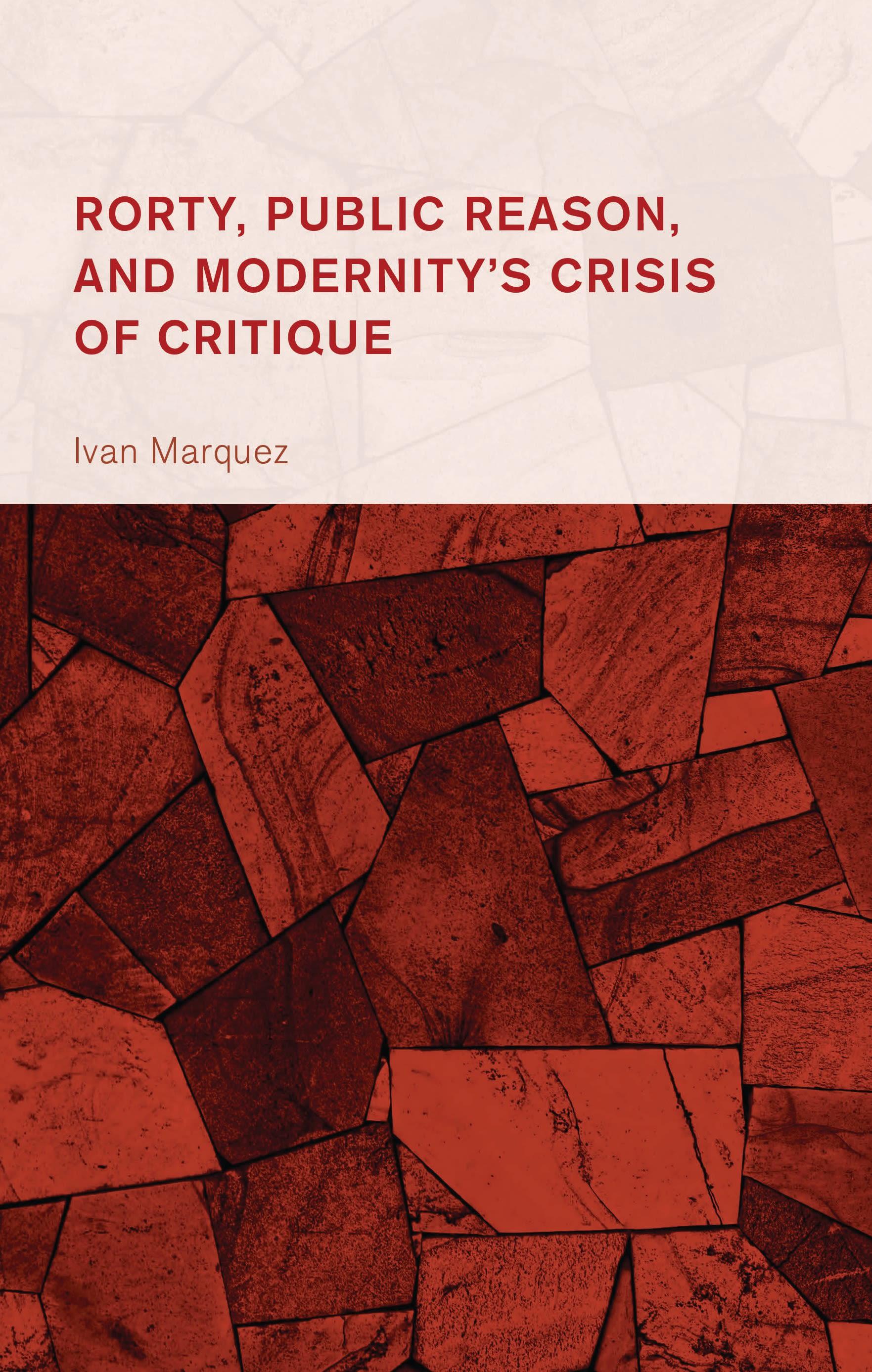
Starting with Richard Rorty's critique of reason, this book discusses modernity's legitimation crisis in political discourse. Rorty, Public Reason, and Modernity's Crisis of Critique explores the contemporary crisis of rational justification and collective will-formation in our current political institutions and the public sphere, arguing that there is an array of untapped rational resources that should be deployed to justify social, political, and economic views, agendas, and programs. It also identifies limits to the powers of public reason to generate rational agreement and collective will-formation. Using a critical analysis of Rorty's non-foundationalist perspective as a vehicle to study modernity's project of rational critique, Ivan Marquez highlights both the strengths and promise and the weaknesses and limitations of liberal and democratic societies-especially within pluralistic socio-cultural contexts-and some possible ways to work within this space of possibilities and constraints. Ultimately, this book can be seen as elaborating a political epistemology view that argues for a redefinition of philosophy and defends a type of post-metaphysical culture.
Starting with Richard Rorty's critique of reason, this book discusses modernity's legitimation crisis in political discourse. Rorty, Public Reason, and Modernity's Crisis of Critique explores the contemporary crisis of rational justification and collective will-formation in our current political institutions and the public sphere, arguing that there is an array of untapped rational resources that should be deployed to justify social, political, and economic views, agendas, and programs. It also identifies limits to the powers of public reason to generate rational agreement and collective will-formation. Using a critical analysis of Rorty's non-foundationalist perspective as a vehicle to study modernity's project of rational critique, Ivan Marquez highlights both the strengths and promise and the weaknesses and limitations of liberal and democratic societies-especially within pluralistic socio-cultural contexts-and some possible ways to work within this space of possibilities and constraints. Ultimately, this book can be seen as elaborating a political epistemology view that argues for a redefinition of philosophy and defends a type of post-metaphysical culture.
Zahle einfach mit Karte, Klarna, Apple Pay oder Google Pay. Nicht zufrieden? Du hast immer ein 14-tägiges Widerrufsrecht. Lies mehr in unseren AGB. Hast du Fragen, schreib uns eine E-Mail an hello@memmo.org.
Memmo macht das Lernen einfacher – wo auch immer du bist. Bei uns findest du deine Kursbücher und smarte Lerntools an einem Ort: Zusammenfassungen, Quizzes, Podcasts und Lernkarten. Und Ted, dein Lernbuddy, beantwortet alles, was du wissen möchtest. Über 50.000 Studierende lernen bereits hier – gemacht, damit du schneller lernst und weniger Stress hast.