
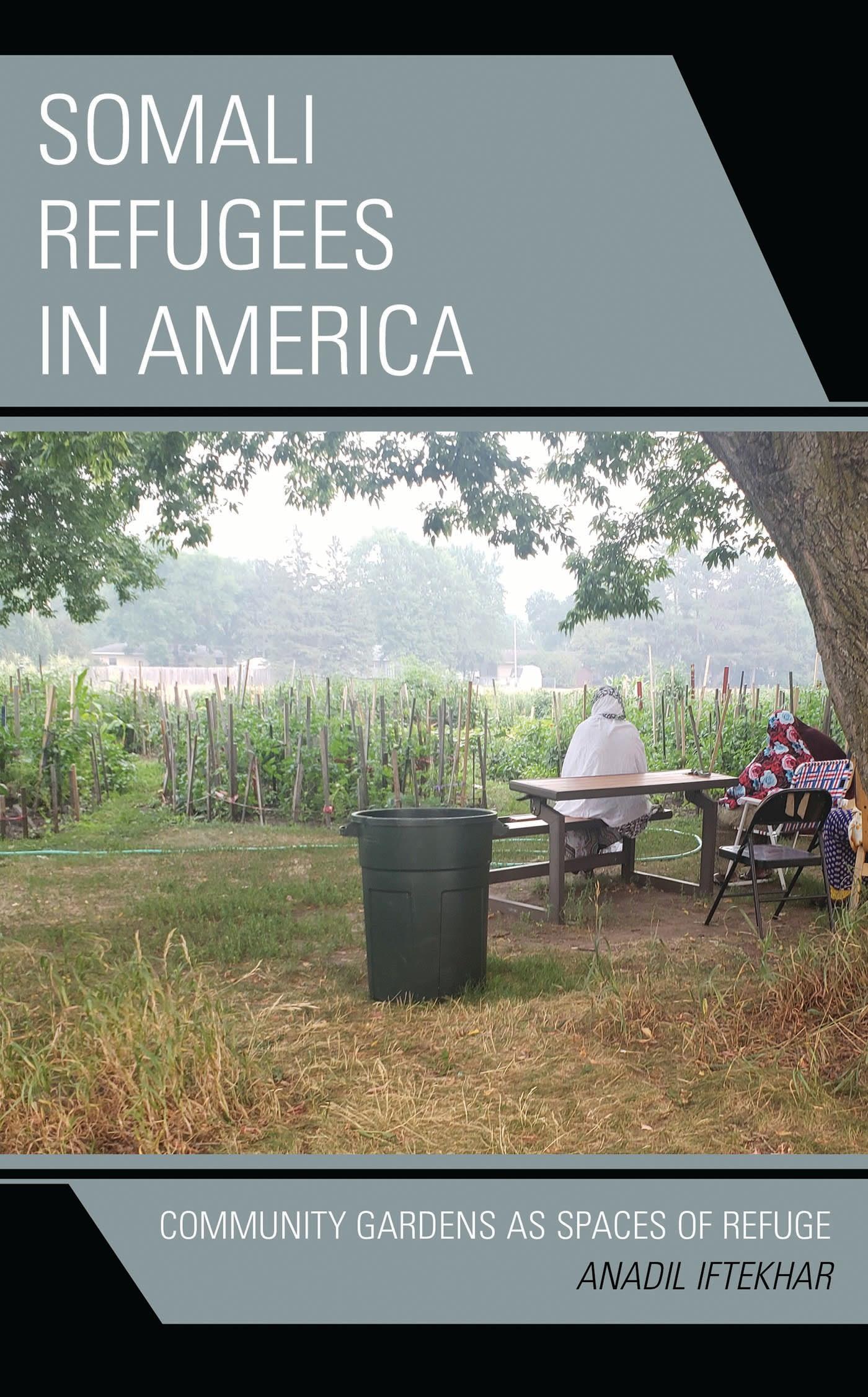
This study looks at the acculturation and social capital of twenty Somali refugee women participating in a community garden in a small town in Minnesota. The women had all been refugees at some point, even if they did not enter the US as a refugee. Using phenomenological interviews to gather the data, the author draws on Berry's framework and juxtaposes it against two other models of acculturation. Doing so allows the exploration of the pros and cons of each model and then offer suggestions for more holistic approaches to understanding and measuring acculturation. There are many aspects of life in the U.S. that were new to the Somali women such as driving, adult education, employment opportunities, and maintaining culture. Through many support systems, and efforts at keeping Somali culture intact through food and religion, along with the language barrier, the women adjusted to life in America. Participation at the community garden was an important part of their daily routine (even if only during the short growing season), giving the women agency, independence and the ability to create something and be on their own. In essence, the garden functioned as a mini-Somalia for them, providing not only a means of acculturation and accumulation of social capital, but a place of bonding.
Seiten: 124
Kategorie: Samhällsvetenskap
e-ISBN: 9781666963564
Versandgewicht: 1.2 kg
Versand in: 1-2 Tage
Zahle einfach mit Karte, Klarna, Apple Pay oder Google Pay. Nicht zufrieden? Du hast immer ein 14-tägiges Widerrufsrecht. Lies mehr in unseren AGB. Hast du Fragen, schreib uns eine E-Mail an hello@memmo.org.
Memmo macht das Lernen einfacher – wo auch immer du bist. Bei uns findest du deine Kursbücher und smarte Lerntools an einem Ort: Zusammenfassungen, Quizzes, Podcasts und Lernkarten. Und Ted, dein Lernbuddy, beantwortet alles, was du wissen möchtest. Über 50.000 Studierende lernen bereits hier – gemacht, damit du schneller lernst und weniger Stress hast.