
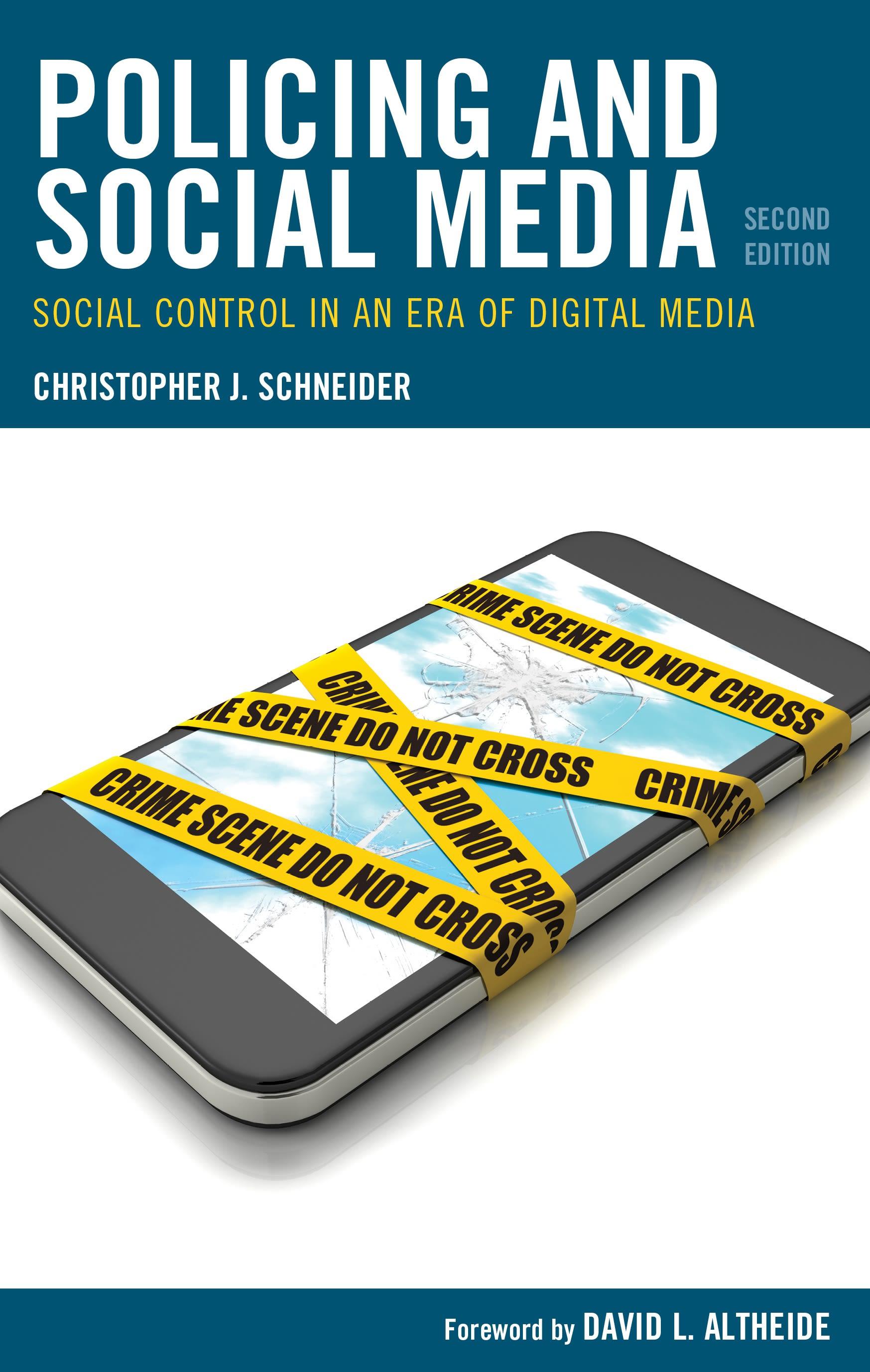
In a world where authority is increasingly performed, mediated, and judged online, policing now unfolds as much on screens as on streets.
Policing and Social Media: Social Control in an Era of Digital Media examines how police agencies in Canada manage, use, and control social media as part of their public-facing work. Christopher J. Schneider shows how shifts in information technology and communication formats have reshaped the institutional practices of policing, arguing that police engagement with social media aligns with the platforms' underlying logic. As police adopt these tools, policing itself evolves to emphasize new forms of public conditioning, self-promotion, and the expansion of social control. Fully updated, each chapter of the second edition presents a case study focused on a different platform or format, while also developing analytical and methodological approaches suited to understanding contemporary policing in digital spaces. The result is a book that demonstrates how police presence on social media is not merely communicative but consequential, with significant implications for power, visibility, and accountability.
Policing and Social Media: Social Control in an Era of Digital Media examines how police agencies in Canada manage, use, and control social media as part of their public-facing work. Christopher J. Schneider shows how shifts in information technology and communication formats have reshaped the institutional practices of policing, arguing that police engagement with social media aligns with the platforms' underlying logic. As police adopt these tools, policing itself evolves to emphasize new forms of public conditioning, self-promotion, and the expansion of social control. Fully updated, each chapter of the second edition presents a case study focused on a different platform or format, while also developing analytical and methodological approaches suited to understanding contemporary policing in digital spaces. The result is a book that demonstrates how police presence on social media is not merely communicative but consequential, with significant implications for power, visibility, and accountability.
Zahle einfach mit Karte, Klarna, Apple Pay oder Google Pay. Nicht zufrieden? Du hast immer ein 14-tägiges Widerrufsrecht. Lies mehr in unseren AGB. Hast du Fragen, schreib uns eine E-Mail an hello@memmo.org.
Memmo macht das Lernen einfacher – wo auch immer du bist. Bei uns findest du deine Kursbücher und smarte Lerntools an einem Ort: Zusammenfassungen, Quizzes, Podcasts und Lernkarten. Und Ted, dein Lernbuddy, beantwortet alles, was du wissen möchtest. Über 50.000 Studierende lernen bereits hier – gemacht, damit du schneller lernst und weniger Stress hast.