
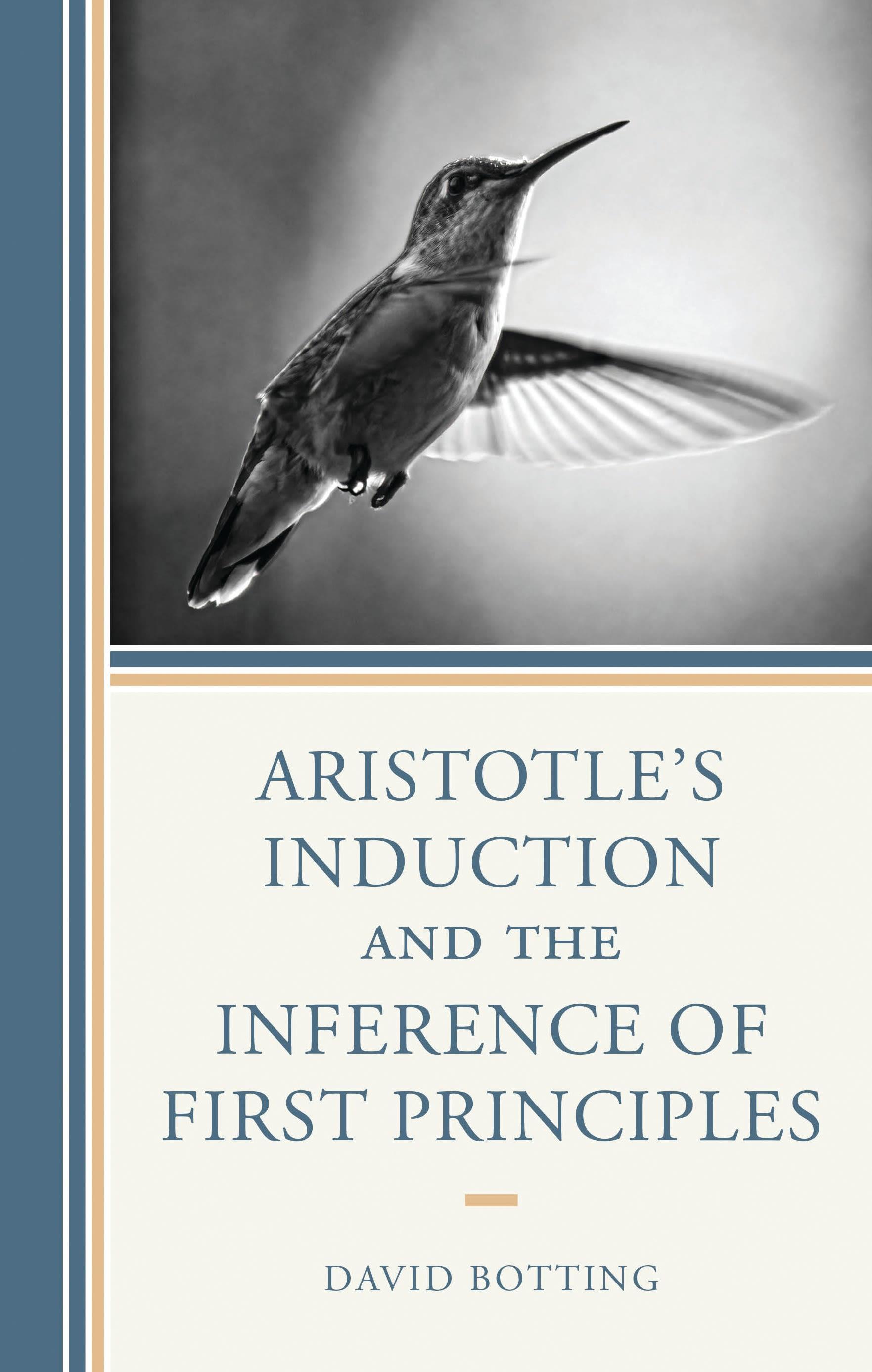
Aristotle's Induction and the Inference of First Principles observes that Aristotle’s reputation as an empiricist has come under threat. In the Posterior Analytics, Aristotle puts forward a foundationalist theory of scientific knowledge that problematizes knowing the science's first principles empirically. Aristotle states that we know the principles through induction but also that induction is inadequate for knowing essences. In response to this tension, rationalists claim that Aristotle equivocates between two conceptions of induction, enumerative and intuitive:"intuitive induction" being that which grasps the principles and provides direct knowledge of essences, “enumerative induction” being that which is said to be inadequate. Empiricists preserve an empiricist road to first principles by downplaying enumerative induction’s role.
In order to preserve Aristotle's avowals that it is by induction that we know the principles while avoiding the rationalist alternative, David Botting provides an inferentialist account of induction, showing how the content of a first principle is inferentially known but not its necessity, which must be proved by constructing the first principle from simpler elements. A world governed by natural necessities and not just brute regularities is knowable through the senses and without resorting to super-empirical acts or faculties of intuition.
In order to preserve Aristotle's avowals that it is by induction that we know the principles while avoiding the rationalist alternative, David Botting provides an inferentialist account of induction, showing how the content of a first principle is inferentially known but not its necessity, which must be proved by constructing the first principle from simpler elements. A world governed by natural necessities and not just brute regularities is knowable through the senses and without resorting to super-empirical acts or faculties of intuition.
Zahle einfach mit Karte, Klarna, Apple Pay oder Google Pay. Nicht zufrieden? Du hast immer ein 14-tägiges Widerrufsrecht. Lies mehr in unseren AGB. Hast du Fragen, schreib uns eine E-Mail an hello@memmo.org.
Memmo macht das Lernen einfacher – wo auch immer du bist. Bei uns findest du deine Kursbücher und smarte Lerntools an einem Ort: Zusammenfassungen, Quizzes, Podcasts und Lernkarten. Und Ted, dein Lernbuddy, beantwortet alles, was du wissen möchtest. Über 50.000 Studierende lernen bereits hier – gemacht, damit du schneller lernst und weniger Stress hast.