
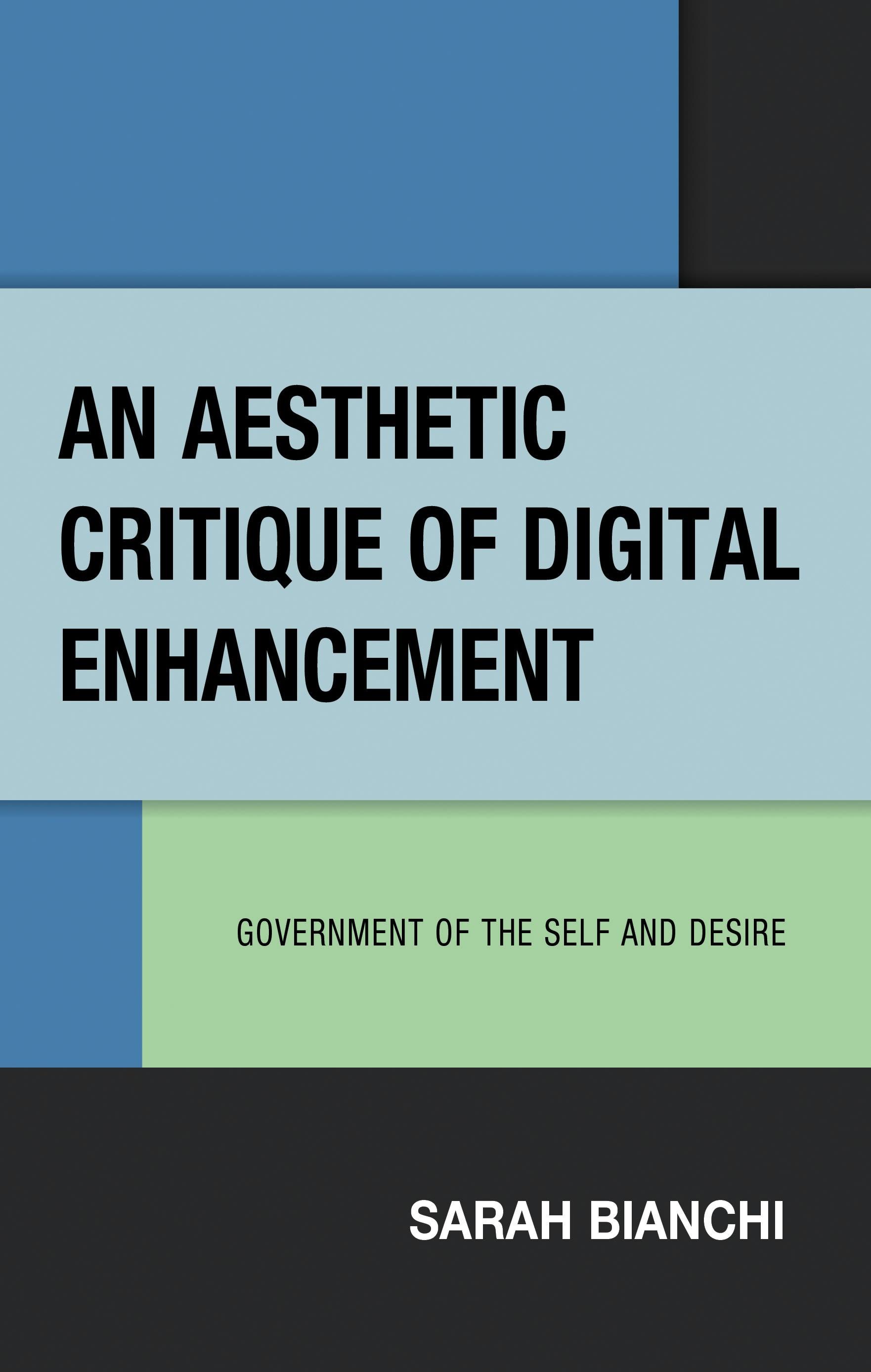
The socio-cultural phenomenon of digital enhancement, that is, the attempt to perfect the subject’s offline life by means of digital media, seduces people into participating in digitalization. Subjects paradoxically want to participate in digital change even though it is well known that digitalization also impairs their freedom and privacy, and this book investigates both the freedom-impairing and the freedom-enhancing aspects of digital enhancement. Sarah Bianchi provides an empirically informed critical aesthetic diagnosis, a perspective that makes the overlooked affect- and power-sensitive Janus face of subjectivity in digital enhancement perceivable: the subjects’ desire to be governed by the logic of perfection—that is, the heart of digital enhancement—and their simultaneous desire for self-government. To this end, An Aesthetic Critique of Digital Enhancement: Government of the Self and Desire makes Foucault’s “history of the present” in its Nietzschean genealogy productive for contemporary critical thought on digital enhancement. Through genealogical critique, this approach provides the needed semantics to question the costs of our digital present and to conceptualize how an enlightened agency might be critically constructed.
Zahle einfach mit Karte, Klarna, Apple Pay oder Google Pay. Nicht zufrieden? Du hast immer ein 14-tägiges Widerrufsrecht. Lies mehr in unseren AGB. Hast du Fragen, schreib uns eine E-Mail an hello@memmo.org.
Memmo macht das Lernen einfacher – wo auch immer du bist. Bei uns findest du deine Kursbücher und smarte Lerntools an einem Ort: Zusammenfassungen, Quizzes, Podcasts und Lernkarten. Und Ted, dein Lernbuddy, beantwortet alles, was du wissen möchtest. Über 50.000 Studierende lernen bereits hier – gemacht, damit du schneller lernst und weniger Stress hast.