
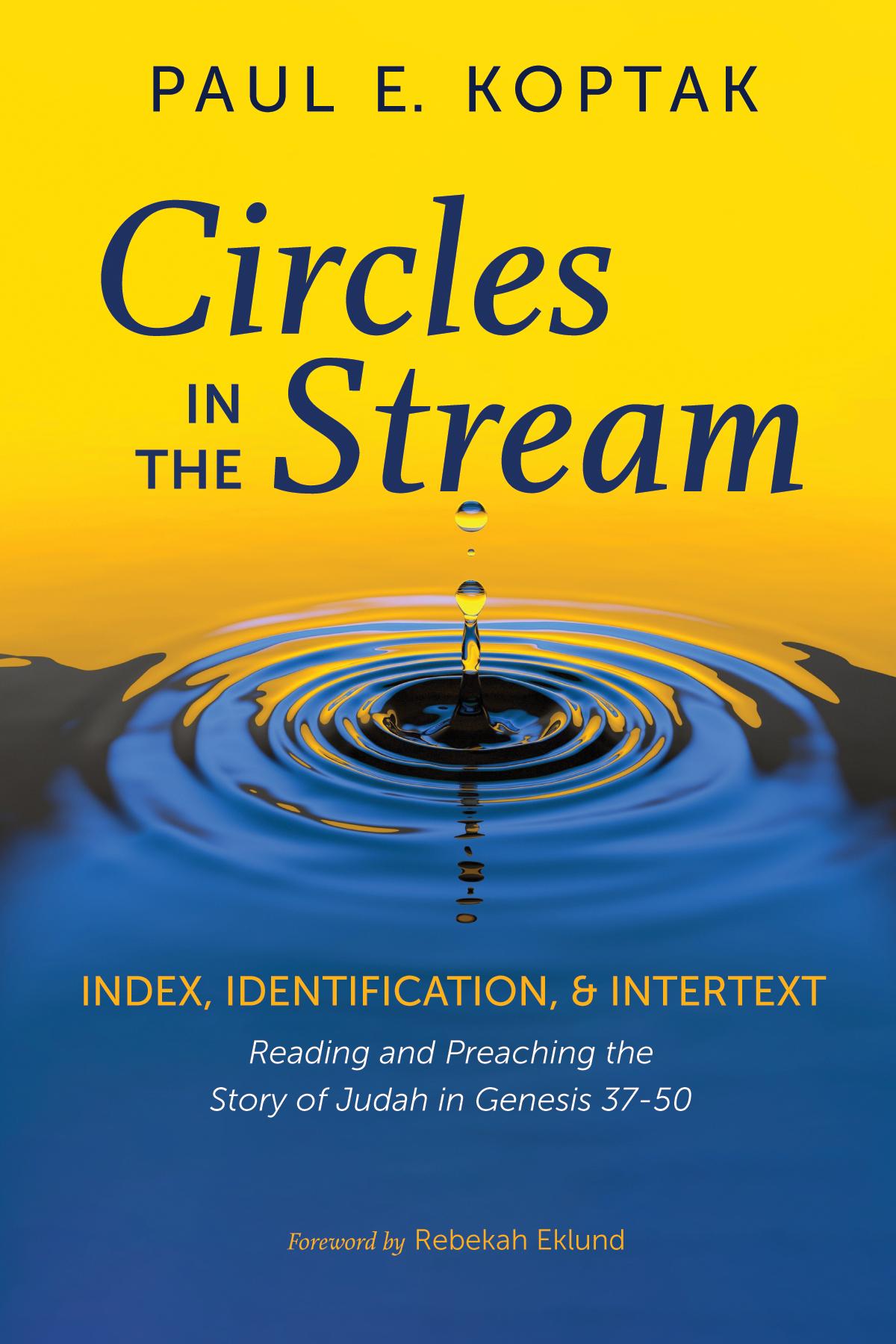
Maybe we should read Genesis 37-50 as the story of Joseph and Judah. Both kept their families alive and received major blessings from their father Jacob. Like his brother Joseph, Judah knew how to use words to lead and persuade, primarily by appealing to common experience. His speeches model Kenneth Burke's rhetoric of identification, "inducing cooperation" by showing his listeners how they are consubstantial--that is, where they stand together.
Preachers hope to do the same, making gospel connections between ancient texts and life today. Circles in the Stream shows that the connections are there in the Scripture text, freeing preachers from the pressure to find contemporary illustrations. Adapting Burke's literary-rhetorical approach to reading, Paul Koptak offers ever-widening circles of reading to that end. Indexing a passage and looking for identification there lead to the transformative purpose and life issue. Intertextual study, a combination of both, discovers these connections in the wider two-testament canon.
Circles in the Stream offers both a distinct perspective for reading Scripture and practical steps for in-depth study. Its method can make sermon preparation more efficient and effective. More importantly, it leads to the life-issues that listeners want their preachers to address.
Zahle einfach mit Karte, Klarna, Apple Pay oder Google Pay. Nicht zufrieden? Du hast immer ein 14-tägiges Widerrufsrecht. Lies mehr in unseren AGB. Hast du Fragen, schreib uns eine E-Mail an hello@memmo.org.
Memmo macht das Lernen einfacher – wo auch immer du bist. Bei uns findest du deine Kursbücher und smarte Lerntools an einem Ort: Zusammenfassungen, Quizzes, Podcasts und Lernkarten. Und Ted, dein Lernbuddy, beantwortet alles, was du wissen möchtest. Über 50.000 Studierende lernen bereits hier – gemacht, damit du schneller lernst und weniger Stress hast.
Das könnte dir auch gefallen
Buch kaufen0