
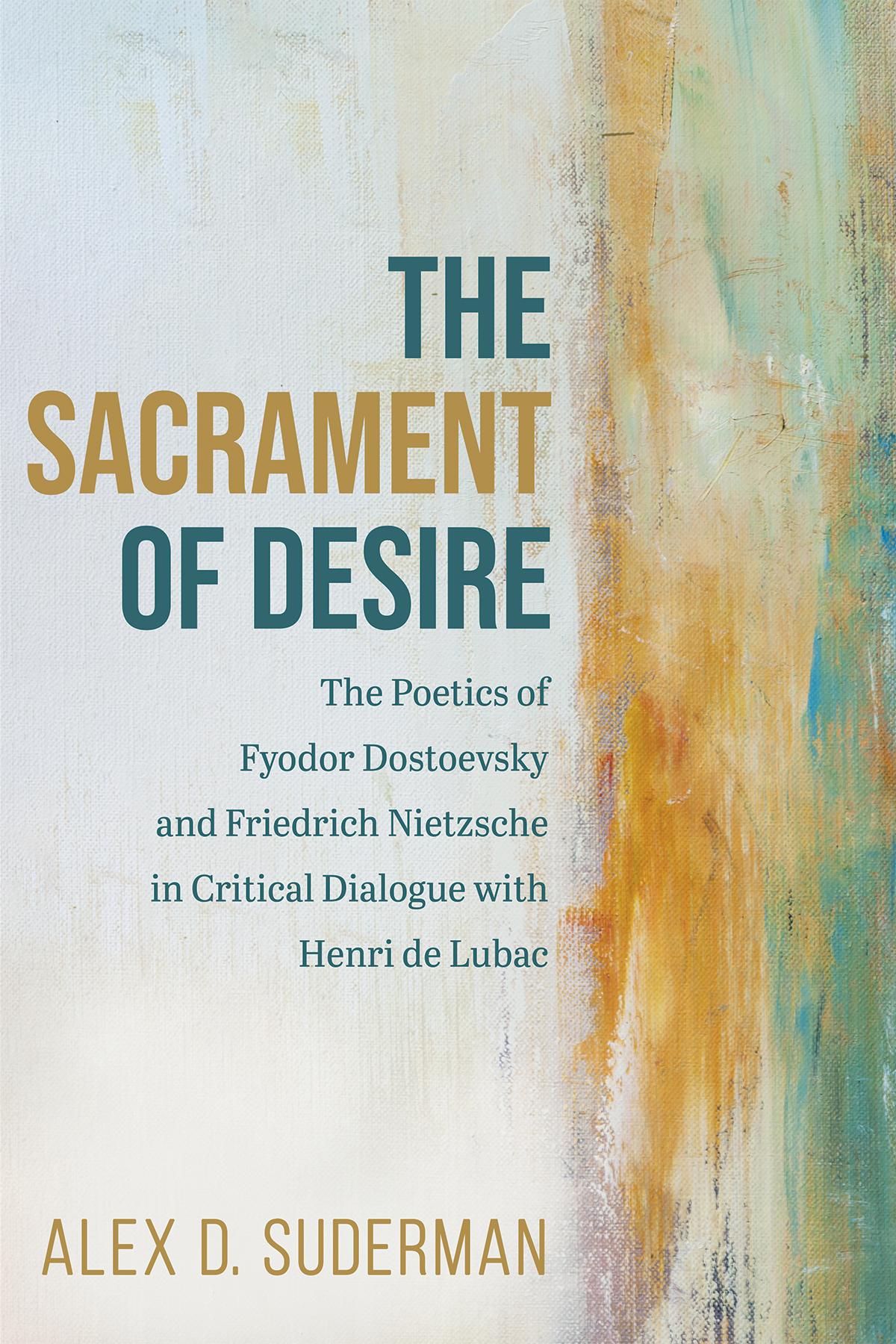
This book explores the political-theological implications of sacramental desire in Fyodor Dostoevsky`s The Brothers Karamazov with Friedrich Nietzsche's Thus Spoke Zarathustra in critical dialogue with Henri de Lubac. Suderman demonstrates how the work of de Lubac, Dostoevsky, and Nietzsche address a transcendent desire for a higher social and political unity in late-modern Western cultures and the imperialistic and coercive tendencies latent within it, concretely expressed in the Western church and the modern state. Specifically, this book investigates how Dostoevsky and Nietzsche envision new forms of political embodiment that are neither escapist nor imperialist. Through a detailed examination of Zarathustra's dramatic discovery of the eternal return and Alyosha's mystical experience of the resurrection, Suderman demonstrates the metaphysical significance of their respective political ethics. While the intent of de Lubac is to recover the social implications of the sacraments of Roman Catholicism, Nietzsche and Dostoevsky espouse alternative articulations of community and the sacramental desire necessary for such embodiment, a desire rooted in their respective perceptions of God.
Zahle einfach mit Karte, Klarna, Apple Pay oder Google Pay. Nicht zufrieden? Du hast immer ein 14-tägiges Widerrufsrecht. Lies mehr in unseren AGB. Hast du Fragen, schreib uns eine E-Mail an hello@memmo.org.
Memmo macht das Lernen einfacher – wo auch immer du bist. Bei uns findest du deine Kursbücher und smarte Lerntools an einem Ort: Zusammenfassungen, Quizzes, Podcasts und Lernkarten. Und Ted, dein Lernbuddy, beantwortet alles, was du wissen möchtest. Über 50.000 Studierende lernen bereits hier – gemacht, damit du schneller lernst und weniger Stress hast.
Das könnte dir auch gefallen
Buch kaufen0