
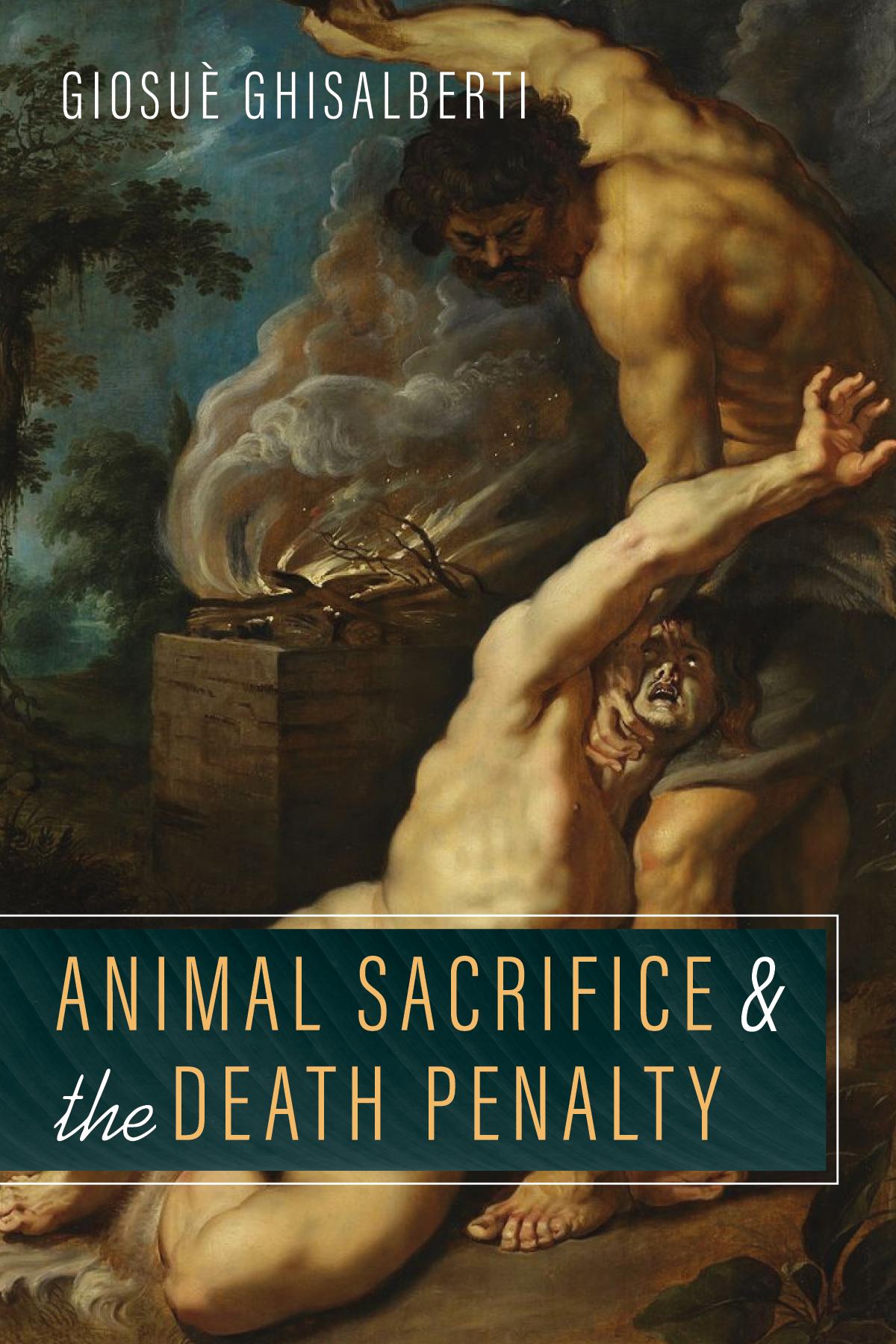
The slaughter of animals as a religious ritual and the execution of human beings as a judicial one was an interrelated phenomenon in the ancient world. Writings from different traditions had to be interpreted in relation to each other for the connection between two sacred rituals to be made. The history of the death penalty within the textual traditions of Judaism and ancient Greece could be traced to specific commandments beginning in Genesis and in laws specified as early as in Hesiod's Theogony--in each case, however, with far from unambiguous conclusions despite their divine origins in YHWH or Zeus. An ever-present uncertainty in the nature of the death penalty pervades the writings of the Bible from Genesis to the Gospels of Jesus, as well as in the mytho-poetic world of Hesiod, the tragedy of Aeschylus, and Socratic philosophy as represented in Plato's dialogues. Scholarship has not considered the importance of these two interrelated traditions insofar as both expose the specific characteristics of violence and killing within the institutions of religion and the law. The creation of religious rituals and the acts of the law are inseparable and essential to the authority of the politico-religious state. Animal sacrifice and the death penalty serve as the pillars of social legitimacy in the ancient world.
Zahle einfach mit Karte, Klarna, Apple Pay oder Google Pay. Nicht zufrieden? Du hast immer ein 14-tägiges Widerrufsrecht. Lies mehr in unseren AGB. Hast du Fragen, schreib uns eine E-Mail an hello@memmo.org.
Memmo macht das Lernen einfacher – wo auch immer du bist. Bei uns findest du deine Kursbücher und smarte Lerntools an einem Ort: Zusammenfassungen, Quizzes, Podcasts und Lernkarten. Und Ted, dein Lernbuddy, beantwortet alles, was du wissen möchtest. Über 50.000 Studierende lernen bereits hier – gemacht, damit du schneller lernst und weniger Stress hast.
Das könnte dir auch gefallen
Buch kaufen0