
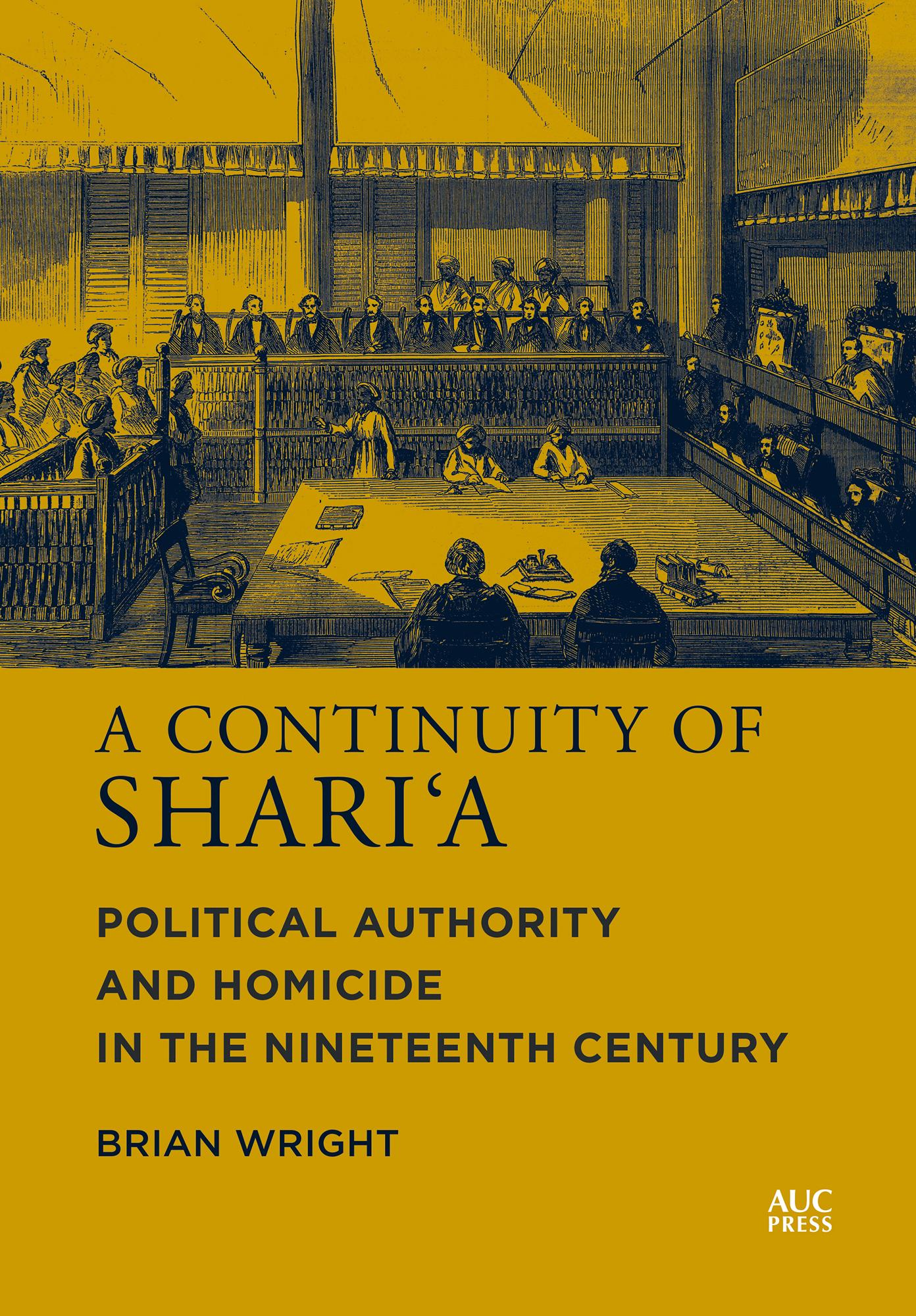
A challenge to the “end of the shari‘a” thesis in Islamic legal historiography
In the second half of the nineteenth century, states across the Muslim World developed new criminal codes and reshaped their legal landscapes, laying the foundations of the systems that continue to inform the application of justice today. Influenced by colonialism and the rise of the modern state’s desire to control its populations, many have seen the introduction of these codes as a pivotal shift and divergence from the shariʼa, the dominant paradigm in premodern Muslim jurisdictions.
In A Continuity of Shari‘a, Brian Wright challenges this view, comparing among the Egyptian, Ottoman, and Indian contexts. By examining the environment in which the new codes were created, highlighting the work of local scholars and legal actors, and examining the content of the codes themselves, Wright argues that the criminal systems of the late nineteenth century have more connections to their past than is previously understood. Colonial influence was adapted to local circumstances and synthesized with premodern understandings in an eclectic legal environment to create solutions to local problems while maintaining a continuity with the shari’a.
This book will be of interest to scholars and students of Islamic Studies, Islamic Law, and Islamic Legal History.
Zahle einfach mit Karte, Klarna, Apple Pay oder Google Pay. Nicht zufrieden? Du hast immer ein 14-tägiges Widerrufsrecht. Lies mehr in unseren AGB. Hast du Fragen, schreib uns eine E-Mail an hello@memmo.org.
Memmo macht das Lernen einfacher – wo auch immer du bist. Bei uns findest du deine Kursbücher und smarte Lerntools an einem Ort: Zusammenfassungen, Quizzes, Podcasts und Lernkarten. Und Ted, dein Lernbuddy, beantwortet alles, was du wissen möchtest. Über 50.000 Studierende lernen bereits hier – gemacht, damit du schneller lernst und weniger Stress hast.