
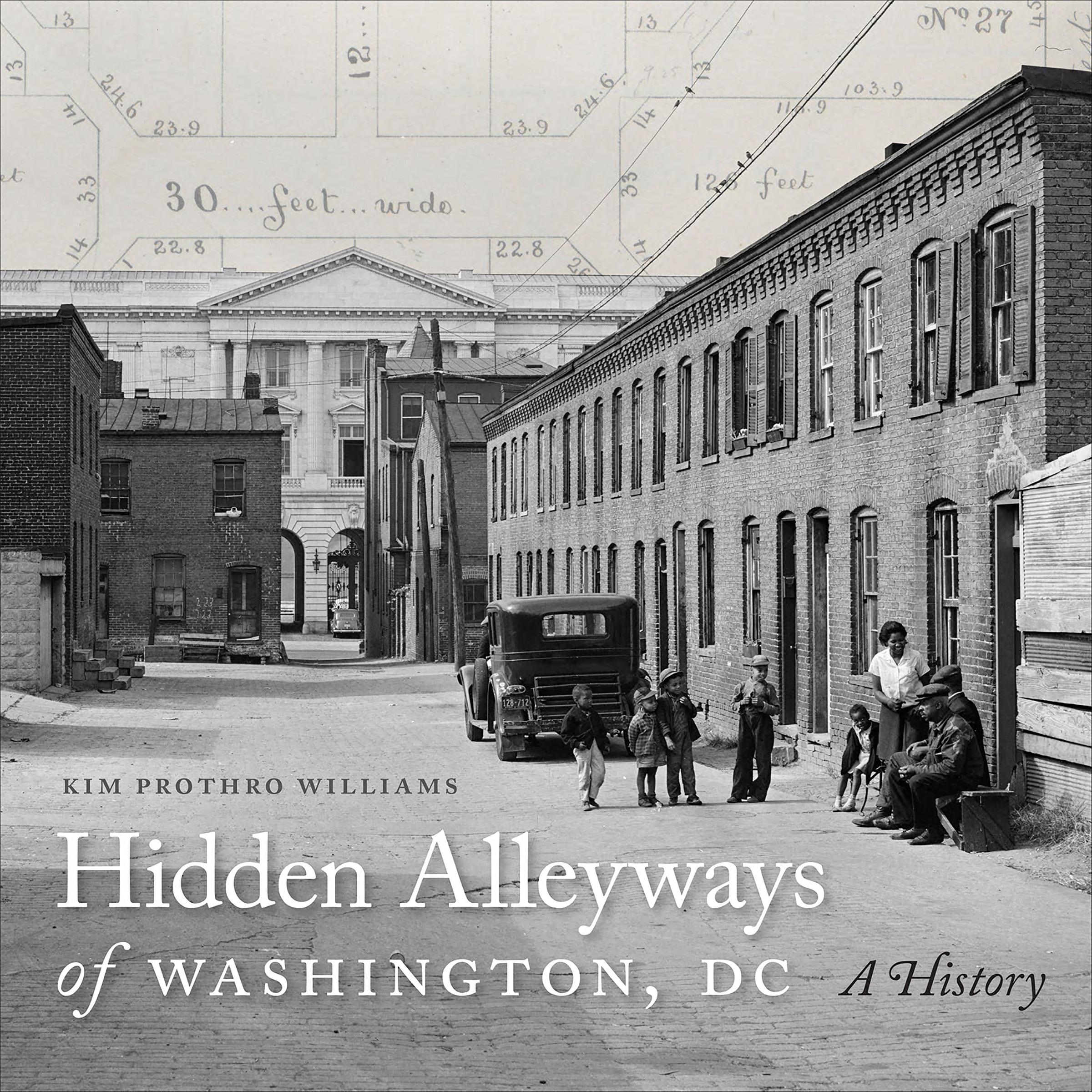
The remarkable architectural and social history of DC’s multifaceted alleyways
Alleyways in Washington, DC, have always been a fundamental part of the city’s life and economy. Deliberately hidden from public view by the capital’s early planners, DC’s alleys were created to provide access to stables, carriage houses, and other utility buildings. But as the city grew and property values rose, the nature of some alleys and their buildings changed, resulting in a parallel world of residential , manufacturing, and artistic spaces. Kim Prothro Williams reveals this world in a fascinating and richly illustrated history.
In the nineteenth and early twentieth centuries, the city’s inhabited alleys were often unsanitary spaces that were home to its poorest residents. These conditions spurred Progressive Era campaigns to demolish alley dwellings, which in turn led to the displacement of minority and disadvantaged communities. Today, many remaining alleyways, with their intimately scaled buildings, have been transformed into vibrant commercial and residential spaces. Yet this new wave of development raises questions about how spaces that were once reserved for the city’s poorest residents now cater to the wealthy.
This book is a must-have for anyone with an interest in Washington, social history, architecture, or historical preservation.
Zahle einfach mit Karte, Klarna, Apple Pay oder Google Pay. Nicht zufrieden? Du hast immer ein 14-tägiges Widerrufsrecht. Lies mehr in unseren AGB. Hast du Fragen, schreib uns eine E-Mail an hello@memmo.org.
Memmo macht das Lernen einfacher – wo auch immer du bist. Bei uns findest du deine Kursbücher und smarte Lerntools an einem Ort: Zusammenfassungen, Quizzes, Podcasts und Lernkarten. Und Ted, dein Lernbuddy, beantwortet alles, was du wissen möchtest. Über 50.000 Studierende lernen bereits hier – gemacht, damit du schneller lernst und weniger Stress hast.