
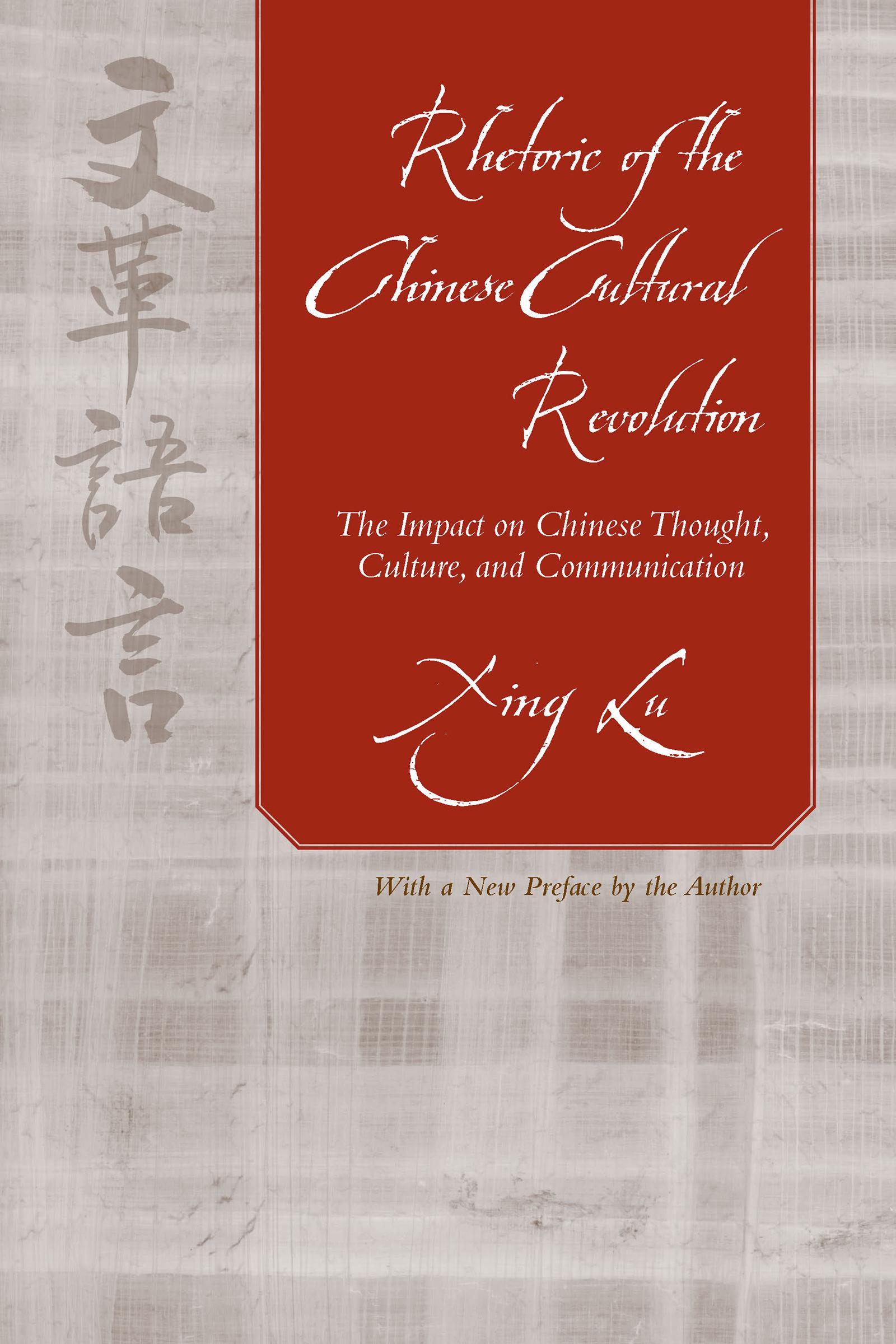
A startling look at revolutionary rhetoric and its effects
Now known to the Chinese as the "ten years of chaos," the Chinese Cultural Revolution (1966–76) brought death to thousands of Chinese and persecution to millions. In Rhetoric of the Chinese Cultural Revolution Xing Lu identifies the rhetorical practices and persuasive effects of the polarizing political language and symbolic practices used by Communist Party leaders to legitimize their use of power and violence to dehumanize people identified as class enemies.
Lu provides close readings of the movement's primary texts—political slogans, official propaganda, wall posters, and the lyrics of mass songs and model operas. She also scrutinizes such ritualistic practices as the loyalty dance, denunciation rallies, political study sessions, and criticism and self-criticism meetings. Lu enriches her rhetorical analyses of these texts with her own story and that of her family, as well as with interviews conducted in China and the United States with individuals who experienced the Cultural Revolution during their teenage years.
In her new preface, Lu expresses deep concern about recent nationalism, xenophobia, divisiveness, and violence instigated by the rhetoric of hatred and fear in the United States and across the globe. She hopes that by illuminating the way language shapes perception, thought, and behavior, this book will serve as a reminder of past mistakes so that we may avoid repeating them in the future.
Zahle einfach mit Karte, Klarna, Apple Pay oder Google Pay. Nicht zufrieden? Du hast immer ein 14-tägiges Widerrufsrecht. Lies mehr in unseren AGB. Hast du Fragen, schreib uns eine E-Mail an hello@memmo.org.
Memmo macht das Lernen einfacher – wo auch immer du bist. Bei uns findest du deine Kursbücher und smarte Lerntools an einem Ort: Zusammenfassungen, Quizzes, Podcasts und Lernkarten. Und Ted, dein Lernbuddy, beantwortet alles, was du wissen möchtest. Über 50.000 Studierende lernen bereits hier – gemacht, damit du schneller lernst und weniger Stress hast.