
“Confront personal losses as well as the numerous harbingers of environmental collapse, from birds to beavers to beetles along Red River or beside Lake Marie, eddies and currents evoking social, economic, and political conflicts beyond the trails hiked in many of these poems.”—James Scruton, author of The Rules
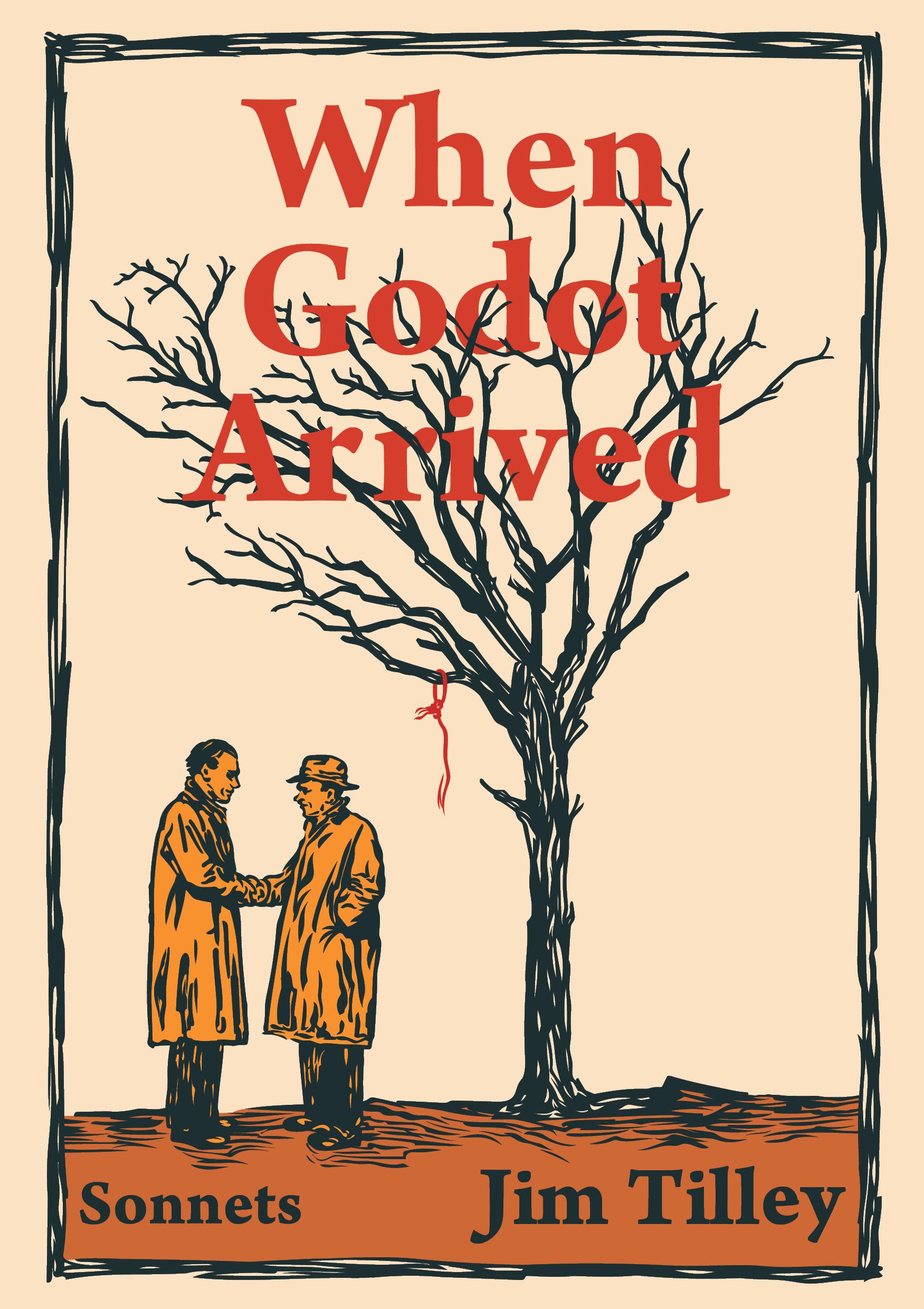
When Godot Arrived uses eighty-one free-verse sonnets to explore the intersections of family, environment, politics, and the human condition, balancing contemplative reflection with dark humor and lyrical precision in a world of uncertainty.
Jim Tilley's latest poetry collection, When Godot Arrived, eighty-one free-verse sonnets, continues the explorations from the set of new poems in his previous book, Ripples in the Fabric of the Universe. As in that previous book, he draws on his experience as a poet and mathematician to fix a lens on the current raw state of the country and the world and on interpersonal relationships. At times, his mood is merely contemplative, especially in his testaments to family, but as he delves relentlessly into matters political, ecological, and environmental, that mood turns darker, even ominous, infused occasionally with humor to present a more optimistic outlook. Together with Ripples in the Fabric of the Universe, When Godot Arrived is a most expansive read.
Zahle einfach mit Karte, Klarna, Apple Pay oder Google Pay. Nicht zufrieden? Du hast immer ein 14-tägiges Widerrufsrecht. Lies mehr in unseren AGB. Hast du Fragen, schreib uns eine E-Mail an hello@memmo.org.
Memmo macht das Lernen einfacher – wo auch immer du bist. Bei uns findest du deine Kursbücher und smarte Lerntools an einem Ort: Zusammenfassungen, Quizzes, Podcasts und Lernkarten. Und Ted, dein Lernbuddy, beantwortet alles, was du wissen möchtest. Über 50.000 Studierende lernen bereits hier – gemacht, damit du schneller lernst und weniger Stress hast.