
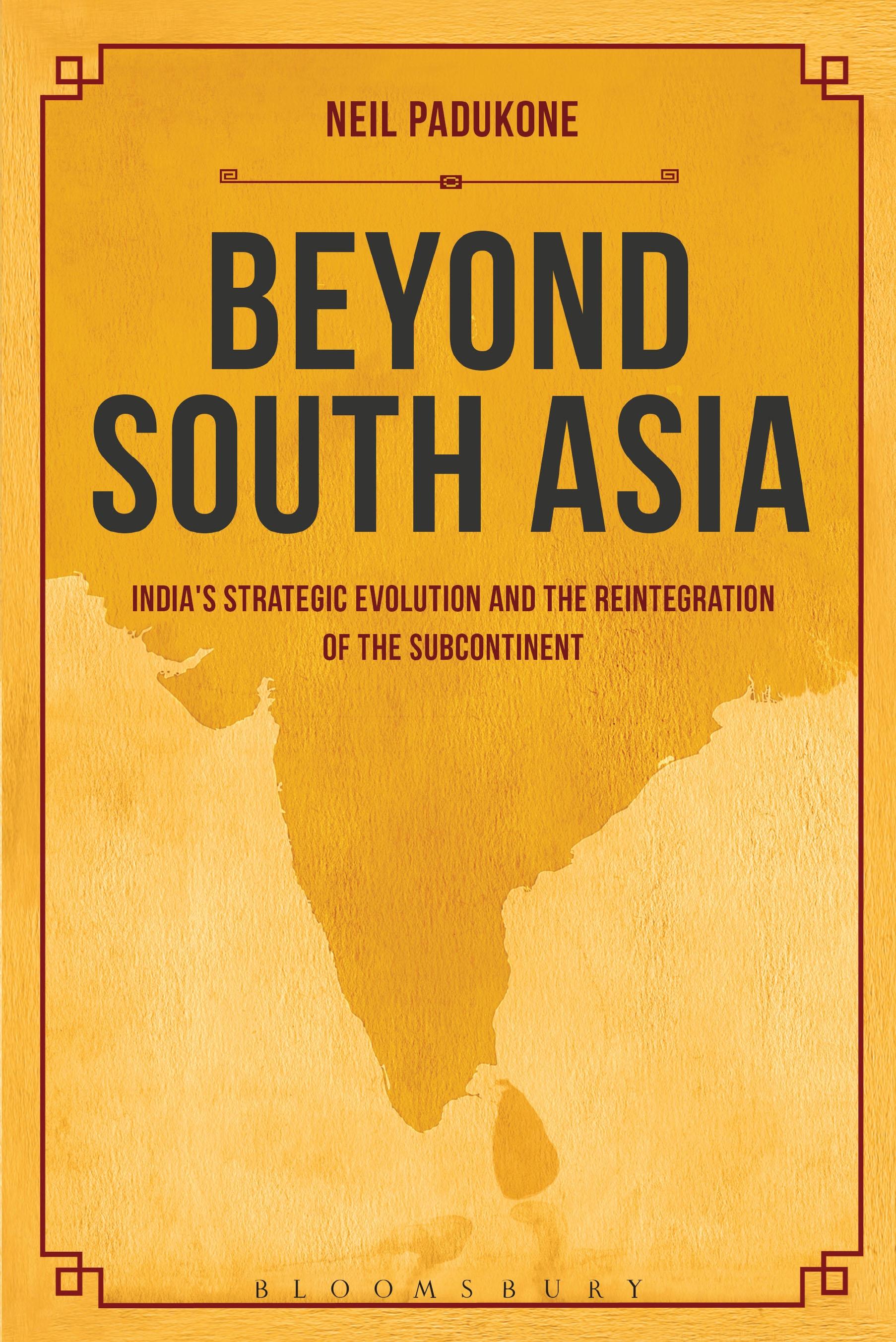
The Republic of India occupies a key geopolitical and strategic space at the center of the Indian Ocean. How it interacts with the rest of the world will have profound consequences in the 21st century.
Beyond South Asia follows the evolution of India's strategic thinking since 1947, providing a comprehensive analysis of its foreign policy worldview. It begins with India's failed attempt to unite and dominate the subcontinent following independence, a strategy that resulted in conflict as its smaller neighbors invited the U.S. and China to the region, resisted intra-regional cooperation, and even violently opposed New Delhi. It then explores how this worldview has shifted as India, needing markets, energy resources, and ways to balance against China, has developed economic and military ties in Central and Southeast Asia, the Middle East, Africa, the southern Indian Ocean, and beyond. To do so has required more stability in South Asia, making India more conciliatory toward other countries of the subcontinent. This is in turn leading to a lessening of tensions, enhanced cooperation, and an economic reintegration of the subcontinent, including a burgeoning détente with Pakistan.
This in-depth analysis provides a comprehensive look at the domestic and regional factors that drive India, a key actor in global politics. Written in an accessible manner, it will be of use to students and specialists of Indian foreign policy, South Asian politics, international relations, and security studies and to anyone interested in the future of AfPak, the Indian Ocean region, and America's "strategic pivot."
Beyond South Asia follows the evolution of India's strategic thinking since 1947, providing a comprehensive analysis of its foreign policy worldview. It begins with India's failed attempt to unite and dominate the subcontinent following independence, a strategy that resulted in conflict as its smaller neighbors invited the U.S. and China to the region, resisted intra-regional cooperation, and even violently opposed New Delhi. It then explores how this worldview has shifted as India, needing markets, energy resources, and ways to balance against China, has developed economic and military ties in Central and Southeast Asia, the Middle East, Africa, the southern Indian Ocean, and beyond. To do so has required more stability in South Asia, making India more conciliatory toward other countries of the subcontinent. This is in turn leading to a lessening of tensions, enhanced cooperation, and an economic reintegration of the subcontinent, including a burgeoning détente with Pakistan.
This in-depth analysis provides a comprehensive look at the domestic and regional factors that drive India, a key actor in global politics. Written in an accessible manner, it will be of use to students and specialists of Indian foreign policy, South Asian politics, international relations, and security studies and to anyone interested in the future of AfPak, the Indian Ocean region, and America's "strategic pivot."
Zahle einfach mit Karte, Klarna, Apple Pay oder Google Pay. Nicht zufrieden? Du hast immer ein 14-tägiges Widerrufsrecht. Lies mehr in unseren AGB. Hast du Fragen, schreib uns eine E-Mail an hello@memmo.org.
Memmo macht das Lernen einfacher – wo auch immer du bist. Bei uns findest du deine Kursbücher und smarte Lerntools an einem Ort: Zusammenfassungen, Quizzes, Podcasts und Lernkarten. Und Ted, dein Lernbuddy, beantwortet alles, was du wissen möchtest. Über 50.000 Studierende lernen bereits hier – gemacht, damit du schneller lernst und weniger Stress hast.