
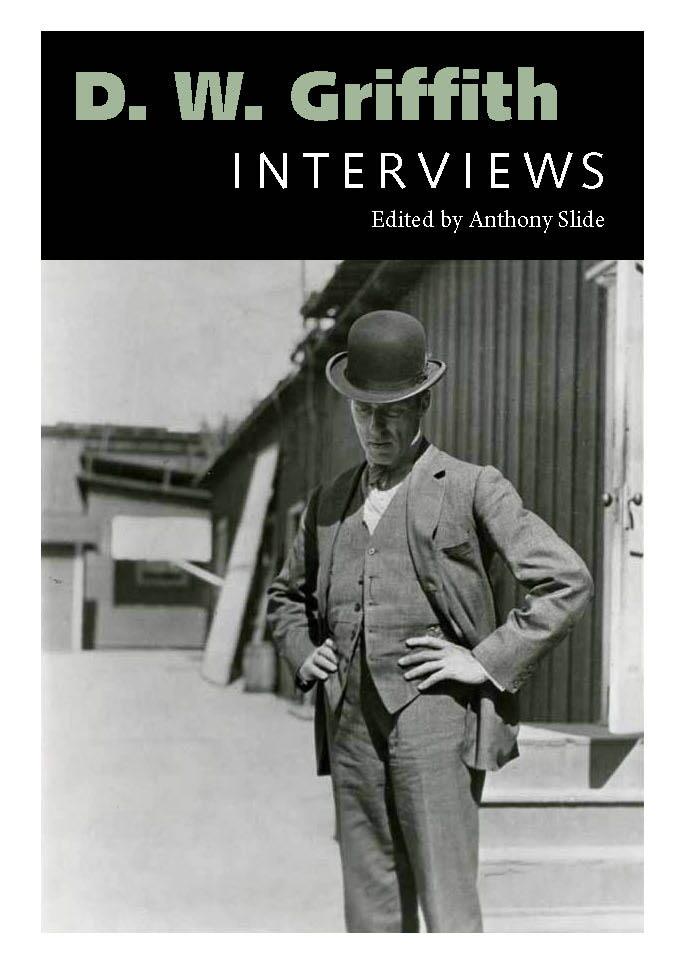
D. W. Griffith (1875–1948) is one of the most influential figures in the history of the motion picture. As director of The Birth of a Nation, he is also one of the most controversial. He raised the cinema to a new level of art, entertainment, and innovation, and at the same time he illustrated, for the first time, its potential to influence an audience and propagandize a cause.
Collected together here are virtually all of the “interviews” given by D. W. Griffith from the first in 1914 to the last in 1948. Some of the interviews concentrate on specific films, including The Birth of a Nation, Intolerance, and, most substantially, Hearts of the World, while others provide the director with an opportunity to expound on topics of personal interest, including the importance of proper exhibition of his and other’s films, and his search for truth and beauty on screen.
The interviews are taken from many sources, including leading newspapers, trade papers, and fan magazines. They are often marked by humor and by a desire to please the interviewer and thus the reader. Griffith may not have been particularly enthusiastic about giving interviews, but he seems always determined to put on a good show.
Ultimately, D. W. Griffith: Interviews provides the reader with a unique insight into the mind and filmmaking techniques of a director whose work and philosophy is as relevant today as it was when he was at the height of his fame in the 1910s and 1920s.
Collected together here are virtually all of the “interviews” given by D. W. Griffith from the first in 1914 to the last in 1948. Some of the interviews concentrate on specific films, including The Birth of a Nation, Intolerance, and, most substantially, Hearts of the World, while others provide the director with an opportunity to expound on topics of personal interest, including the importance of proper exhibition of his and other’s films, and his search for truth and beauty on screen.
The interviews are taken from many sources, including leading newspapers, trade papers, and fan magazines. They are often marked by humor and by a desire to please the interviewer and thus the reader. Griffith may not have been particularly enthusiastic about giving interviews, but he seems always determined to put on a good show.
Ultimately, D. W. Griffith: Interviews provides the reader with a unique insight into the mind and filmmaking techniques of a director whose work and philosophy is as relevant today as it was when he was at the height of his fame in the 1910s and 1920s.
Zahle einfach mit Karte, Klarna, Apple Pay oder Google Pay. Nicht zufrieden? Du hast immer ein 14-tägiges Widerrufsrecht. Lies mehr in unseren AGB. Hast du Fragen, schreib uns eine E-Mail an hello@memmo.org.
Memmo macht das Lernen einfacher – wo auch immer du bist. Bei uns findest du deine Kursbücher und smarte Lerntools an einem Ort: Zusammenfassungen, Quizzes, Podcasts und Lernkarten. Und Ted, dein Lernbuddy, beantwortet alles, was du wissen möchtest. Über 50.000 Studierende lernen bereits hier – gemacht, damit du schneller lernst und weniger Stress hast.
Das könnte dir auch gefallen
Buch kaufen0