
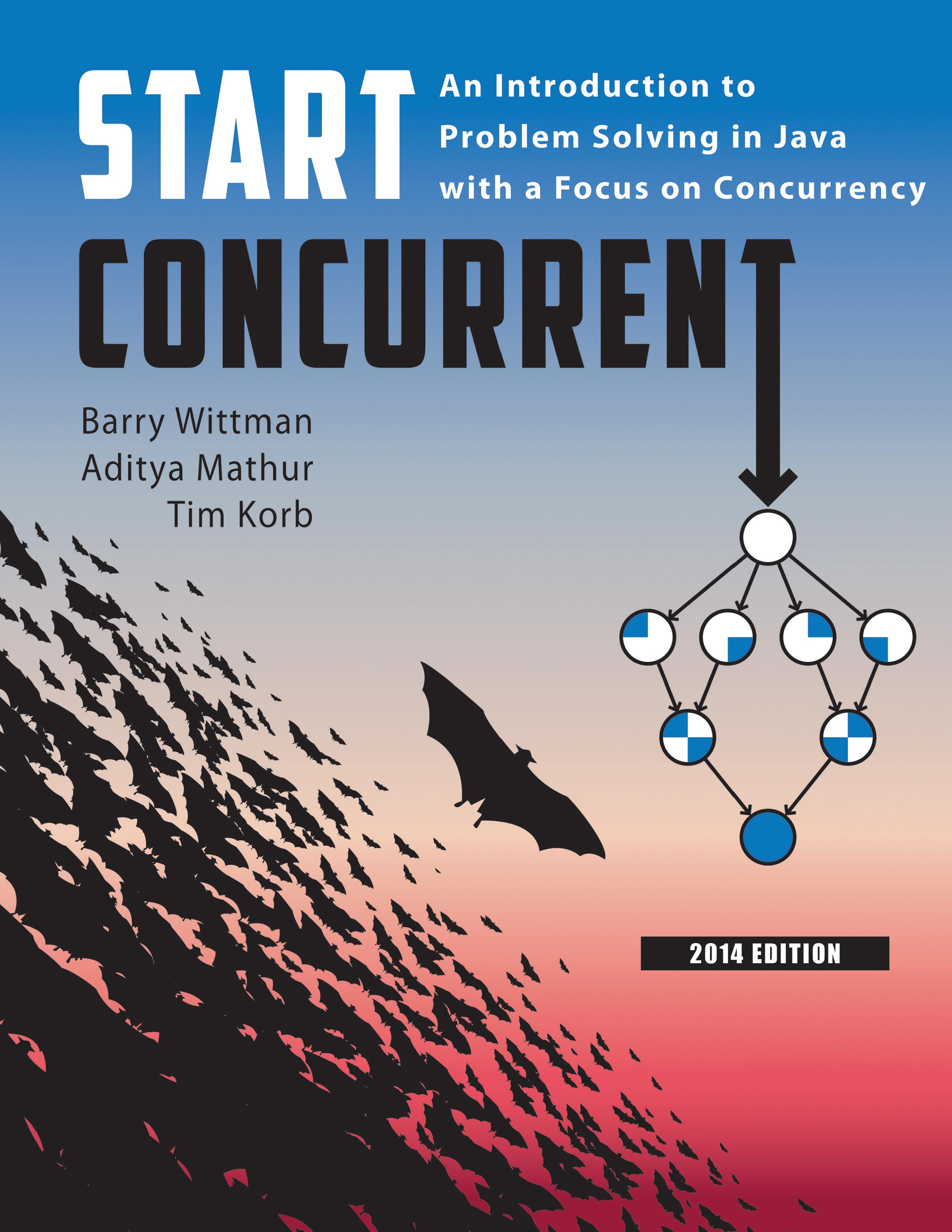
Multicore microprocessors are now at the heart of nearly all desktop and laptop computers. While these chips offer exciting opportunities for the creation of newer and faster applications, they also challenge students and educators. How can the new generation of computer scientists growing up with multicore chips learn to program applications that exploit this latent processing power? This unique book is an attempt to introduce concurrent programming to first-year computer science students, much earlier than most competing products.
This book assumes no programming background but offers a broad coverage of Java. It includes over 150 numbered and numerous inline examples as well as more than 300 exercises categorized as "conceptual," "programming," and "experiments." The problem-oriented approach presents a problem, explains supporting concepts, outlines necessary syntax, and finally provides its solution. All programs in the book are available for download and experimentation. A substantial index of at least 5000 entries makes it easy for readers to locate relevant information.
In a fast-changing field, this book is continually updated and refined. The 2014 version is the seventh "draft edition" of this volume, and features numerous revisions based on student feedback.
A list of errata for this version can be found on the Purdue University Department of Computer Science website.
Zahle einfach mit Karte, Klarna, Apple Pay oder Google Pay. Nicht zufrieden? Du hast immer ein 14-tägiges Widerrufsrecht. Lies mehr in unseren AGB. Hast du Fragen, schreib uns eine E-Mail an hello@memmo.org.
Memmo macht das Lernen einfacher – wo auch immer du bist. Bei uns findest du deine Kursbücher und smarte Lerntools an einem Ort: Zusammenfassungen, Quizzes, Podcasts und Lernkarten. Und Ted, dein Lernbuddy, beantwortet alles, was du wissen möchtest. Über 50.000 Studierende lernen bereits hier – gemacht, damit du schneller lernst und weniger Stress hast.