
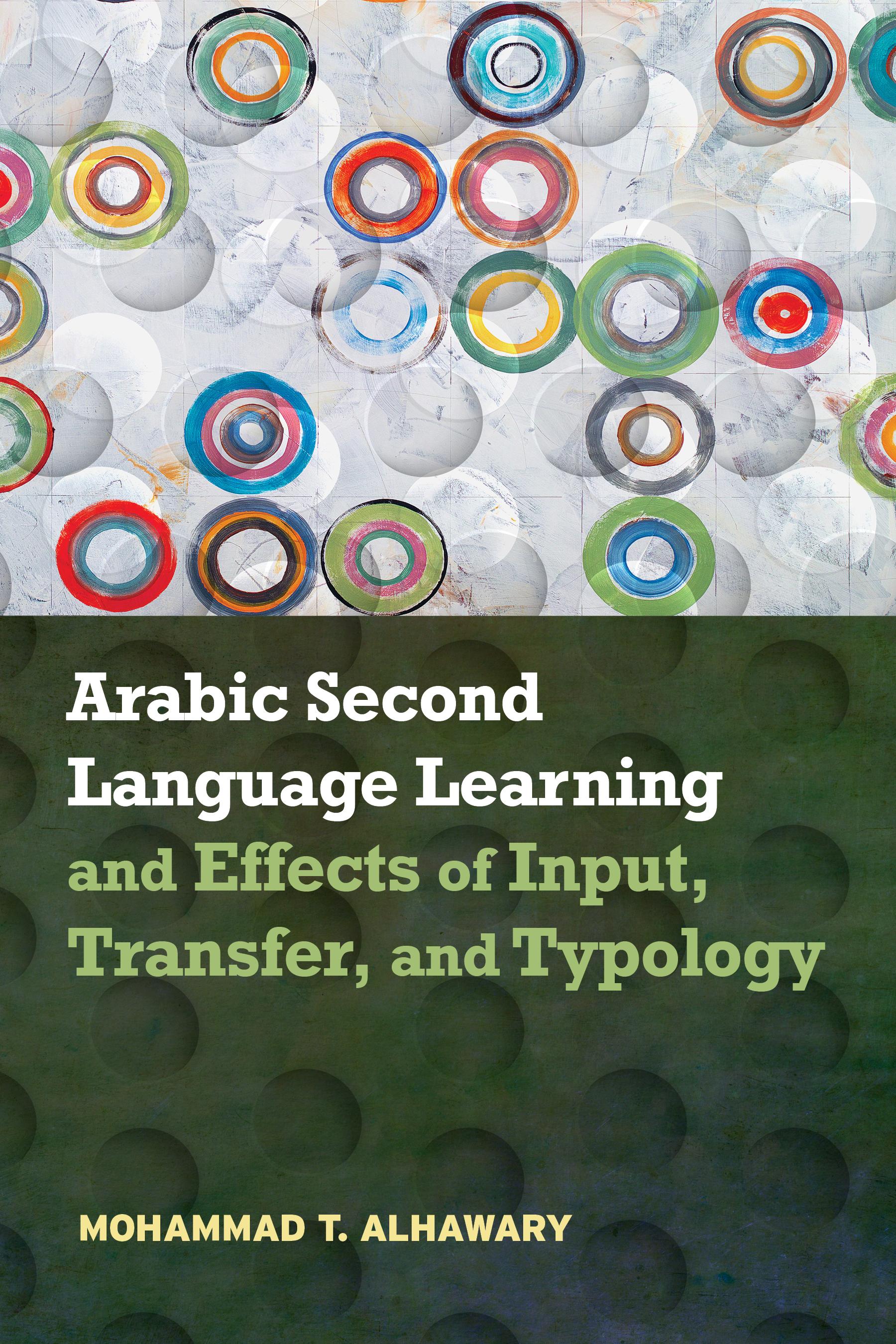
Despite the status of Arabic as a global language and the high demand to learn it, the field of Arabic second language acquisition remains underinvestigated. Second language acquisition findings are crucial for informing and advancing the field of Arabic foreign language pedagogy including Arabic language teaching, testing, and syllabus design.
Arabic Second Language Learning and Effects of Input, Transfer, and Typology provides data-driven empirical findings for a number of basic and high-frequency morphosyntactic structures with two novel typological language pairings, examining Arabic second language acquisition data from adult L1 Chinese- and Russian-speaking learners of Arabic as a foreign language. Alhawary’s study examines the different processes, hypotheses, and acquisition tendencies from the two learner groups, and documents the extent of the successes and challenges faced by such learners in their L2 Arabic grammatical development during the first three years of learning the language. In addition, the book offers both theoretical and practical implications related to input exposure, L1 and L2 transfer, and typological and structural proximity effects.
This book serves as a valuable resource for both second language acquisition experts and foreign language teaching practitioners.
Zahle einfach mit Karte, Klarna, Apple Pay oder Google Pay. Nicht zufrieden? Du hast immer ein 14-tägiges Widerrufsrecht. Lies mehr in unseren AGB. Hast du Fragen, schreib uns eine E-Mail an hello@memmo.org.
Memmo macht das Lernen einfacher – wo auch immer du bist. Bei uns findest du deine Kursbücher und smarte Lerntools an einem Ort: Zusammenfassungen, Quizzes, Podcasts und Lernkarten. Und Ted, dein Lernbuddy, beantwortet alles, was du wissen möchtest. Über 50.000 Studierende lernen bereits hier – gemacht, damit du schneller lernst und weniger Stress hast.