
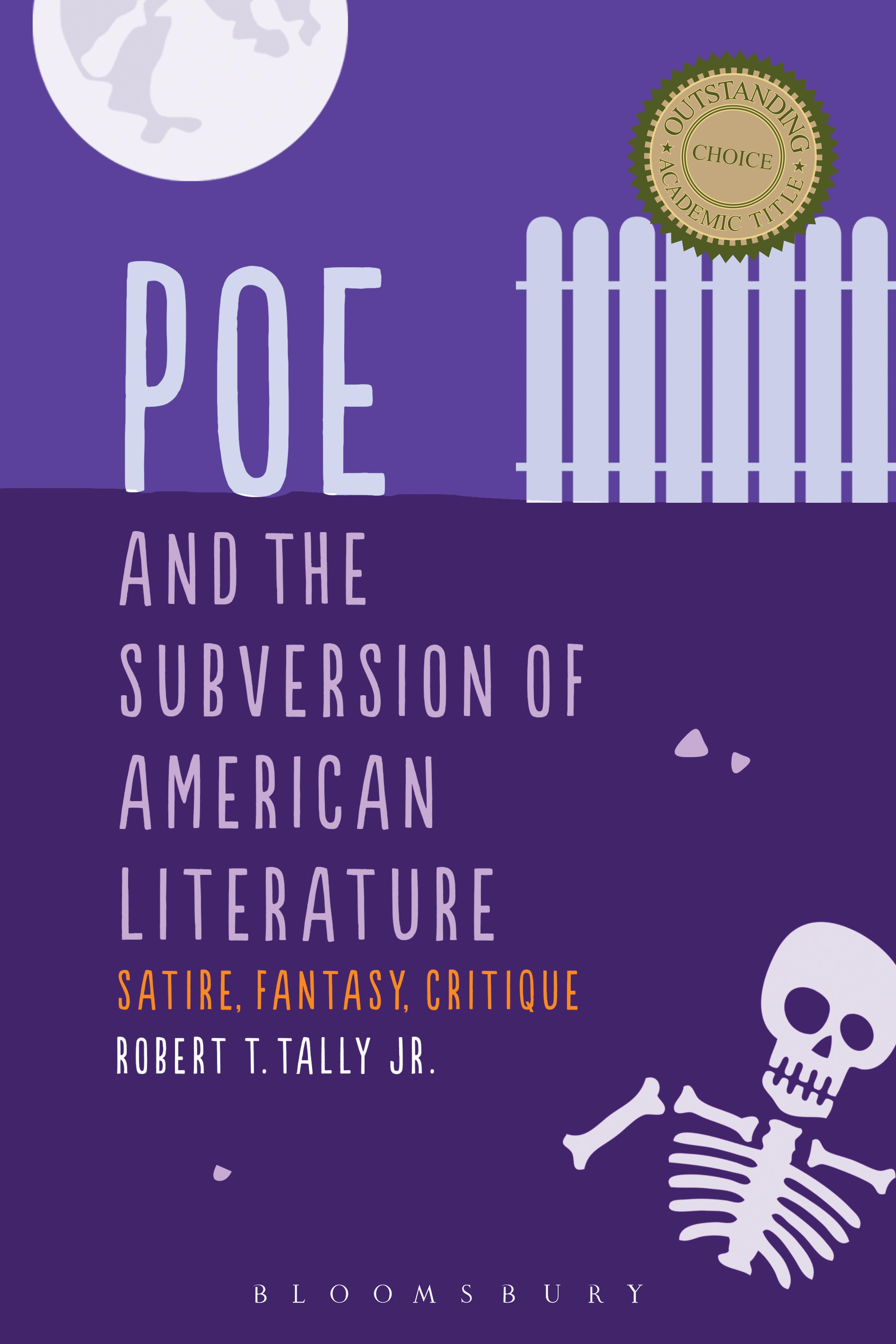
Choice Outstanding Academic Title 2014
In Poe and the Subversion of American Literature, Robert T. Tally Jr. argues that Edgar Allan Poe is best understood, not merely as a talented artist or canny magazinist, but primarily as a practical joker who employs satire and fantasy to poke fun at an emergent nationalist discourse circulating in the United States. Poe's satirical and fantastic mode, on display even in his apparently serious short stories and literary criticism, undermines the earnest attempts to establish a distinctively national literature in the nineteenth century. In retrospect, Poe's work also subtly subverts the tenets of an institutionalized American Studies in the twentieth century. Tally interprets Poe's life and works in light of his own social milieu and in relation to the disciplinary field of American literary studies, finding Poe to be neither the poète maudit of popular mythology nor the representative American writer revealed by recent scholarship. Rather, Poe is an untimely figure whose work ultimately makes a mockery of those who would seek to contain it. Drawing upon Gilles Deleuze's distinction between nomad thought and state philosophy, Tally argues that Poe's varied literary and critical writings represent an alternative to American literature. Through his satirical critique of U.S. national culture and his otherworldly projection of a postnational space of the imagination, Poe establishes a subterranean, nomadic, and altogether worldly literary practice.
In Poe and the Subversion of American Literature, Robert T. Tally Jr. argues that Edgar Allan Poe is best understood, not merely as a talented artist or canny magazinist, but primarily as a practical joker who employs satire and fantasy to poke fun at an emergent nationalist discourse circulating in the United States. Poe's satirical and fantastic mode, on display even in his apparently serious short stories and literary criticism, undermines the earnest attempts to establish a distinctively national literature in the nineteenth century. In retrospect, Poe's work also subtly subverts the tenets of an institutionalized American Studies in the twentieth century. Tally interprets Poe's life and works in light of his own social milieu and in relation to the disciplinary field of American literary studies, finding Poe to be neither the poète maudit of popular mythology nor the representative American writer revealed by recent scholarship. Rather, Poe is an untimely figure whose work ultimately makes a mockery of those who would seek to contain it. Drawing upon Gilles Deleuze's distinction between nomad thought and state philosophy, Tally argues that Poe's varied literary and critical writings represent an alternative to American literature. Through his satirical critique of U.S. national culture and his otherworldly projection of a postnational space of the imagination, Poe establishes a subterranean, nomadic, and altogether worldly literary practice.
Zahle einfach mit Karte, Klarna, Apple Pay oder Google Pay. Nicht zufrieden? Du hast immer ein 14-tägiges Widerrufsrecht. Lies mehr in unseren AGB. Hast du Fragen, schreib uns eine E-Mail an hello@memmo.org.
Memmo macht das Lernen einfacher – wo auch immer du bist. Bei uns findest du deine Kursbücher und smarte Lerntools an einem Ort: Zusammenfassungen, Quizzes, Podcasts und Lernkarten. Und Ted, dein Lernbuddy, beantwortet alles, was du wissen möchtest. Über 50.000 Studierende lernen bereits hier – gemacht, damit du schneller lernst und weniger Stress hast.