
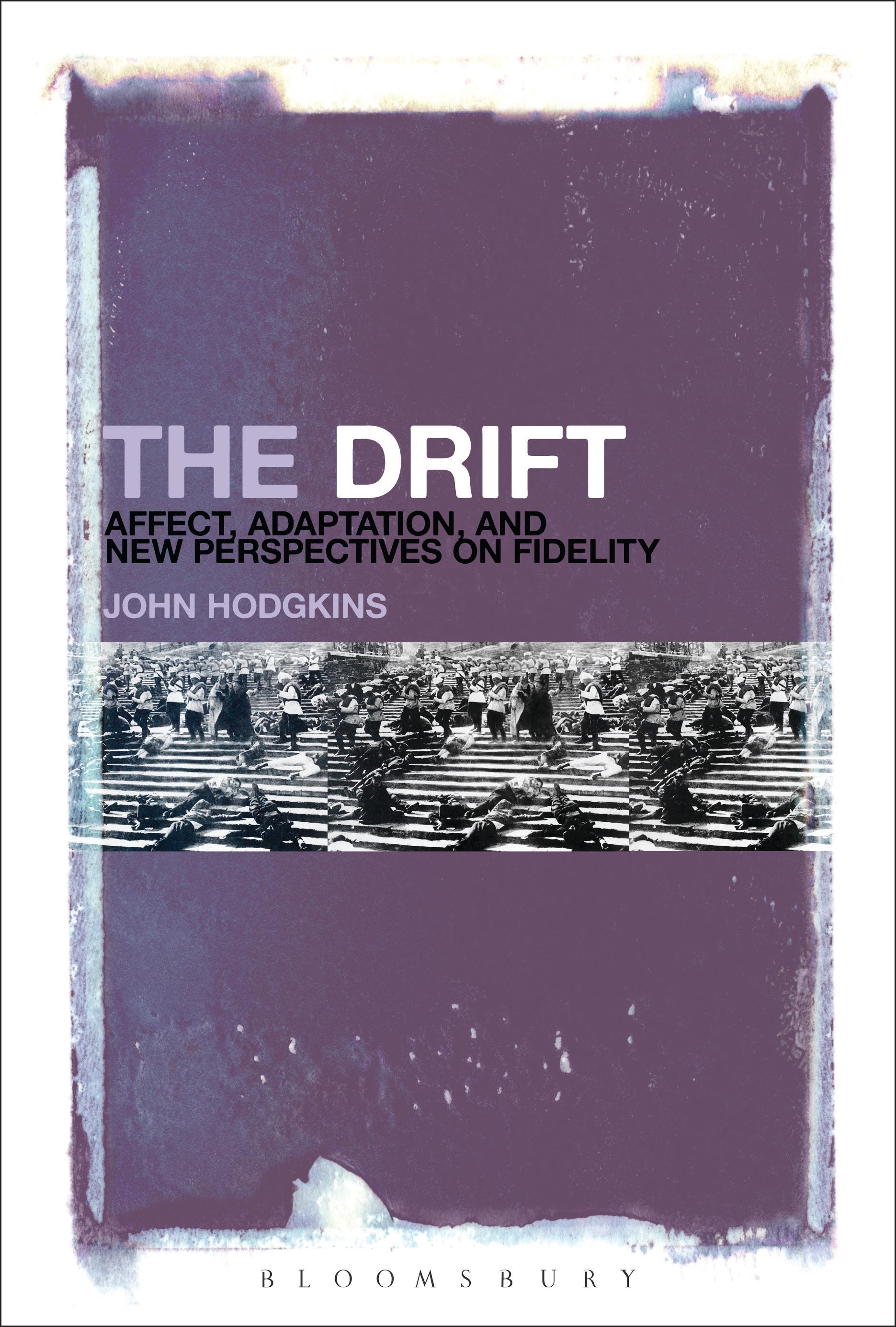
The Drift: Affect, Adaptation, and New Perspectives on Fidelity offers a new perspective on the complex interrelations between literature and cinema. It does so by articulating an 'affective turn' for adaptation studies, a field whose traditional focus has been the critical castigation of film adaptations of canonical plays or novels. Drawing on theorists such as Gilles Deleuze, Brian Massumi, and Marco Abel,the author is able to re-conceive literary and cinematic works as textual engines generating and circulating affect, and the adaptive process as a drifting of those affective intensities from one medium to another.
By conceptualizing adaptation in this manner, the work steers clear of the chimerical notion of 'fidelity' (to character, to theme, to narrative) which has anchored so many analyses of adaptive texts over the years-and the reproving language that inevitably attends it-in favor of more productive avenues of investigation: What affective work are certain literary and filmic texts performing? What can this tell us, more broadly, about the underexplored affective dimensions of literature and cinema, and the dialogic interactions between them?
The Drift addresses such questions through close, careful readings which put a variety of realist, modernist, and postmodernist works into conversation with each other, among them the fiction of John Dos Passos, Don DeLillo, and Susanna Moore, the films of Dziga Vertov and Sergei Eisenstein, as well as recent cinematic adaptations by Jane Campion and Charles Burnett. This methodological approach, helps to elevate adaptation studies into a discourse that speaks more directly and pertinently to our fluid, hypertextual era.
By conceptualizing adaptation in this manner, the work steers clear of the chimerical notion of 'fidelity' (to character, to theme, to narrative) which has anchored so many analyses of adaptive texts over the years-and the reproving language that inevitably attends it-in favor of more productive avenues of investigation: What affective work are certain literary and filmic texts performing? What can this tell us, more broadly, about the underexplored affective dimensions of literature and cinema, and the dialogic interactions between them?
The Drift addresses such questions through close, careful readings which put a variety of realist, modernist, and postmodernist works into conversation with each other, among them the fiction of John Dos Passos, Don DeLillo, and Susanna Moore, the films of Dziga Vertov and Sergei Eisenstein, as well as recent cinematic adaptations by Jane Campion and Charles Burnett. This methodological approach, helps to elevate adaptation studies into a discourse that speaks more directly and pertinently to our fluid, hypertextual era.
Seiten: 176
Kategorie: Film- & Medievetenskap
e-ISBN: 9781623568986
Versandgewicht: 1.2 kg
Versand in: 1-2 Tage
Zahle einfach mit Karte, Klarna, Apple Pay oder Google Pay. Nicht zufrieden? Du hast immer ein 14-tägiges Widerrufsrecht. Lies mehr in unseren AGB. Hast du Fragen, schreib uns eine E-Mail an hello@memmo.org.
Memmo macht das Lernen einfacher – wo auch immer du bist. Bei uns findest du deine Kursbücher und smarte Lerntools an einem Ort: Zusammenfassungen, Quizzes, Podcasts und Lernkarten. Und Ted, dein Lernbuddy, beantwortet alles, was du wissen möchtest. Über 50.000 Studierende lernen bereits hier – gemacht, damit du schneller lernst und weniger Stress hast.