
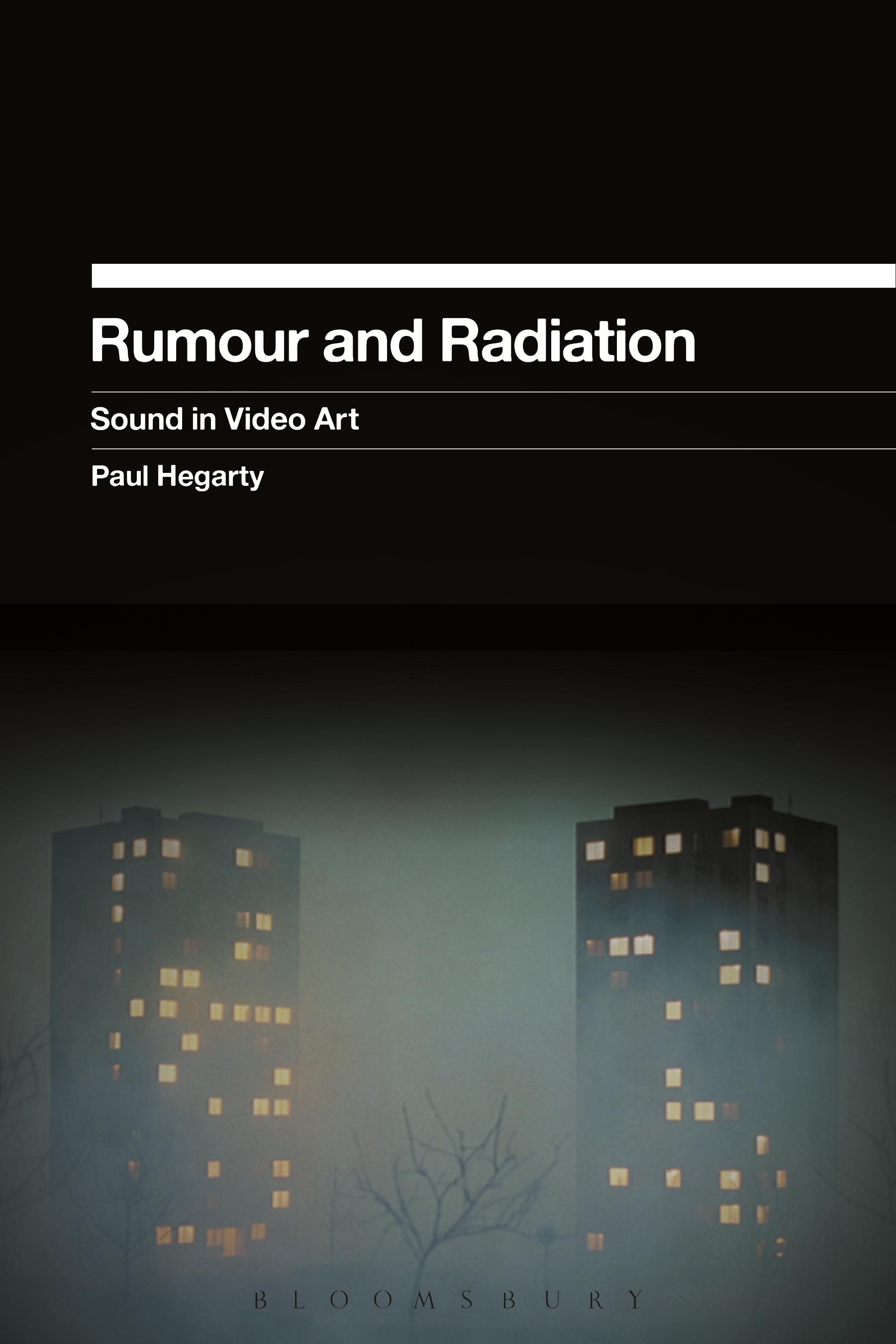
This is a book about video art, and about sound art.
The thesis is that sound first entered the gallery via the video art of the 1960s and in so doing, created an unexpected noise. The early part of the book looks at this formative period and the key figures within it - then jumps to the mid-1990s, when video art has become such a major part of contemporary art production, it no longer seems an autonomous form.
Paul Hegarty considers the work of a range of artists (including Steve McQueen, Christian Marclay, Ryan Trecartin, and Jane and Louise Wilson), proposing different theories according to the particular strategy of the artist under discussion. Connecting them all are the twinned ideas of intermedia and synaesthesia. Hegarty offers close readings of video works, as influenced by their sound, while also considering the institutional and material contexts. Applying contemporary sound theory to the world of video art, Paul Hegarty offers an entirely fresh perspective on the interactions between sound, sound art, and the visual.
The thesis is that sound first entered the gallery via the video art of the 1960s and in so doing, created an unexpected noise. The early part of the book looks at this formative period and the key figures within it - then jumps to the mid-1990s, when video art has become such a major part of contemporary art production, it no longer seems an autonomous form.
Paul Hegarty considers the work of a range of artists (including Steve McQueen, Christian Marclay, Ryan Trecartin, and Jane and Louise Wilson), proposing different theories according to the particular strategy of the artist under discussion. Connecting them all are the twinned ideas of intermedia and synaesthesia. Hegarty offers close readings of video works, as influenced by their sound, while also considering the institutional and material contexts. Applying contemporary sound theory to the world of video art, Paul Hegarty offers an entirely fresh perspective on the interactions between sound, sound art, and the visual.
Zahle einfach mit Karte, Klarna, Apple Pay oder Google Pay. Nicht zufrieden? Du hast immer ein 14-tägiges Widerrufsrecht. Lies mehr in unseren AGB. Hast du Fragen, schreib uns eine E-Mail an hello@memmo.org.
Memmo macht das Lernen einfacher – wo auch immer du bist. Bei uns findest du deine Kursbücher und smarte Lerntools an einem Ort: Zusammenfassungen, Quizzes, Podcasts und Lernkarten. Und Ted, dein Lernbuddy, beantwortet alles, was du wissen möchtest. Über 50.000 Studierende lernen bereits hier – gemacht, damit du schneller lernst und weniger Stress hast.